
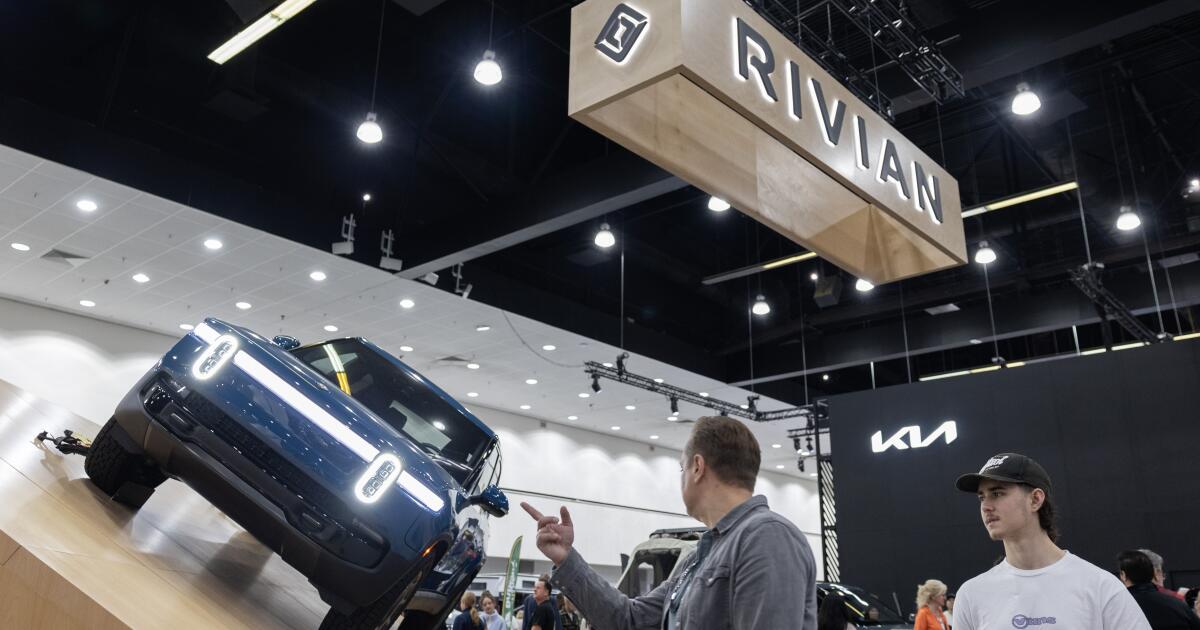
Thousands flocked to downtown L.A. for the final days of the Los Angeles Auto Show. This event is one of the biggest auto shows in the country and showcases a variety of new cars, especially electric vehicles (EVs).
EVs take center stage at this show. This year, attendees saw new models ready for sale, as well as future concepts. California has a reputation for promoting electric innovation, especially with its goal to reach 100% decarbonization by 2045. Despite the recent cancellation of federal rebates that helped make EVs more affordable, many remain hopeful about the market.
Among the new offerings this year is the updated Nissan Leaf, boasting 303 miles of range on a single charge, and the much-anticipated Chevy Bolt, which has a range of 255 miles and is making a comeback after a brief hiatus. Both are priced around $29,000.
The Jeep Recon debuted as a fully electric SUV, promising 230 miles of range starting at $65,000. A sneak peek at the Hyundai Ioniq 6 N reveals expected specs around 257 miles. Luxury models like the $77,000 Rivian R1S and the $80,000 Lucid Gravity are turning heads, with ranges reaching up to 450 miles.
Political shifts have impacted the EV market significantly. After the Trump administration’s repeal of EV rebates, California reported a surge in zero-emission vehicle sales—nearly 126,000 units in the third quarter of 2025, making up about 29% of all new car sales.
However, this political climate has caused some hesitation among manufacturers. Companies like Acura and Ford are reassessing or even halting certain electric models. An article on Heatmap noted that excitement for EVs was noticeably subdued during the show.
Statistics show that by October, EVs only accounted for 5.2% of new car sales in the U.S., down from a high of 12.9% in September, according to J.D. Power. Forecasts suggest November may be similar, with only 6% expected.
Despite these bumps in the road, industry experts remain optimistic. “The strong will survive,” said Ed Loh from Motor Trend. “Companies making quality, well-priced EVs will bounce back.”
California continues to expand its EV charging network, now exceeding 200,000 charging ports—more than there are gas stations. Governor Gavin Newsom reaffirmed the state’s commitment to electric vehicles through an executive order aimed at reducing emissions and supporting clean manufacturers.
On a global scale, the outlook for EVs is promising. The International Energy Agency reported 17 million electric vehicles sold worldwide in 2024—a 25% increase from the previous year. Predictions for 2025 project sales to surpass 20 million, accounting for over a quarter of all cars sold globally.
Source link
