
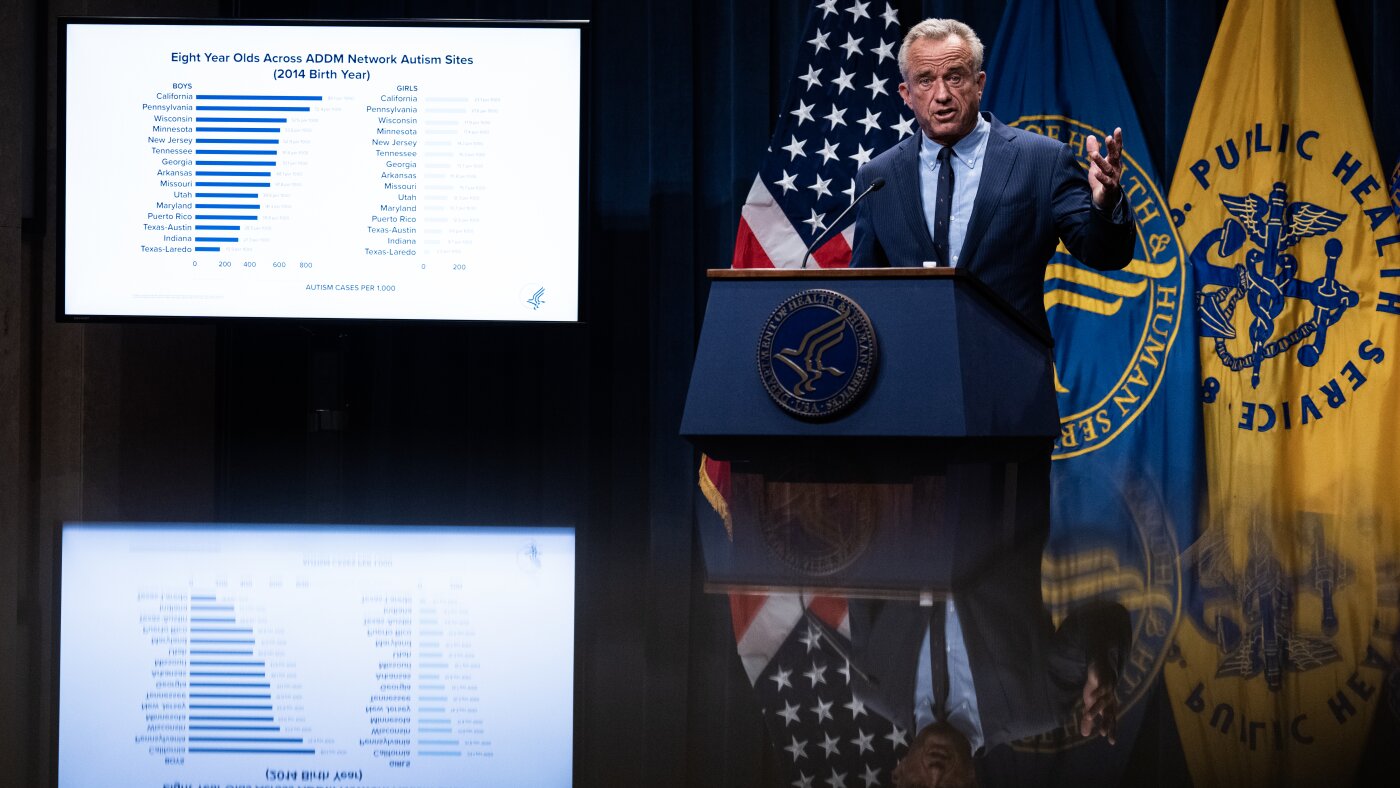
An independent panel of autism experts will meet in Washington, D.C., soon to discuss and challenge the views of the current government on autism spectrum disorder. This new group, called the Independent Autism Coordinating Committee, aims to provide a science-based perspective that contrasts sharply with the existing Interagency Autism Coordinating Committee.
This meeting is particularly noteworthy as it follows the recent appointment of 21 new members by Health and Human Services Secretary Robert F. Kennedy Jr. Many of these members support Kennedy’s idea that vaccines may cause autism—a claim repeatedly debunked by the scientific community.
Prominent figures like Helen Tager-Flusberg, a professor emerita at Boston University, voiced their frustration about the selection process. She believes it embodies a narrow ideology that misrepresents the vast autism community and current scientific understanding. Alison Singer, president of the Autism Science Foundation, shared similar sentiments, calling the current committee’s composition ideologically driven rather than reflective of comprehensive autism science.
In a recent press release, Kennedy asserted that his appointments were “the most qualified experts.” However, the Independent Committee includes seasoned experts, including five former members of the federal group and two former directors of the National Institute of Mental Health.
Despite these credentials, Eric Garcia, author of We’re Not Broken: Changing the Autism Conversation, highlighted a lack of representation for autistic individuals in discussions that directly affect them.
The Independent Autism Committee is aiming to refocus attention on significant research questions. Singer stated, “Every dollar spent debating vaccine causes is a dollar we lose for understanding autism.” This committee seeks to investigate profound autism, which encompasses nonverbal individuals requiring high levels of support.
Tager-Flusberg plans to highlight innovative ways to use technology to improve communication for nonverbal autistic individuals.
This move also parallels actions taken by scientists last year regarding the Trump administration’s vaccine-related policies. The Vaccine Integrity Project emerged at the University of Minnesota to counter those changes and has collaborated with key medical organizations to establish vaccine schedules based on sound research.
While the Independent Autism Committee plans to communicate findings to Congress and engage with major research organizations, its influence may be limited due to its non-governmental status. Nonetheless, private funding for autism research is on the rise, and committee members are eager to ensure that it’s utilized effectively. This growing interest in autism research may lead to new breakthroughs in understanding and supporting those affected by this condition.
For ongoing insights into autism research and advocacy, explore more at the Autism Science Foundation.
