
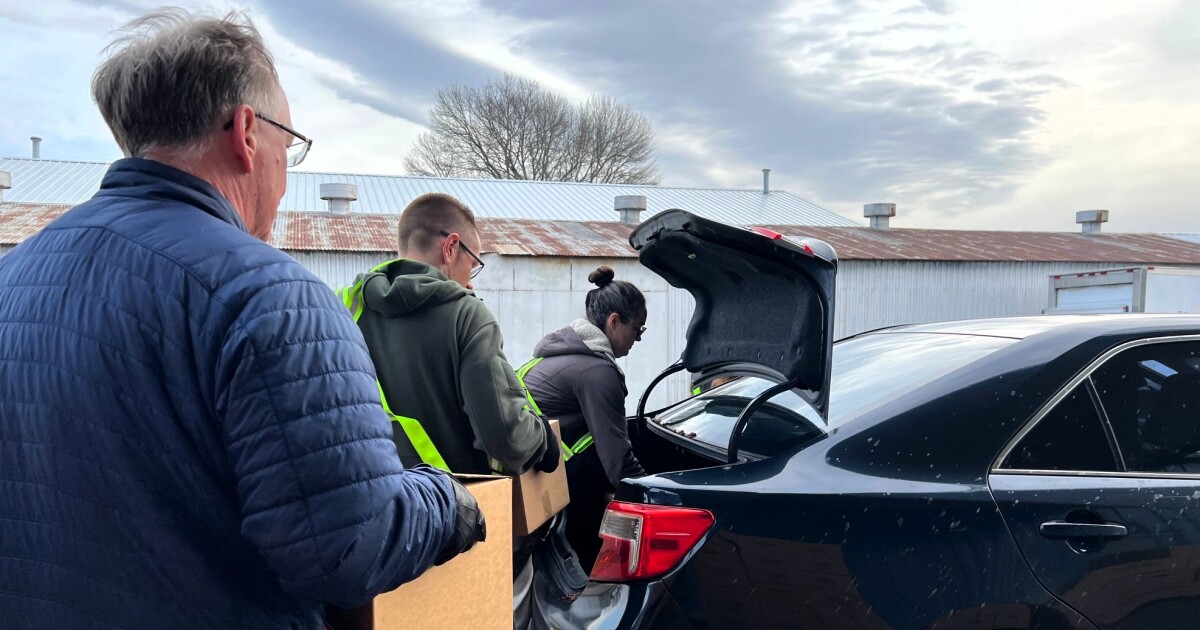
On the second Friday of March, DoorDash drivers gathered at Shared Harvest Foodbank in Fairfield, Ohio, just north of Cincinnati. Instead of delivering takeout, they filled their cars with boxes of groceries.
Program coordinator Lily Austin greeted the drivers, “You have 10 deliveries today?” she confirmed before explaining the process. “These boxes are for homebound seniors. Each person will receive one of these 40-pound boxes, which includes a block of cheese.”
Shared Harvest began this delivery method during the COVID pandemic and continues to provide nearly 500 meals to seniors each month.
The Delivering for Rural Seniors Act
Recently, Senators Jon Husted and Mark Kelly introduced the Delivering for Rural Seniors Act. This proposed law would create a three-year program to expand home delivery for the Commodity Supplemental Food Program. This program offers nutritional help to seniors aged 60 and above who are living below the poverty line. In Ohio, about 30,000 residents qualify, but many can’t easily pick up their food.
Robert Zohfeld, from Shared Harvest, pointed out that seniors in Butler County often lack transportation or face medical challenges. They have limited delivery options, especially given Ohio’s vast rural areas. As Zohfeld noted, delivery services reach just 2,000 square miles of their five-county area.
Challenges in Rural Areas
Southeast Ohio faces unique challenges due to its geography. Many seniors live 30 minutes or more from the nearest grocery store. Alicia Miklos, director of the SE Ohio Foodbank, explained that mobility issues make it hard for seniors to access food.
Last year, a quarter of those served by the SE Ohio Foodbank were seniors, a number that has notably increased. “Living on a fixed income, many struggle to keep up with rising living costs,” Miklos said. These individuals often face tough choices between paying bills and buying food.
To tackle this, the SE Ohio Foodbank partnered with Meals on Wheels to bring food directly to homebound seniors, a model they wish to expand with additional funding.
Real-Life Impact
Instead of third-party services, Second Harvest Food Bank of North Central Ohio depends on volunteers to deliver meals. Erin Moore-Ondich, a program coordinator there, shared the real-life impact of these deliveries.
Many seniors may have cars but must choose between filling their gas tank or getting necessary medications. For some, mobility issues make it nearly impossible to stand in food lines. As Rosalie Martin, a former social worker, stated, arthritis makes it difficult for her to move. “Having deliveries is fantastic because I don’t have family that can help,” she said.
With more funding, organizations like Second Harvest could help even more seniors like Martin. As Moore-Ondich remarked, “There is definitely a huge need. I receive calls every day.”
The Delivering for Rural Seniors Act is currently with the Senate Committee on Agriculture, Nutrition, and Forestry, but its potential impact could be significant for many Ohio families.
For additional details, you can check the U.S. Department of Agriculture and the news release on this proposed legislation here.
