
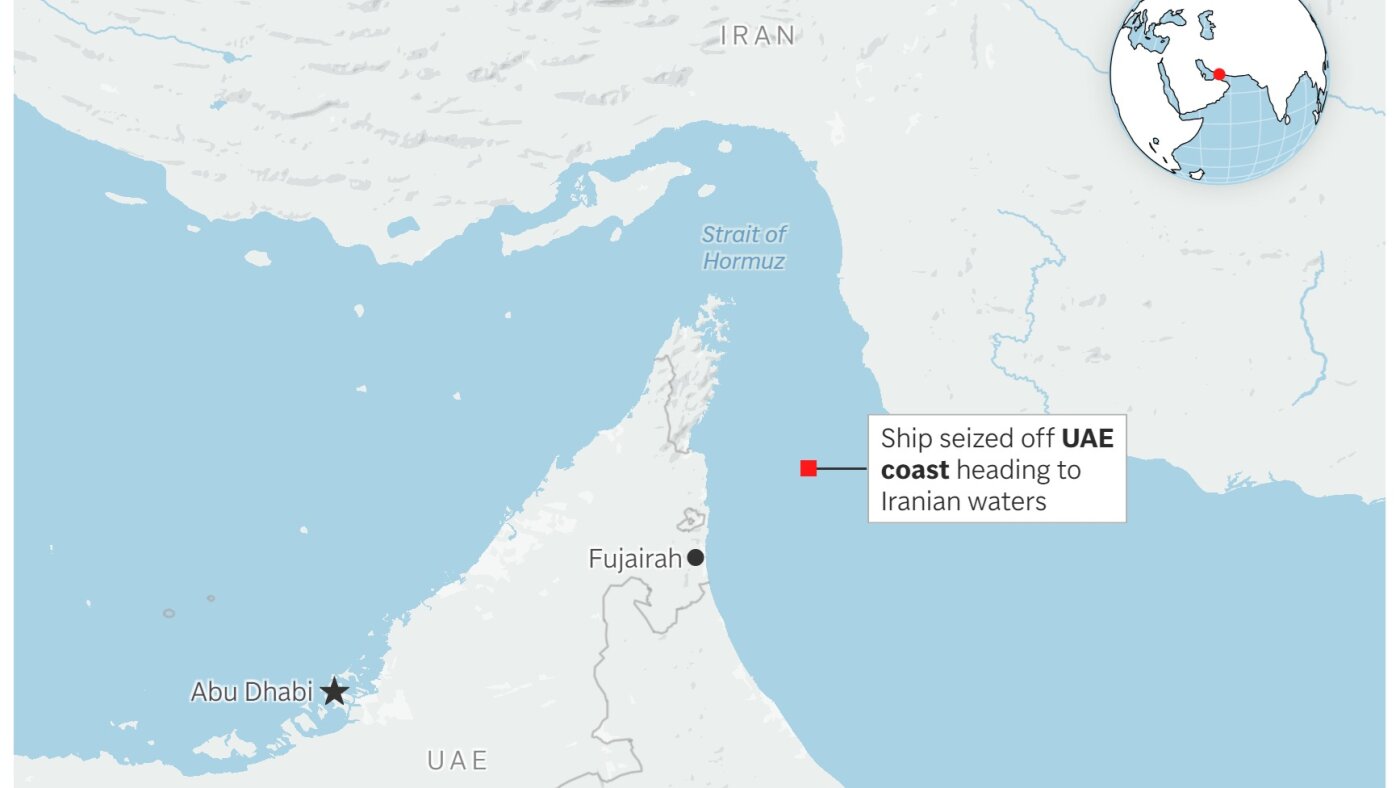
DUBAI, United Arab Emirates — Recently, tensions heightened in the Strait of Hormuz as two significant incidents unfolded. A ship anchored near the UAE was seized and headed towards Iran, while another cargo vessel sank off Oman after being attacked. These events reflect ongoing unrest in the region.
It’s unclear who is behind these actions, but they coincide with Iran’s assertive claims over this crucial waterway. Iranian officials have reiterated their right to take control of oil tankers linked to the U.S.
The Strait of Hormuz is vital; approximately 20% of the world’s oil passes through it. Such control by Iran threatens global oil supply and has already sent fuel prices soaring. The U.S. and Iran have been in tense discussions about stabilizing the situation, but incidents in the strait continue to complicate the dialogue.
Just days ago, U.S. forces engaged Iranian oil tankers attempting to breach a blockade. The ongoing conflict is a significant issue, especially as U.S. President Donald Trump met with China’s Xi Jinping, both agreeing on the need to keep the strait open.
Reports from the UK Maritime Trade Operations indicate that the seized ship was taken by unauthorized personnel while anchored off the UAE. The British military is monitoring the situation, confirming the ship is moving towards Iranian waters.
In another alarming event, an Indian-flagged cargo ship sank after a fire broke out, reportedly due to an attack en route from Somalia to Sharjah. Fortunately, all 14 crew members were rescued by Oman’s coast guard. India’s foreign ministry condemned the attack as “unacceptable,” although they did not specify the attackers.
Adding to these tensions, Iranian media claimed that Chinese ships began traversing the strait under newly established protocols. This occurred shortly after reports suggested Prime Minister Benjamin Netanyahu of Israel had visited the UAE, a claim that the UAE promptly denied. This visit highlights the complex dynamics in the region, especially given the UAE’s normalization of relations with Israel in 2020.
Expert Yoel Guzansky pointed out the increasing cooperation between Israel and Gulf nations, stressing the complicated reality where Israel is seen as defending Arab states against Iran. However, many in the UAE remain uneasy about Israel’s policies, particularly regarding Gaza.
On the diplomatic front, Iran has set five strict conditions for entering further negotiations with the U.S., including recognizing its sovereignty over the Strait of Hormuz. Such demands would effectively formalize Iran’s control over this critical international waterway.
As the tension continues, Iran’s senior vice president made clear Iran’s intention not to cede control over the strait under any circumstances. He stated, “It has always been our property,” highlighting Iran’s commitment to its claims.
Inevitably, the ongoing disputes in the Strait of Hormuz will impact shipping and insurance industries. U.S. military leaders believe Iran’s military ability has diminished but acknowledge that its threats still resonate strongly across business sectors. Admiral Brad Cooper, a top U.S. commander, mentioned that while the U.S. has the military might to ensure shipping safety, the situation demands careful navigation during sensitive talks.
As the situation continues to evolve, observers are closely watching how these incidents might reshape diplomatic relations and global oil markets.
