
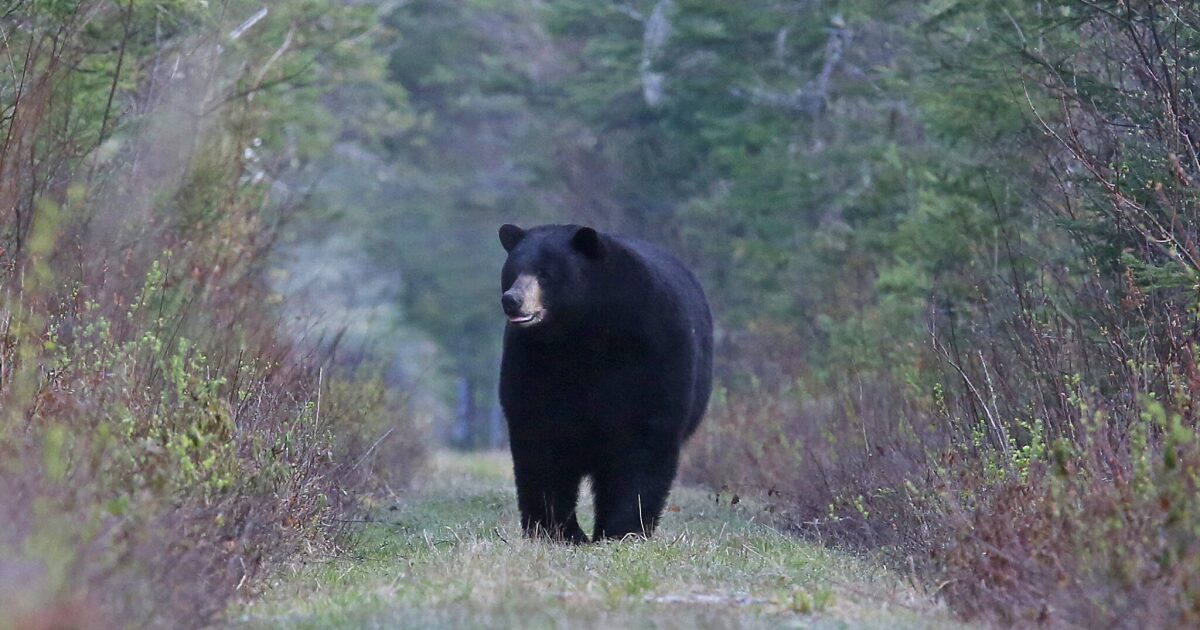
Black bears are doing well in New Hampshire, particularly in the White Mountains. However, more visitors to this area are creating challenges for these animals. Experts emphasize that managing human behavior is crucial for coexisting peacefully with bears.
A new rule requires overnight hikers in the Pemigewasset Wilderness to use bear-proof canisters for food. This move aims to keep both hikers and bears safe, especially as encounters between the two have risen. Forest Service officials are testing this requirement, which may expand to more areas in the future.
U.S. Forest Service ranger Ryan Twomey warns that habituated bears can become dangerous. He noted, “A fed bear is a dead bear,” meaning bears that get too comfortable around humans often end up facing severe consequences. Dan Bailey, the bear project leader for the New Hampshire Fish and Game Department, agrees. He believes a few bears have learned to seek food from humans, which leads to problematic behavior.
Statistics revealing the high number of bear encounters reflect an increased trend in “bear incidents.” These incidents include bears rummaging through campsites or begging for food, deviating from their natural instinct to flee. The last recorded bear-related death in New Hampshire was in 1784, emphasizing that while bears can be unpredictable, serious attacks are rare.
The current black bear population in New Hampshire stands at about 1.24 bears per square mile, which is higher than the target of 0.8. This growth is partly because the White Mountains offer vast, uninterrupted habitats. Interestingly, visitation to this area soared during the pandemic and remains high, resulting in more human-bear interactions.
To prevent negative encounters, bear canisters are essential. These sturdy containers can safeguard food and other items that might attract bears. Starting May 1, using certified canisters will be mandatory in the Pemigewasset Wilderness. Visitors can rent these for free at several locations.
If you encounter a bear, making noise while backing away is the best course of action. Feeding bears or leaving food unattended can foster dangerous habits.
As the bear population continues to thrive, it’s vital for all outdoor enthusiasts to understand they are intruding in the bears’ habitat. Respecting this balance is key for both species’ safety. For more information on black bears in New Hampshire, check out resources from the New Hampshire Fish and Game Department and the U.S. Forest Service.
