
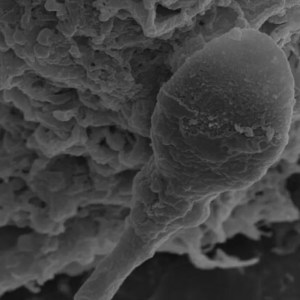
New research suggests human sperm struggles to navigate in space. Scientists conducted tests to see if conception could happen in a zero-gravity environment using a tiny plastic maze to simulate the female reproductive tract. The results, published in the journal Communications Biology, reveal that sperm’s ability to find their way is hampered by the lack of gravity.
This study is significant as it’s the first to specifically assess sperm navigation under space-like conditions. Dr. Nicole McPherson from the Robinson Research Institute at Adelaide University noted, “This is the first time we have evidence that gravity plays a key role in sperm navigation.”
The researchers used sperm samples from humans and two other mammals. They placed these samples in a device called a clinostat, which mimics microgravity and makes sperm disoriented. The results showed a marked drop in sperm successfully navigating through the simulated reproductive tract compared to when they were in normal gravity.
Interestingly, when the hormone progesterone was added—a hormone naturally released by eggs—more sperm could overcome the navigational challenges posed by microgravity. This finding suggests that understanding hormones could be essential for future reproductive success in space.
The study also looked at embryo development. It found that sperm faced about a 50% decrease in navigation ability but resulted in only a 30% drop in fertilization rates. However, the embryos that did form appeared of higher quality, indicating that perhaps the stressful conditions filtered for the strongest sperm.
The research aligns with historical space missions where scientists have long wondered how human biology would function beyond Earth. For instance, in the 1979 film *Moonraker*, James Bond’s encounter in space was purely fictional, highlighting our ongoing fascination with human reproduction in outer space.
While the findings are promising, McPherson cautioned that significant challenges remain, especially with longer exposures to microgravity. After extended periods, fertilization rates and embryo quality worsened. This suggests that although microgravity may not outright prevent reproduction, it may complicate it significantly.
As we aim to become a multi-planetary species, understanding these details becomes essential. “We are far from producing the first space baby,” McPherson noted, highlighting the need for further research to address these complex challenges.
This study, in partnership with the Andy Thomas Centre for Space Resources, emphasizes that while healthy embryos can form under specific conditions in space, much work remains to be done in this area. The journey of discovering how to reproduce in space is just beginning.
Source link
Human sperm, Adelaide University, Nicole McPherson, zero-gravity, lost in space, space shuttle, research, gravity
