
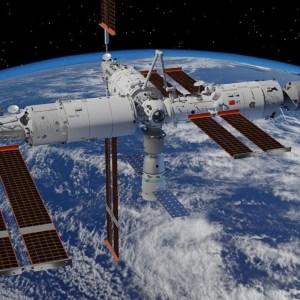
China has made a groundbreaking move by sending synthetic human embryo models to the Tiangong space station. This is the first time scientists are studying human embryonic development in space. The aim? To see if early human development can happen normally in microgravity, a condition where gravity is much weaker than on Earth.
The experiments are part of the Shenzhou 19 mission. What they are studying won’t involve actual fertilized embryos. Instead, they are using synthetic models called blastoids, created from stem cells. These blastoids resemble a human blastocyst, the early stage of development typically seen five days post-fertilization. This is significant because working with real embryos raises numerous ethical and legal issues, but synthetic models are viewed differently in research.
Inside the Tiangong station, these blastoids are housed in a special automated culture device. This device keeps the right temperature and nutrients, enabling the scientists to monitor changes over time. Advanced imaging systems will capture how these synthetic models develop, providing valuable data that will be sent back to Earth.
So, why does studying embryonic development in microgravity matter? Research shows microgravity impacts various biological processes. For instance, previous studies on mice in space revealed changes in hormone levels and reproductive functions. A recent study in 2023 demonstrated that mouse embryos cultured in microgravity developed but with lower success rates than those on Earth.
Human cells might react differently. The absence of gravity affects how cells communicate and develop. Understanding how these initial processes are impacted in space is crucial. If humans are ever to reproduce on long missions, like a trip to Mars, knowing how microgravity affects development is vital.
China’s mission extends beyond just studying embryos. The Tiangong space station serves as a hub for broader life sciences research. This includes exploring materials that could sustain human life on the Moon and studying other health effects of microgravity, such as changes in bone density and plant growth.
While using synthetic embryos in space isn’t about reproducing in the immediate future, the insights gained could significantly impact fertility treatments here on Earth. Understanding early embryonic development can help in assisted reproduction techniques.
The results from this mission are not yet available. The Shenzhou 19 is set to return to Earth in 2025, after which scientists will analyze the data collected. Researchers are eager to find out how well these blastoids developed and what discoveries await in this uncharted territory of space biology.
For more insights on synthetic human embryo models, check out this helpful article.
Source link
human embryo, Tiangong space station, human reproduction, China, human development, Earth's gravity, blastocyst stage, developmental biology, human embryos, microgravity
