
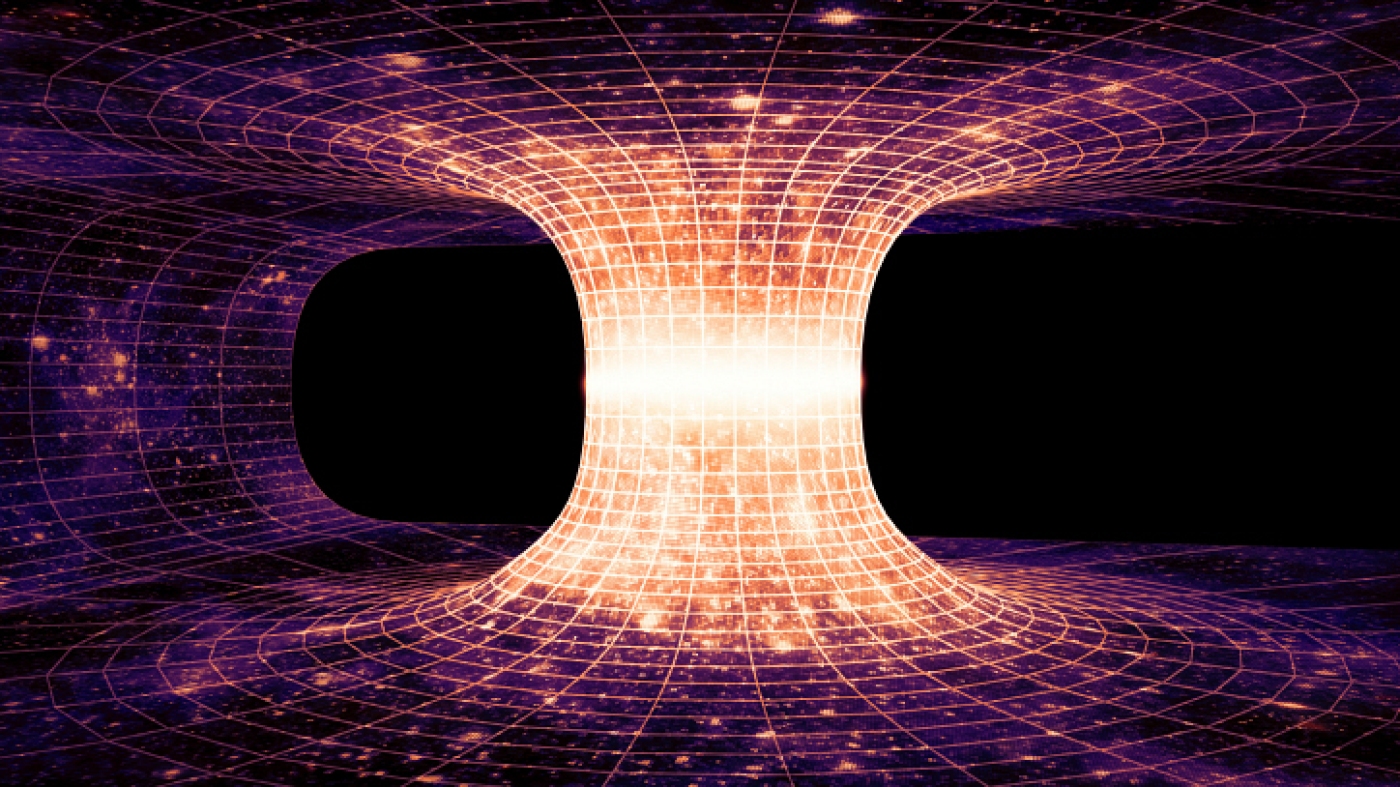
In the fifth season of *Stranger Things*, a science teacher named Scott Clarke talks about wormholes. He asks his class what’s cool about them, and his bright student Erica jumps in, explaining that wormholes let matter travel between galaxies without the hassle of crossing space. This fascinating concept ties into both science fiction and serious science.
Wormholes are often seen in movies and books, from Carl Sagan’s works to *Interstellar*. They are a fun way for storytellers to explore the idea of time travel. The term “wormhole” was popularized by physicist John Archibald Wheeler in 1957. Albert Einstein and Nathan Rosen first proposed the idea in 1935, describing a theoretical tunnel connecting two points in space-time—now called an Einstein-Rosen bridge. As Sean Carroll, a theoretical physicist at Johns Hopkins University, describes, this idea serves as a useful model for scientists today. He notes that wormholes might allow for cosmic shortcuts, enabling quick travel across vast distances.
However, it’s important to remember that wormholes are still theoretical. Obstacles abound, making them tough to exist or use practically. Carroll humorously emphasizes that if one could travel faster than the speed of light, time travel could become a reality. The idea is intriguing, and many use it in studies like quantum entanglement. Yet, challenges remain before any practical applications come to light.
As the years went on, Hollywood kept using wormholes in various stories. Viewers loved the idea of instant travel to other worlds. Carroll has even worked as a consultant for filmmakers trying to understand these concepts, like when he pitched the wormhole idea for the movie *Thor*. Such pop culture references have, in turn, helped scientists discuss wormholes more frequently.
Interestingly, in 2022, a team of scientists claimed to have created a “holographic wormhole” using a quantum computer. Some experts criticized the claims, stressing that they could mislead the public about the actual existence of wormholes. This incident highlights the delicate balance between speculative science and public understanding.
Science educators like Carsten Welsch from the University of Liverpool have harnessed the excitement of shows like *Stranger Things* to engage students. Welsch finds that linking scientific concepts to popular culture can spark interest in physical sciences, especially among teens who might otherwise shy away from physics. He admires how the show represents scientific principles, like the “upside down” mirroring concepts in antimatter research.
Welsch hopes that shows like *Stranger Things* can inspire a new generation of scientists. With wormholes captivating imaginations, the potential for scientific inquiry seems limitless. Though they might not lead us to other dimensions just yet, they open doors for discussions about our universe and the mysteries it holds.
