
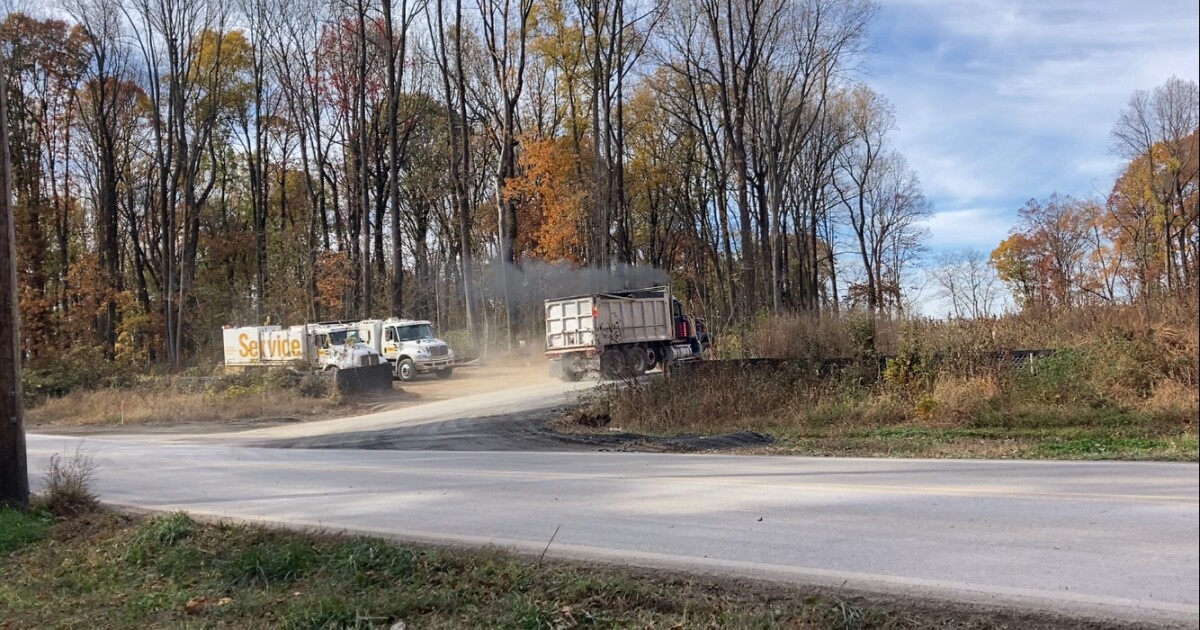
Residents near Quantum Frederick, a massive data center project in Frederick County, are expressing serious concerns over health and safety. Dust clouds fill the air, and mud coats local roads. They worry heavy construction traffic could harm their homes and the environment.
Quantum Frederick spans 2,100 acres north of Adamstown. Launched in 2021, it aims to host private data centers and provide “shells” for companies needing server space. The site used to be an Alcoa aluminum smelting plant, which closed in 2010. Parts of the land are now a brownfield, meaning they require careful environmental management due to previous contamination.
Hope Green, a long-time resident and farmer, fears for her well water. Recently, she learned the water from her well was contaminated. “If there are bad substances in my water, it’s likely in the soil too,” she said. Green and others are calling for an independent environmental study before further work continues on the site.
State Senator Karen Lewis Young proposed legislation for such a study, but Governor Moore vetoed it, citing financial concerns as Maryland faces a significant budget deficit. Despite this setback, Frederick County is conducting free well water tests for some nearby residents. Green raises questions about the selection process for these tests, as she believes more transparency is needed.
The construction site, managed by Rowan Digital Infrastructure, has created significant mud and dust, especially as vehicles traverse the area. Green mentions that dust clouds have been prevalent throughout the summer, raising concerns about airborne pollutants.
A report from the Sage Policy Group indicates the Quantum Frederick project could take 15 years to complete. Many residents believe the local roads are ill-suited for the increased traffic from construction vehicles. “These roads can’t handle this kind of weight,” Green said. She and her neighbors stress the need for designated routes for heavy machinery away from residential areas to minimize disruption.
Ultimately, as the county continues to develop plans to zone specific areas for data centers, public input remains crucial. A recent planning commission recommendation to limit construction to the Quantum Frederick area has been met with mixed feelings from the community. A public hearing will soon provide a platform for residents to voice their concerns.
This isn’t just a local issue; it mirrors a growing concern across the U.S. as data centers expand. A recent study found that over 70% of data center developments are located in regions with significant environmental risks, including water shortages and pollution. As reliance on digital infrastructure increases, finding a balance between development and community health will be essential.
For more information on the environmental implications of data centers, you can explore studies from reputable sources like the Environmental Protection Agency [EPA](https://www.epa.gov/). Understanding these dynamics can benefit communities as they navigate similar challenges in the future.
