
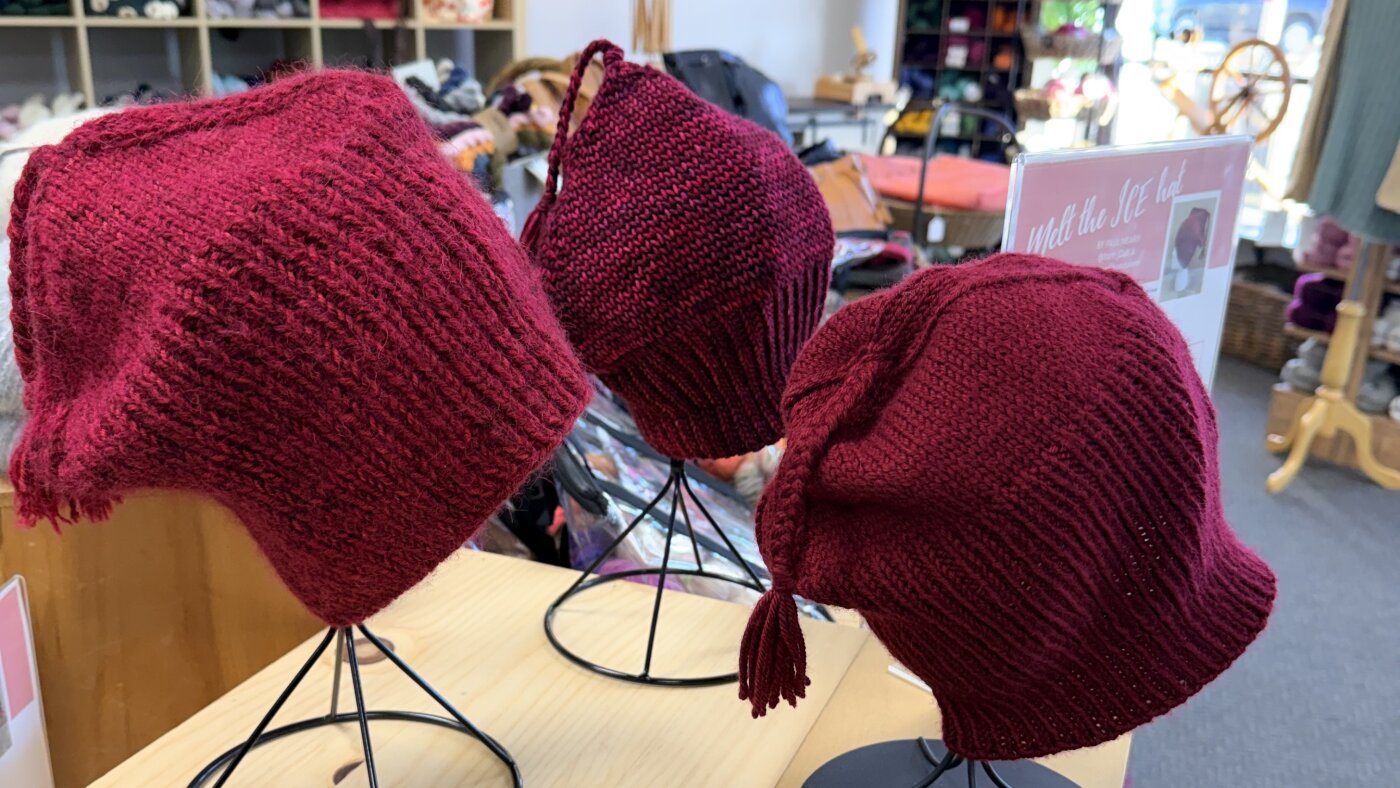
The weekly knitting meet-ups at Needle & Skein, a yarn shop in Minneapolis, usually buzz with laughter and chatter. But a recent session felt heavy. “It was just a collective exhaustion,” said Paul Neary, an employee at the shop. The tension stemmed from the looming presence of federal immigration officials and the heart-wrenching death of U.S. citizen Renee Good at the hands of an immigration agent. Just days later, another tragedy struck with the death of Alex Pretti.
“What’s happening here is so destructive,” said shop owner Gilah Mashaal. The group felt compelled to respond in a supportive, creative way.
They picked up their knitting needles and started crafting a symbol of their protest: the “Melt the ICE” hat. This striking red beanie, adorned with a braided tassel, was designed by Neary and quickly gained traction. Since launching the pattern for just $5, they’ve raised nearly $400,000. So far, $250,000 has been donated to two local organizations that support immigrant housing, the STEP and the Immigrant Rapid Response Fund.
Social media has played a big role in spreading awareness of their movement, with people around the globe—from Israel to South Africa—sending messages of solidarity. Now, red yarn is sold out in many Minneapolis knitting stores.
Neary chose a pattern inspired by a Norwegian hat worn during protests against Nazi occupation in the 1940s. Known as “nisselue,” these hats symbolized peaceful resistance. They offered hope during bleak times. Mats Tangestuen, director of Norway’s Resistance Museum, highlighted the significance of this connection, noting that the resurgence of such a notable piece of history in Minnesota was surprising and encouraging.
Neary sees parallels between then and now. Professor Peter Fritzsche from the University of Illinois noted that, while the scale is different, many in Minnesota feel as if they are living under an occupying force.
At her shop, Mashaal usually steers clear of politics. However, as a Jewish woman and an immigrant, she felt an obligation to act. “Knitting fosters community, but it can also be a form of protest,” she said. She is determined to support those caught in the crosshairs of federal actions.
Wendy Woloson, a history professor and fellow knitter, noted that crafting has long been a practical way for communities to come together. Just as knitters have provided support by making hats for those undergoing treatment or welcoming newborns, the red hats now represent solidarity against the injustices faced by immigrants.
While it’s yet to be seen if the red hats will become a lasting symbol, Neary believes that every knit made contributes to community well-being. “Not everyone is cut out for the front lines,” he said. In response to skepticism about the movement being mere “performative activism,” Mashaal pointed to the real impact—the financial support raised for the community.
This knitting endeavor, rooted in compassion, shows how creative efforts can unite individuals around a common cause, pushing back against larger systemic issues while fostering a sense of community.
For more insights on the history of protest symbols, see the work from the Resistance Museum.
