
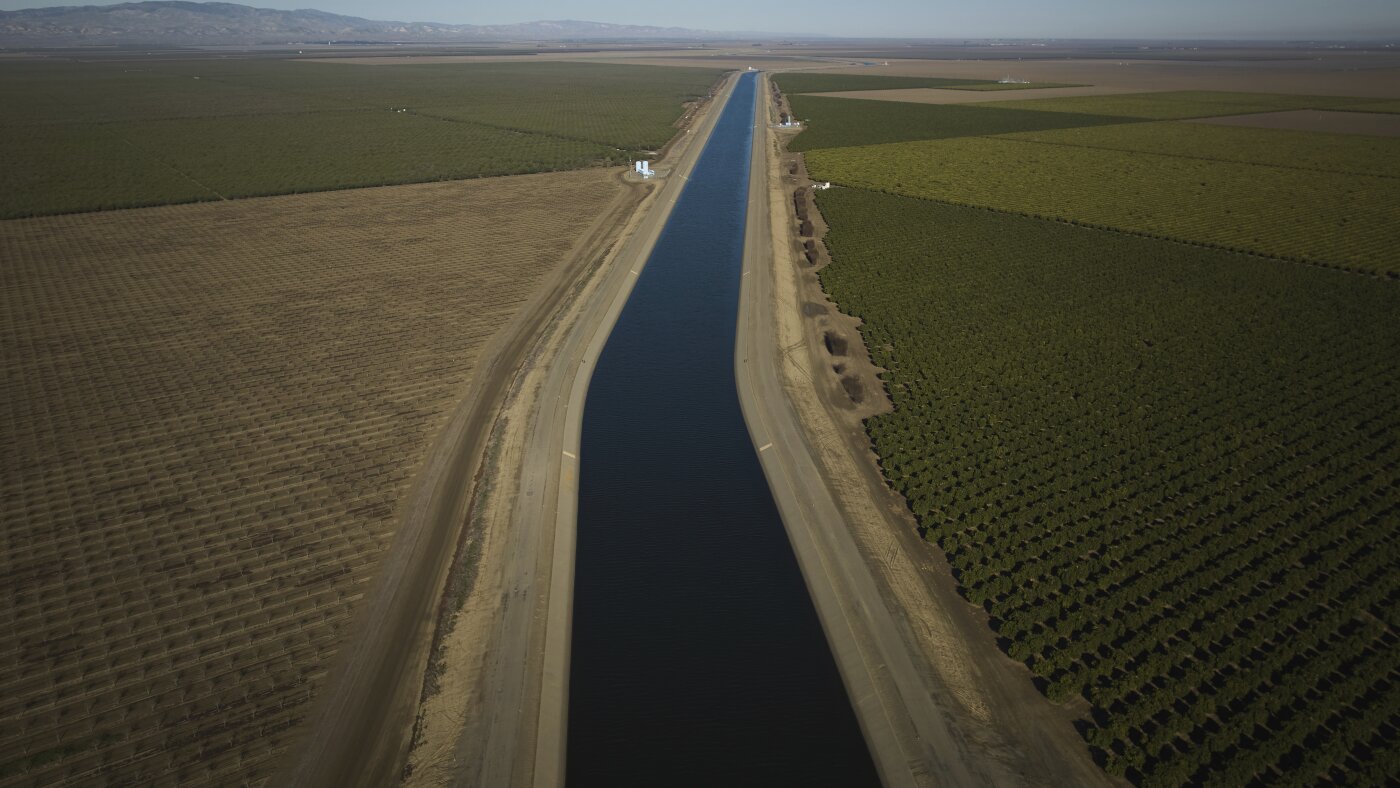
A large solar project is set to transform farmland in California’s San Joaquin Valley. This initiative aims to create a solar farm covering 200 square miles, generating 21,000 megawatts of electricity. It could power entire cities while giant batteries will store energy for peak demand times.
Farmers support this endeavor because they face water shortages, preventing them from cultivating their land. Ross Franson, who leads Woolf Farming, explains, “If we had the water, we would farm it. But the reality is, you don’t.”
The Westlands Water District, where Franson serves on the board, has long championed farmers’ rights in this area. Historically, this district helped secure irrigation water from distant rivers. But lately, due to climate change and legal restrictions, water supplies have dwindled. Farmers can no longer rely on over-pumping their underground aquifers, as new regulations limit that practice.
As a result, many farmers are leaving large areas of land unplanted. Some fields are now fallow to prevent toxic minerals like selenium from harming wildlife. Seeing a chance to use this unused land for solar development, Golden State Clean Energy proposed a massive solar project. Their partner, Patrick Mealoy, emphasizes the project’s scale is essential to justify building expensive power lines that will transport electricity to major cities.
Getting approval for the power lines is a key challenge. Yet, community support is evident. Franson expressed immediate enthusiasm for the project, seeing it as essential for the future of local agriculture. After lengthy discussions, the Westlands Water District’s board voted to proceed, signifying a shift in land use in the face of environmental changes.
Grace Wu, an environmental scientist at UC Santa Barbara, highlights that the proposed site is ideal for solar farms since it doesn’t disrupt valuable wildlife habitats. The income generated from solar installations offers farmers new opportunities, allowing them to maintain agricultural operations with less reliance on water.
However, concerns linger among local residents about how this project will impact job availability. Rey León, the mayor of Huron, wants to ensure that revenue flows back into the community for education and job training in the solar industry. He emphasizes that the local populace has contributed to sustaining the region and should not be overlooked in future developments.
In the broader context of California farming, this situation might serve as a model for other agricultural communities facing similar issues. According to research from the Public Policy Institute of California, farmers might soon have to stop cultivating crops on a significant portion of land—potentially up to 1 million acres. This leaves vast areas primed for solar development.
Despite the initial adjustments and challenges, the solar project in the San Joaquin Valley symbolizes hope and change for both farmers and the community, paving the way for a new agricultural future reliant on renewable energy. For more insights on solar energy’s role in agriculture and water management, check out this PPIC study.
