
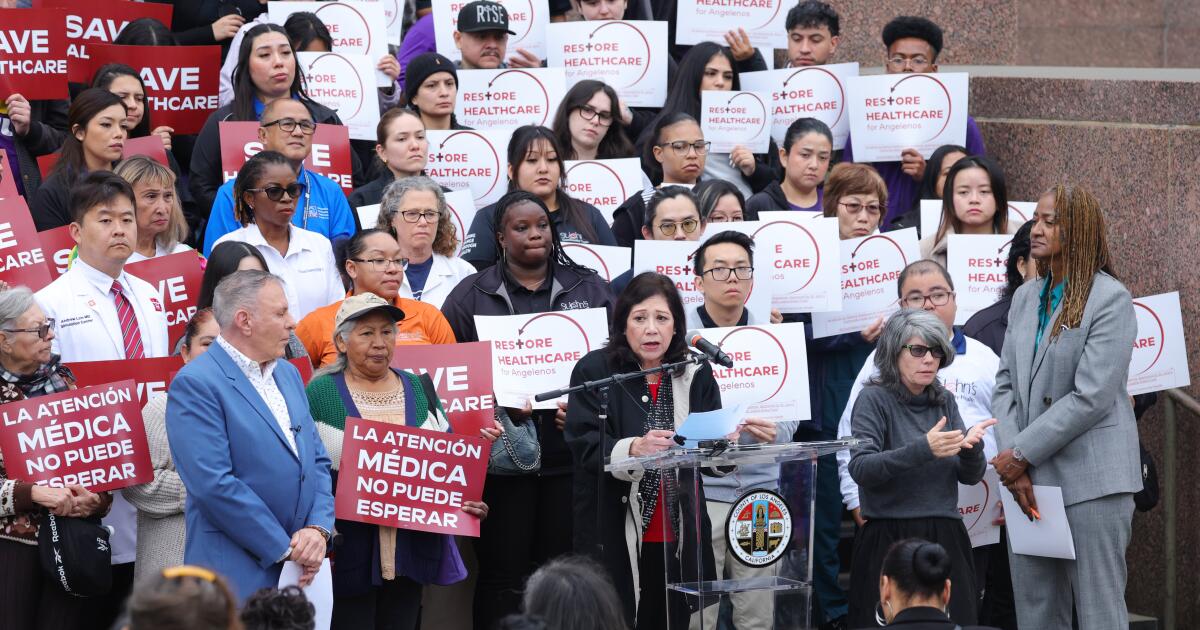
L.A. County is gearing up for a crucial vote this June. Voters will decide whether to raise the sales tax by half a cent. This move aims to help the public health system cope with significant federal funding cuts.
The county’s Board of Supervisors approved the measure, expecting it to bring in around $1 billion a year. This revenue would support local hospitals and clinics facing budget constraints. If passed, the tax would be in place for five years.
Supervisor Holly Mitchell, who proposed the ballot, emphasized the urgency of the situation. She noted that cuts from the One Big Beautiful Bill Act could strip over $2 billion from the county’s health services in three years. “Millions rely on us when the federal government falls short,” she said.
Healthcare advocates, including the group Restore Healthcare for Angelenos, are backing the tax. They argue that it’s vital to prevent job losses in the healthcare sector and keep emergency rooms available. Mitchell drew a painful lesson from the past, recalling the 2007 closure of the Martin Luther King Jr./Drew Medical Center. Many residents were left without access to vital services.
Opposing voices exist too. Supervisor Kathryn Barger was the only one to vote against the tax. She believes the county should seek state help and expressed concerns about how the funds would be allocated, fearing they may not be exclusively earmarked for healthcare.
The proposed tax hike would push the sales tax rate in L.A. County up to over 11% in some cities. Areas like Palmdale and Lancaster could see rates as high as 11.75%, which puts extra pressure on low-income families.
Barbara Ferrer, head of the county’s Public Health Department, painted a dire picture of the potential consequences if funding doesn’t improve. She warned about the possibility of shuttered emergency rooms and job losses for tens of thousands of healthcare workers.
While some criticize the measure as potentially burdensome, others find it essential. The California Contract Cities Association, a coalition of local cities, fears the tax may disproportionately affect the people it’s meant to help. Supervisor Janice Hahn noted rising concerns from businesses about shoppers moving to neighboring counties to avoid higher taxes.
Similar struggles are not unique to L.A. County. Santa Clara County voters recently approved a sales tax increase to bolster their public health system amidst funding challenges.
In an era where public health funds are critical, L.A. County faces a pivotal decision that reflects broader trends in local governance and funding for essential services.
Source link
