
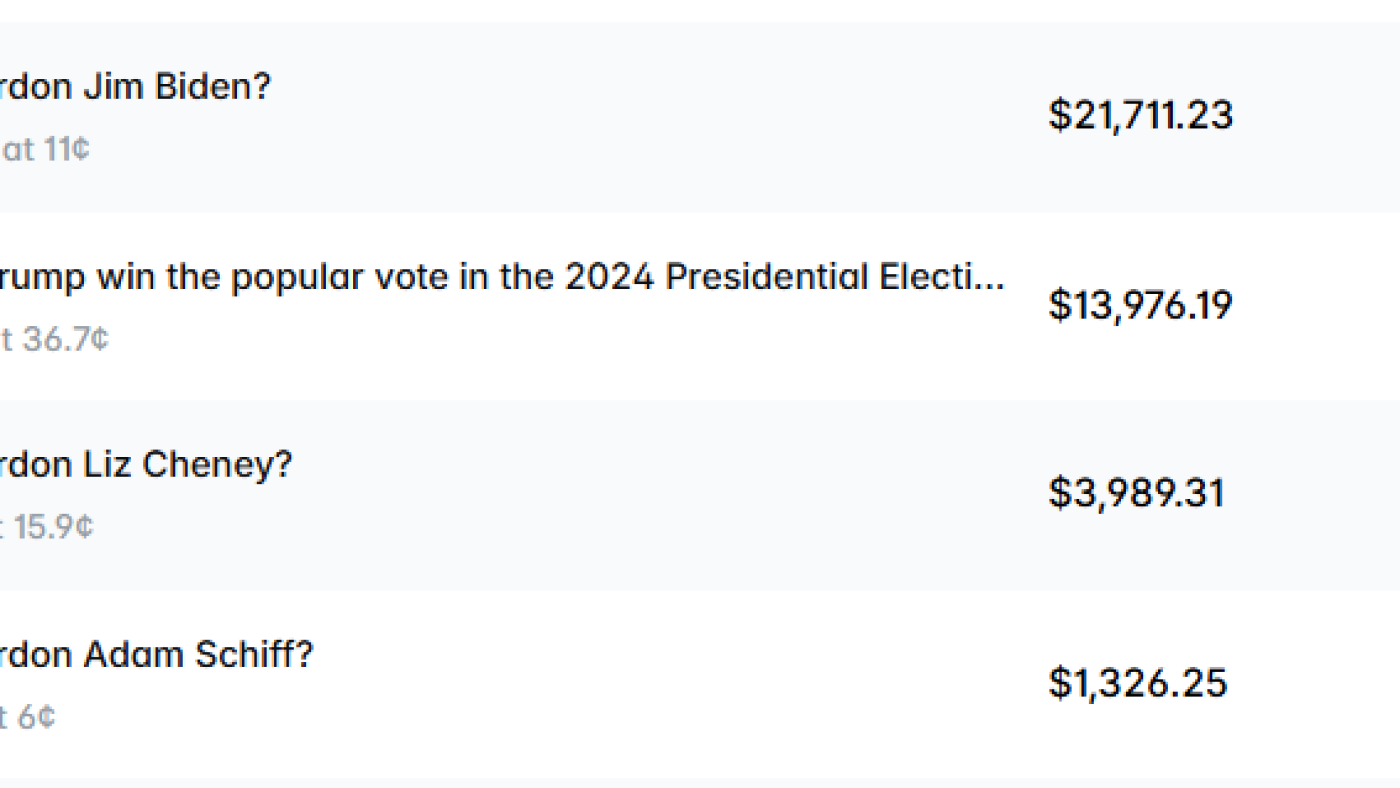
In the final moments of President Biden’s presidency, a savvy trader on Polymarket turned a massive profit, betting nearly $300,000 on pardons Biden would issue before leaving office. Interestingly, these bets paid off when Biden granted pardons to several high-profile figures, including his son, Hunter Biden, and former lawmakers such as Liz Cheney and Adam Schiff.
Bubblemaps, a data analytics firm, analyzed these transactions and highlighted the trader’s successful strategies. They noted the odds for these pardons were near zero just before the news broke, suggesting that this anonymous bettor had likely inside information. Joshua Mitts, a Columbia Law School expert, emphasized that the probability of such a win through luck was virtually nonexistent. He indicated that the bettor could have had access to privileged information, leading to these informed predictions.
Exploring further, the analysis found a potential connection between two Polymarket accounts that had a remarkable success rate with bets on Biden’s pardons. Nick Vaiman from Bubblemaps explained that the two accounts shared a deposit wallet, hinting at collaboration or possible insider knowledge.
The landscape of prediction markets like Polymarket and its competitor Kalshi has grown, especially during the Trump administration. This surge isn’t just about quick profits; research suggests the prediction market industry could reach $1 trillion by 2030. Trump’s family, including Donald Trump Jr., has even taken on advisory roles in these firms.
However, with high stakes come serious questions. Concerns over insider trading and ethical practices continue to surface. Recent events have shown traders making considerable gains following pivotal international events, such as military actions or political shifts, raising alarms about the potential exploitation of confidential information.
Despite its challenges, the US government has opted for a lighter regulatory touch on prediction markets. The Commodity Futures Trading Commission oversees Kalshi, prohibiting bets related to war and terrorism, while Polymarket operates under a different set of rules that allow greater anonymity for users. The current landscape is a far cry from traditional betting markets, igniting debates on the ethical implications and the need for stronger regulations.
Nizan Packin, a law professor, points out that as these markets grow, society must establish guidelines to address the risks involved. She advocates for well-defined regulations to mitigate the gray areas surrounding prediction betting, echoing the need for caution as public interest in such markets continues to rise.
Overall, the events surrounding Biden’s last-minute pardons illuminate the intersection of politics, finance, and ethics in modern prediction markets. As these platforms evolve, they challenge our understanding of information, strategy, and the moral responsibilities of those operating within them.
Source link
