
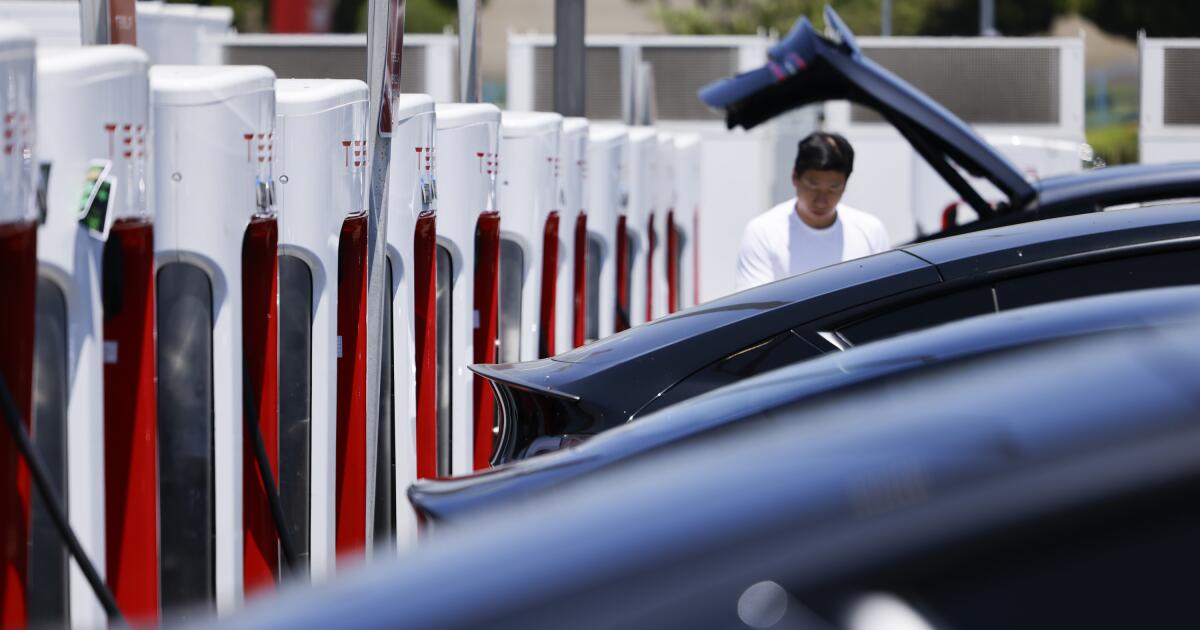
U.S. electric vehicle (EV) charging networks are striving to meet rising demand, especially with events like the Iran conflict driving up gas prices and sparking increased interest in EVs.
In the first quarter alone, there were 605 new public, high-speed charging stations across the country, marking a 34% increase from last year, according to Bloomberg News. Now, nearly 13,500 charging spots are available, up 25% from a year ago.
The surge in charging stations came at a pivotal moment. As gas prices soared—now averaging $4.82 per gallon, a 37% rise since the Iran conflict began—more Americans began exploring electric vehicles. Sales of Tesla, while still below analyst predictions, saw improvement compared to past months.
Ingrid Malmgren, a senior policy director at Plug In America, explained that policies from past administrations have hindered EV growth, but consumer enthusiasm remains strong. “Once people drive an EV, they don’t want to go back to gas,” she noted.
The private sector is largely driving this demand. Truck stops like Pilot Flying J have added chargers at numerous locations, aiming to provide convenient services for EV drivers. Pilot’s head of electrification, Brandon Trama, emphasized the need to match the convenience expected by all drivers.
Charging networks are adapting to meet these needs as well. Many EV owners live in apartments, making public charging crucial. Newer, efficient chargers deliver power faster, enhancing profitability and encouraging more EV usage.
There’s a positive cycle forming: faster chargers draw more drivers to electric cars, as noted by Paren, a company focused on EV infrastructure. Despite a downturn in EV sales, Paren projects an 8% growth in fast-charging stations by 2026. Bill Ferro, cofounder of Paren, mentioned that operators are planning for the long term, focusing on infrastructure development for 2035.
As of late last year, there were 7.4 million plug-in EVs on U.S. roads, representing nearly 3% of all registered vehicles, according to S&P Global Mobility. However, the number of cars to available chargers remains disproportionately high compared to other developed nations.
With rising fuel prices, many who initially planned to buy gas-powered cars are rethinking their options. If gas prices remain high, it’s likely that even reluctant buyers will consider electric alternatives.
In summary, as charging infrastructure rapidly expands and gasoline prices climb, the EV market is poised for significant growth. This shift not only helps the environment but offers greater choice for drivers looking for more sustainable options.
For more information, see Bloomberg News on recent EV trends.
Source link
