
In a significant move for travel in India, Railway Minister Ashwini Vaishnaw recently announced plans for dedicated passenger corridors aimed at speeds of up to 350 km/h. This initiative addresses the increasing demand for rail travel and aims to reduce congestion on current routes.
During his speech at the International Railway Equipment Exhibition, Vaishnaw highlighted India’s need for improved rail capacity, especially given its 1.4 billion population. The new passenger-only lines will feature modern signaling systems and Operations Control Centres, ensuring high safety standards.
The ambitious plan includes constructing about 7,000 kilometers of new corridors over the next two decades. According to the minister, this project is set to transform long-distance travel by enhancing punctuality and providing faster, smoother journeys.
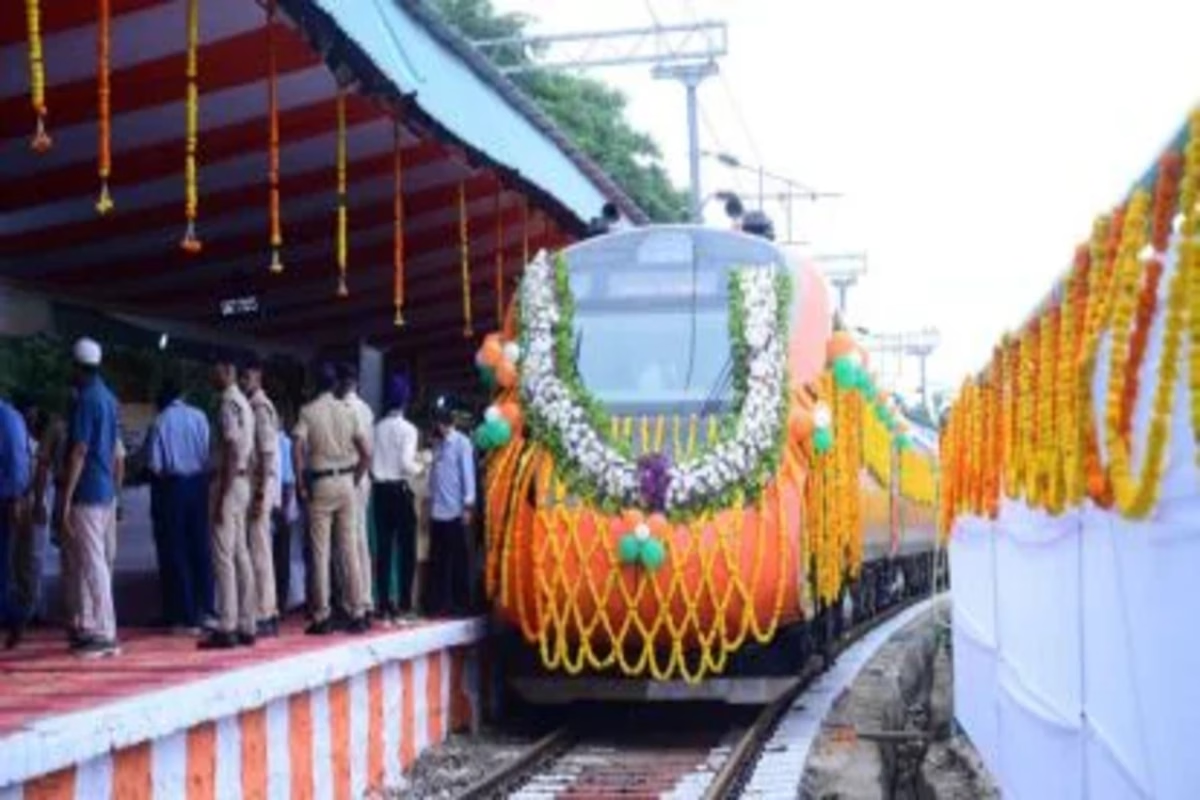
India’s train technology is advancing rapidly. With the Vande Bharat 3.0 already hitting 100 km/h in just 52 seconds, it’s outperforming several trains in countries like Japan and Europe. The upcoming Vande Bharat 4.0, expected in 18 months, promises even greater comfort with improved seating and upgraded facilities. Vaishnaw hopes that this model will set a global benchmark in quality.
Emphasizing the government’s ‘Make in India’ initiative, Vaishnaw stated that all new rail technologies will be developed in India. He insisted on strict quality control and warned suppliers against providing substandard products, which could lead to blacklisting.
Additionally, India has introduced its first hydrogen-powered train, showcasing its commitment to sustainable travel. This innovative train, with a powerful 2,400-horsepower engine, was developed entirely within the country. Vaishnaw stated, “We will design it ourselves; there will be no imports.”
With these developments, Indian Railways is poised to redefine travel, emphasizing high-speed, sustainable options and establishing India as a leader in modern rail technology.
For further context, a 2022 report from the International Union of Railways predicted that the global high-speed rail market will reach $115 billion by 2025, with countries like India playing a crucial role in its growth. Moreover, user feedback on social media shows enthusiasm for these advancements, with many expressing hope for shorter travel times and enhanced experiences.
For more on train technology advances, you can check out this comprehensive report from the [International Railway Journal](https://www.railjournal.com).
Source link
Vande Bharat Train
