
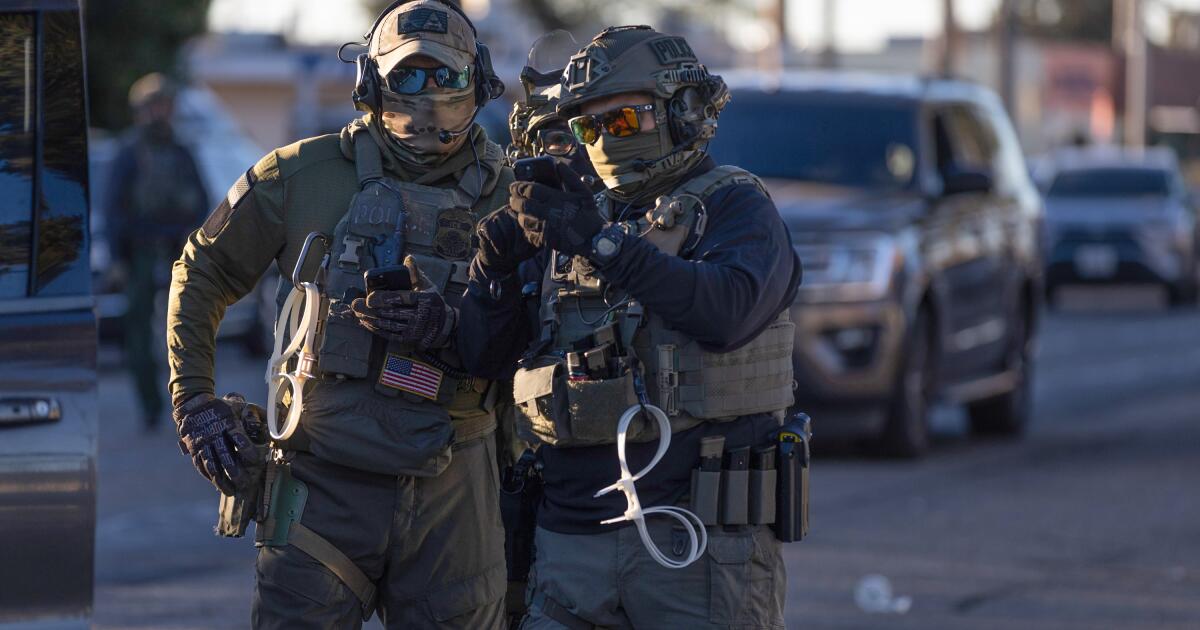
A federal lawyer from the Trump administration asked a judge in Los Angeles to stop a new California law that bans most law enforcement officers from wearing masks, including ICE agents. Tiberius Davis, representing the U.S. Department of Justice, argued that this groundbreaking ban could lead to chaos in law enforcement across the country.
During the hearing, Judge Christina A. Snyder questioned the need for such a ban. “Why can’t they perform their duties without a mask? They did that until 2025, did they not?” she asked.
This legal battle began after California Governor Gavin Newsom signed the No Secret Police Act and the No Vigilantes Act. These laws require law enforcement to display identification while on duty and make it illegal for them to wear masks. Violations would be categorized as misdemeanors.
Federal officials claim these new rules risk the safety of ICE agents and violate constitutional rights. They argue that excluding California state police from this requirement is discriminatory. The California Highway Patrol is mentioned as an exempt agency, while city departments like the Los Angeles Police Department must comply. Davis told the court that these laws primarily target federal authority.
This case arises amid rising public anger towards ICE, particularly after incidents involving the agency. For example, the shooting of Renee Good, a protester, by an ICE agent has intensified scrutiny of masked federal agents. Public statements, like those from California’s Department of Justice lawyer Cameron Bell, highlight that these laws serve the public interest by addressing real concerns about masked federal agents being mistaken for kidnappers.
Statistics indicate a significant rise in threats against ICE agents. Reports indicate an 8,000% increase in death threats and a 1,000% increase in assaults according to DHS. However, Bell disputes these figures, suggesting they may have been manipulated to exaggerate the dangers faced by ICE agents.
One notable case shared in court involved Andrea Velez, who recounted how her family mistook masked immigration agents for criminals. This experience highlighted the potential for community distress caused by masked law enforcement.
The hearing’s outcome could hinge on whether the law’s exemption for state officers is considered discriminatory. If allowed, California will be the first state to bar federal agents from concealing their identities while on duty. A ruling is expected soon.
As this issue unfolds, public sentiment continues to shape the dialogue on transparency and safety in law enforcement. More discussions are needed on how to balance the rights of officers with community concerns.
Source link
