
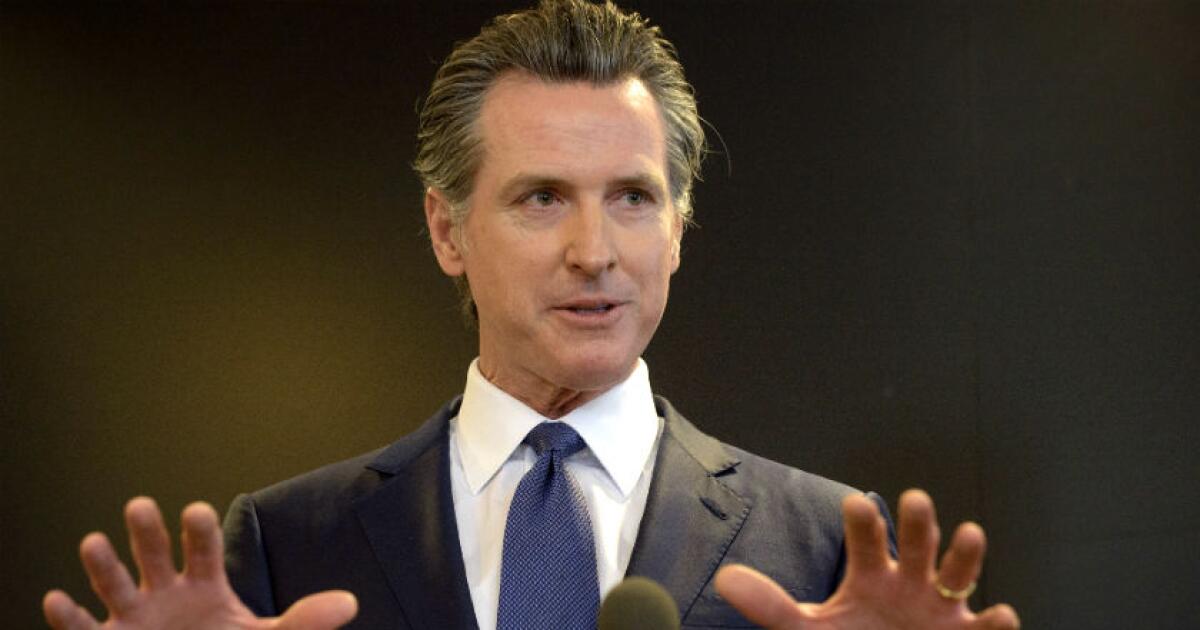
Hours after California Governor Gavin Newsom announced plans to challenge President Trump in court over the deployment of National Guard troops to Oregon, a federal judge issued a temporary restraining order to halt the deployment. This decision comes amid heightened tensions and ongoing protests in Portland.
Newsom viewed the ruling as a significant legal victory. He stated, “This ruling is a win for democracy. Attempting to use our soldiers for political purposes is not right. The rule of law has spoken.”
Officials from California and Oregon sought this restraining order after a memo revealed plans to deploy additional Guard troops from Texas. Oregon Attorney General Dan Rayfield emphasized that the judge’s order was crucial, noting, “What was unlawful yesterday is still unlawful today.”
The federal judge, Karin Immergut, underscored the seriousness of the situation. She questioned the government’s rationale for mobilizing troops, highlighting a potential circumvention of her earlier ruling. Constitutional law experts, like Elizabeth Goitein from the Brennan Center, echoed this sentiment, calling the deployment a clear attempt to bypass legal authority.
Jessica Levinson, a law professor, stressed that such federal troop deployments without local consent are unprecedented. She stated, “There hasn’t been anything like this in history where federalized troops are sent from one state to another against local officials’ wishes.”
Trump’s administration has previously faced criticism for deploying National Guard troops in various cities for what he termed “protection against crime.” Local leaders, particularly in Portland, have deemed these actions unnecessary.
Newsom has ramped up his criticism of Trump’s approach, declaring, “This administration is attacking the rule of law outright.” His frustration reflects a broader unease over the use of military force in civilian situations.
Historically, protests in Portland have varied in scale. Recent demonstrations have been less disruptive compared to those seen during the summer of 2020. Immergut remarked that the current protests did not justify such a significant federal response and that deploying troops could undermine Oregon’s sovereignty.
In California, tensions escalated earlier this summer when Trump deployed nearly 2,000 National Guard members to Los Angeles without the governor’s consent. Local leaders criticized this as excessive and unnecessary.
As the legal battle continues, both states are navigating a complex landscape of authority, rights, and the rule of law. The involvement of National Guard troops in political disputes raises important questions about military oversight and local governance. This situation highlights the ongoing friction between state and federal powers in America, challenging leaders to find a balance.
Engagement continues across social media, with many expressing their opinions on the deployment and the broader implications for governance. Recent surveys show a divide among Americans about the use of the National Guard in such contexts, reflecting deep-seated concerns about civil liberties and the role of military forces in domestic affairs.
For further details on the legal implications surrounding the National Guard’s deployment, you can refer to the Brennan Center for Justice.
