
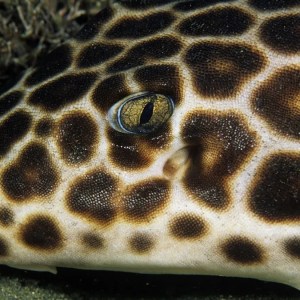
Chondrichthyan fishes, like sharks, rays, and skates, have a reputation for costly reproductive cycles. They often face challenges due to long gestation times and small litters. But recent research on the epaulette shark, found off the coasts of Australia and New Guinea, reveals surprising findings.
The epaulette shark, known as the “walking shark,” is unique. It can use its strong fins to move across the ocean floor and even traverse above water at low tide. Interestingly, it is also the youngest known shark species, emerging only about nine million years ago. Some scientists speculate that these adaptations could hint at future evolution, possibly leading sharks to walk on land.
A recent study in Biology Open challenges the assumption that reproduction drains energy. Researchers expected to see an increase in energy use during reproduction, as is common in many species. Jodie Rummer from James Cook University noted, “We anticipated a spike in energy when these sharks developed their eggs.” However, their findings were quite the opposite.
The research showed no increase in energy consumption during the shark’s reproductive cycle. “It was completely flat,” Rummer mentioned. This suggests that epaulette sharks have adapted to optimize energy use during reproduction. This is significant because it alters what scientists thought about how environmental stress factors, like climate change, could impact reproduction.
Under normal circumstances, many animals may cut back on reproduction when stressed to conserve energy. But the ability of the epaulette shark to maintain its reproductive capabilities, even in warmer waters, poses a glimmer of hope for the health of coral reefs. Carolyn Wheeler, the study’s lead author, commented, “This is encouraging because healthy sharks lead to healthy reefs.”
Studies show that shark populations are declining globally, largely due to human activities. According to the International Union for Conservation of Nature, almost a quarter of shark species are threatened. Protecting species like the epaulette shark can enhance overall reef health, showing an ecosystem’s resilience in the face of change.
In summary, the epaulette shark’s unique reproductive response is not just fascinating; it highlights the importance of protecting such species. As environmental pressures mount, understanding these adaptations can help guide conservation efforts for healthy marine ecosystems.
Source link
epaulette shark, sharks
