
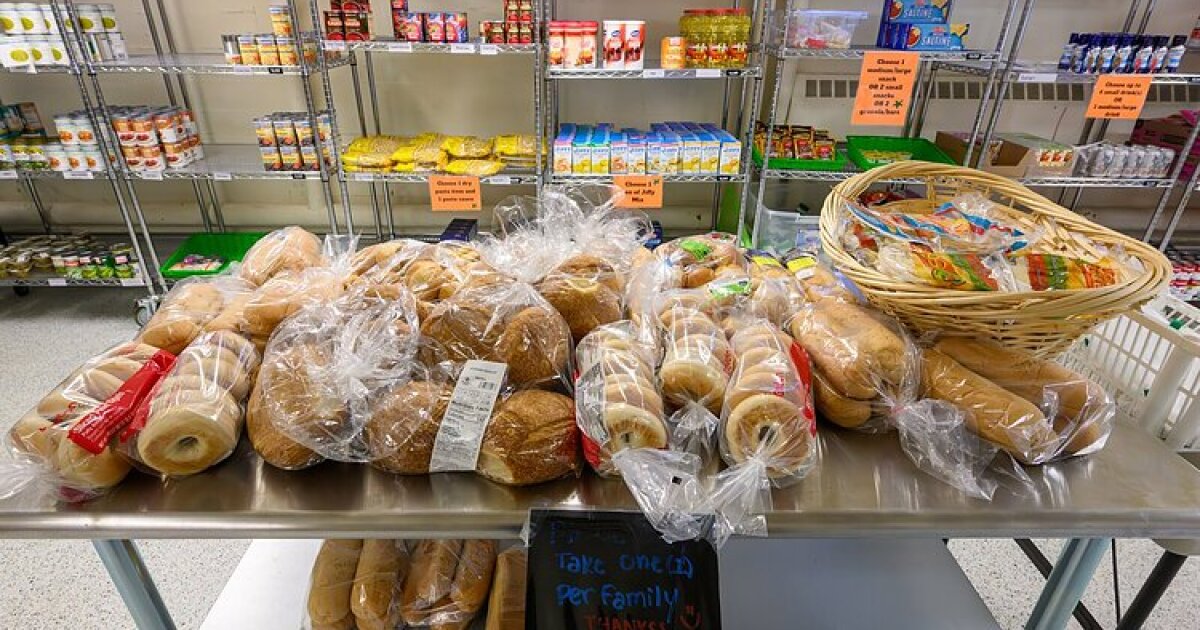
The Michigan Senate recently approved a $71 million spending bill to help with food assistance as federal SNAP benefits are set to pause next month. Governor Gretchen Whitmer also unveiled a plan to allocate $4.5 million in state funding to the Food Bank Council of Michigan.
The U.S. Department of Agriculture has instructed states to hold back on November SNAP payments due to a federal government shutdown. This situation affects about 1.4 million SNAP recipients in Michigan. Experts estimate that fully covering these benefits for November would cost over $200 million, a stark contrast to the amount being proposed.
State Representative John Roth acknowledged that the $4.5 million is only a starting point. He stressed the need for careful evaluation to avoid overspending in case the government reopens quickly. Meanwhile, State Senator Sarah Anthony described the bill as a “stop-gap measure” for Michigan residents, emphasizing the need to support those in low-income households.
The bill allocates $50 million for a new emergency assistance fund that aims to improve food purchasing power. An additional $20 million is split between emergency food bank grants and programs that distribute surplus produce to those in need.
Senate Majority Leader Winnie Brinks expressed confidence in the Michigan Department of Health and Human Services, which will handle the distribution of funds, believing they know best how to reach those in need.
Despite bipartisan support, some Republican leaders voiced skepticism about the bill’s effectiveness, suggesting it is primarily political theater. State Senator Jonathan Lindsey labeled it as a “bluff” since it won’t address immediate needs when SNAP payments cease.
On a broader scale, a federal court is reviewing a multi-state lawsuit urging the USDA to utilize contingency funds to continue SNAP benefits. This could provide a lifeline for those impacted without additional state intervention.
As hunger issues persist, many are closely watching how this situation unfolds, highlighting the ongoing debate about food security and state responsibilities in times of crisis. Data from recent surveys show that food insecurity has become a major concern for many families across the nation, especially in light of recent economic changes and the COVID-19 pandemic.
For further information, you can check the Michigan Department of Health and Human Services for updates.
Source link
