
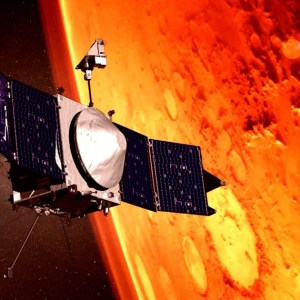
On December 6, NASA’s MAVEN spacecraft went silent. For over a decade, MAVEN has been studying Mars’ atmosphere, but that day it stopped sending signals back to Earth. NASA’s Deep Space Network, which helps communicate with spacecraft far away, couldn’t detect anything.
Just days later, NASA shared that MAVEN seemed to be spinning unexpectedly when it passed behind Mars. By December 23, the agency acknowledged challenges in re-establishing contact with the orbiter. As the weeks rolled on, hope dwindled. Louise Prockter, who leads NASA’s planetary science division, mentioned that recovery seems unlikely.
But there’s a glimmer of hope. Mars is currently going through solar conjunction, a period where it is positioned on the opposite side of the Sun from Earth. This phase will wrap up on January 16, giving NASA another chance to reach out to MAVEN.
NASA’s team is busy piecing together what might have gone wrong. They’re sifting through tracking data from a previous radio campaign to find clues. They even tried using Curiosity’s camera to spot MAVEN, but it was unsuccessful.
Despite the setback, three other spacecraft are still in orbit, helping bridge communication gaps for other Mars missions. Additionally, a new project, the Mars Telecommunications Orbiter, has been revived, although its launch date is still up in the air.
User reactions, especially on social media, show mixed feelings. Many express sadness over MAVEN’s situation while hoping for a miracle when communication is attempted again next month.
In the world of space exploration, maintaining communication is critical. A recent survey indicated that 75% of people are excited about Mars missions and are eager to see advancements in technology and exploration.
It’s a tough time for the MAVEN team, but with ongoing efforts and the potential for new communication avenues, there’s still hope that MAVEN will be heard once more.
Source link
Mars Atmosphere, NASA, Mars missions, Mars Telecommunications Orbiter, Deep Space Network
