
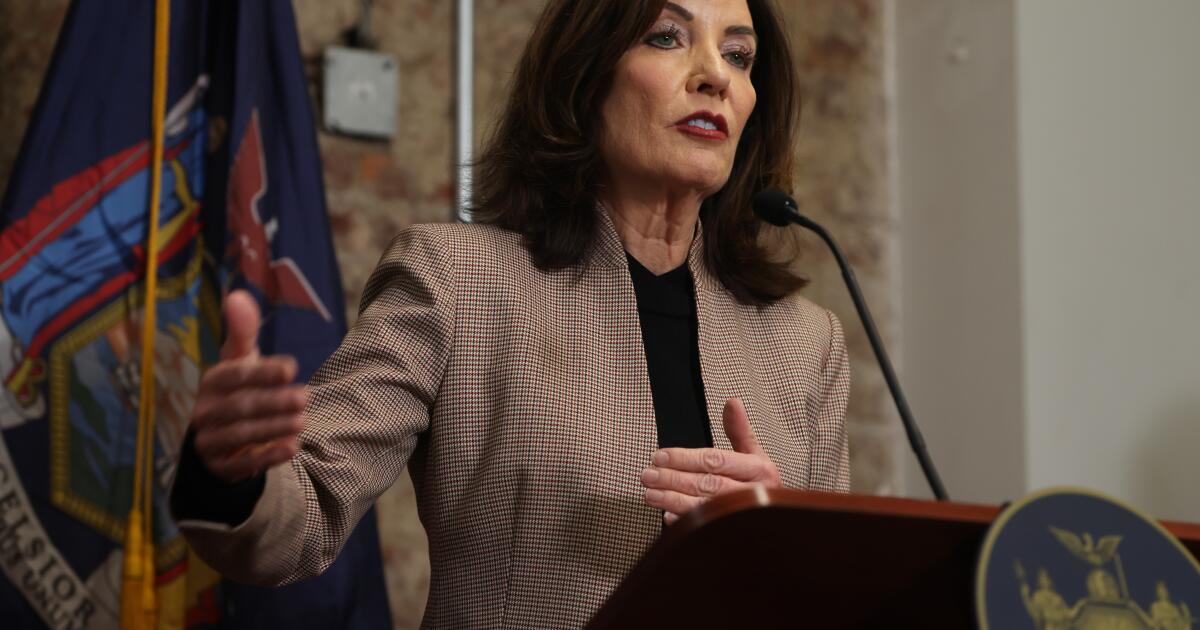
New York Governor Kathy Hochul is looking to change the state’s climate law from 2019. This law, known as the Climate Leadership and Community Protection Act (CLCPA), aimed for significant cuts in greenhouse gas emissions—40% below 1990 levels by 2030 and 85% by 2050. As of now, New York has reduced emissions by about 14%.
Hochul believes the current goals are “costly and unattainable.” She argues that delaying parts of the law is necessary to protect New Yorkers’ finances. The average electricity price in New York is already high—26.5 cents per kilowatt-hour, one of the highest in the U.S. The rising energy costs could hurt many households if the targets are not adjusted.
Expert opinions reflect concerns about takedown efforts. Michael Gerrard, a climate law professor at Columbia University, noted that if a liberal state like New York steps back on climate efforts, it could set a poor example nationally. “If you can’t do it here, can you do it anywhere?” he asked.
Hochul plans to present her revisions in the state budget due on April 1. While some lawmakers support her changes, others are resistant. State Sen. Pete Harckham stressed the need for negotiation, while State Sen. Liz Krueger warned that delays could hinder the law’s effectiveness.
Recent data shows that 70% of New Yorkers support stronger climate policies. Yet, some businesses and Republicans argue that the current targets could worsen financial hardships. They call for a more balanced approach, with some Democrats echoing that New York must adapt its climate goals based on current realities.
In 2025, environmental groups took legal action when the state failed to establish necessary regulations for the law. Rachel Spector from Earthjustice criticized the proposed changes as a way for the administration to avoid meaningful action.
Hochul also wants to switch how emissions are counted, possibly moving from a 20-year to a 100-year method. This change could mask the immediate effects of powerful greenhouse gases like methane. Liz Moran from Earthjustice called this a way to dilute accountability.
As the situation unfolds, the debate over climate policy versus affordability continues. Many argue for investing in renewable energy as a solution to both emissions and cost issues. Harckham concluded, “We should be held accountable to [our climate law].”
Source link
