
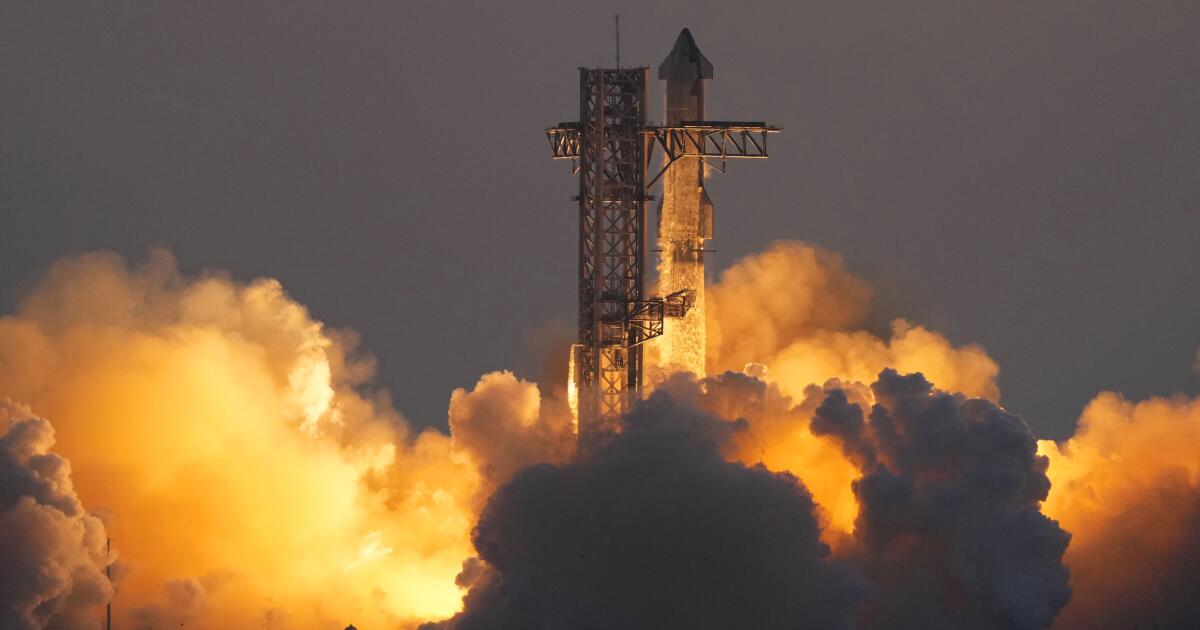
SpaceX, the rocket company founded by Elon Musk, is making headlines again. Recently, it moved its headquarters to Texas but keeps design and manufacturing in Hawthorne, California, where over 5,000 people work.
While Musk celebrated a successful Starship launch last month, challenges remain. Starship is the largest rocket ever built, and it’s gearing up for its 11th test flight soon. The last flight was a bright spot after three earlier attempts didn’t go as planned. Each launch has to inch closer to a full success—landing both the rocket and the booster smoothly is vital.
Starship’s importance goes beyond testing. It plays a crucial role in NASA’s Artemis program, aiming to land astronauts on the Moon. Experts highlight Starship as the key lunar lander, which will need to refuel in orbit before making the trip to the Moon. Laura Forczyk, from a space industry consultancy, expressed doubts about meeting deadlines, suggesting a possible delay of missions until 2030. This illustrates how ambitious space projects can often run into unforeseen delays.
SpaceX’s current focus is on increasing launch frequency. The company is looking to run more launches from both its Texas site and Vandenberg Space Force Base. However, environmental concerns could pose obstacles. Earlier this year, the FAA approved more test flights, but some environmental groups have pushed back, worried about the impact of those launches.
The stakes are high for SpaceX. With Starship, they aim to reduce launch costs significantly. This could open the door to new ambitions such as space manufacturing, and even the colonization of Mars, which Musk adamantly pursues. Recent reports suggest Starship might handle up to 98% of orbital payloads by 2027, a significant leap in capacity compared to SpaceX’s Falcon 9, which currently carries around 23 metric tons.
SpaceX’s Starlink project is another part of the plan. By launching thousands of satellites, Starlink aims to provide global internet coverage. Each Falcon 9 can launch fewer than 30 satellites, but Starship offers the potential to deploy over 100 at once. This capability will be crucial as they expand their satellite network.
Besides rockets, SpaceX is making moves in mobile communications. They recently purchased a vast amount of wireless spectrum, enabling them to provide mobile services anywhere on Earth. This partnership with T-Mobile aims to help those in remote areas stay connected, which is especially important as many rural areas still lack reliable service.
For now, SpaceX is busy navigating these challenges while pushing the boundaries of technology and exploration. As they work towards completing their missions, both excitement and skepticism surround their ambitious goals in the cosmos.
For more insights into SpaceX’s projects and updates, you can visit [NASA’s Artemis program](https://www.nasa.gov/humans-in-space/human-landing-system/).
