
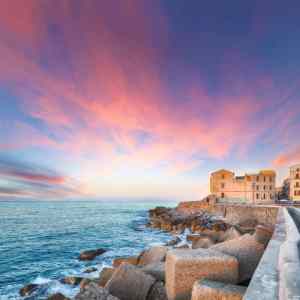
The Mediterranean Sea is warming faster than ever, and the effects are clear. In countries like Greece, Italy, and Spain, summer water temperatures now exceed 28°C, making swimming less enjoyable. According to the Copernicus Earth Observation Service, July 2025 recorded an average temperature of 26.9°C— the highest since monitoring began.
Dr. Abed El Rahman Hassoun, an oceanographer from the Helmholtz Centre for Ocean Research Kiel, emphasizes that the impacts of this warming are not just future predictions—they’re happening now. The increase in sea temperatures, alongside ocean acidification and pollution, poses significant risks to marine life and ecosystems.
A recent meta-study led by Dr. Hassoun and Prof. Dr. Meryem Mojtahid from the University of Angers analyzed 131 studies on Mediterranean ecosystems. Their findings, complemented by data from the Mediterranean Climate Change and Environmental Degradation Research Initiative (MedECC), showed areas at the highest ecological risk. Mojtahid hopes these results will spark awareness and action to protect these vital habitats.
Climate Change Hotspot
The Mediterranean is classified as a “hotspot of climate change.” Its semi-enclosed nature means it warms quicker than other oceans. From 1982 to 2019, temperatures increased by 1.3°C—more than double the global average. Dr. Hassoun points out that changes in this region often indicate future shifts in the global ocean.
The study assessed two future climate scenarios: one with medium emissions and another with a high emission trajectory. Even a small rise of 0.8°C could have major impacts on marine life. “Every tenth of a degree counts,” Dr. Hassoun notes, highlighting the need for immediate political action to prevent further damage.
Ecosystem Changes
As temperatures rise, entire ecosystems are shifting. Iconic seagrasses like Posidonia oceanica face the risk of disappearing by 2100, while fish populations could decline by 30-40% as they migrate northward. Invasive species, such as lionfish, may thrive as native populations dwindle.
Plankton communities are also changing. The rise of harmful algal blooms could threaten food webs and overall biodiversity. Coastal areas are under extreme pressure, with many ecosystems struggling to adapt.
Regional Disparities
Not every part of the Mediterranean faces the same risks. The eastern and southern regions often warm faster, creating a more precarious situation for many species. Factors such as pollution and overfishing compound the impacts of climate change, highlighting the need for a multi-faceted approach to conservation.
A Call for More Research
Despite the wealth of information collected, significant gaps remain in research, particularly regarding deep-sea ecosystems and other habitats in the southern parts of the Mediterranean. Experts call for interdisciplinary studies and increased monitoring to better understand and manage these delicate environments.
The Importance of Action
The findings make it clear that Mediterranean ecosystems are in immediate danger from climate change. Protecting vital areas like seagrass meadows and wetlands is crucial. Effective greenhouse gas emissions reduction and responsible management of human activities are essential for preserving these ecosystems and, by extension, the livelihoods of communities that depend on them.
Research findings are documented in the journal Scientific Reports, providing critical insights for policymakers and coastal managers aiming to address these urgent challenges.
Source link
Mediterranean ecosystems, Mediterranean Sea, Climate Change, Scientific Reports, Abed El Rahman Hassoun, ocean acidification, water temperatures, coastal ecosystems, sea-level rise, Mediterranean Region, habitat loss, CREDIT, risks
