
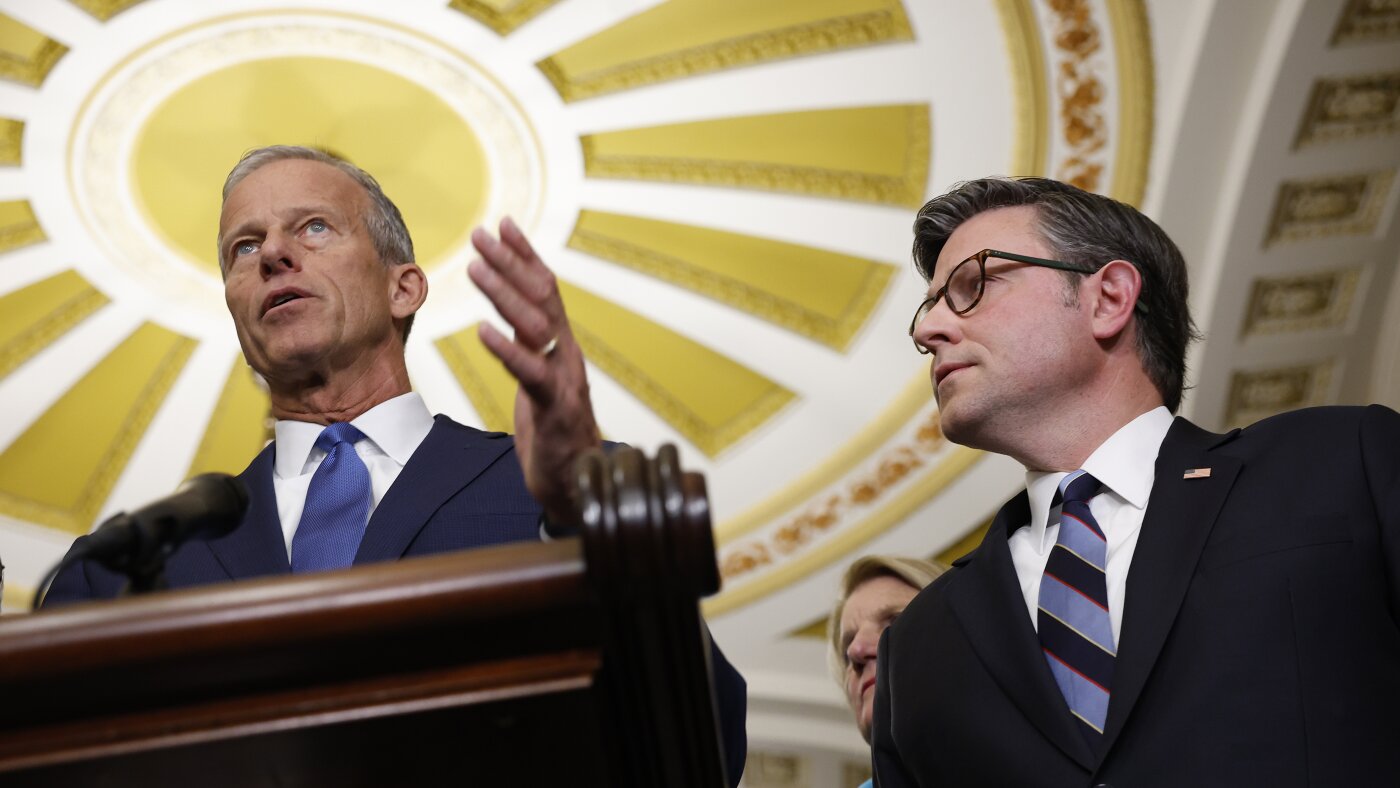
Senate and House Republican leaders are reviving a stalled plan to fund the Department of Homeland Security (DHS) following a lengthy 47-day funding gap. House Speaker Mike Johnson and Senate Majority Leader John Thune announced that the House will vote on a measure passed by the Senate to fund most of DHS through September, excluding Immigration and Customs Enforcement (ICE) and Border Patrol.
After this, Republicans plan to fund ICE and Border Patrol for three years with a budget reconciliation bill that won’t need Democratic support. In a statement, Thune and Johnson emphasized that this approach will ensure federal employees are paid and immigration enforcement is funded without interruption.
However, this agreement comes after previous resistance from House Republicans, who had dismissed a similar Senate plan. Instead, they had put forth a short-term funding bill for DHS that was unlikely to gain Senate approval. Johnson previously criticized that agreement, calling it a “joke.” Former President Trump also expressed his dissatisfaction, preferring a deal that aligns with his agenda on federal elections.
Democrats have welcomed the new measure, supporting it only if it includes necessary reforms, especially after incidents involving ICE agents causing civilian harm. They have pushed for stringent regulations, such as requiring warrants for home entries by immigration enforcement officers.
Amid this political tug-of-war, Senate Minority Leader Chuck Schumer pointed out that the divisions among Republicans delayed a solution, harming American families in the process. He remarked that Senate Democrats remained committed throughout the impasse.
Trump seemed to change his stance, indicating he wanted a party-line immigration funding bill by June 1, saying, “We are going to work as fast as possible.” Nonetheless, despite the budget issues, ICE has seen minimal disruptions due to a substantial previous allocation of $75 billion approved last year.
As Congress takes a two-week recess, operations for DHS could resume swiftly if no objections arise. However, hard-line conservatives in the House remain skeptical about the compromise, fearing it does not provide full funding for DHS.
In the broader context, government shutdowns can have lasting effects. According to a recent study by the Pew Research Center, nearly 25% of government employees reported facing financial difficulties during previous shutdowns. This time, the impact on public services, including security measures, remains a central public concern. The 2018-2019 shutdown lasted 35 days and resulted in significant service disruptions, showcasing the tangible effects of funding negotiations on everyday life.
This ongoing battle over DHS funding highlights the increased polarization in American politics. Public reactions on social media reveal frustration among citizens who feel the repercussions of these political stalemates. Observers note that the path forward hinges on finding common ground amidst the growing discord in Washington.
For more insights into government functions and funding, you can read reports from [Pew Research](https://www.pewresearch.org/). Understanding these dynamics is crucial in an era marked by heightened political tensions and policy disputes.
