
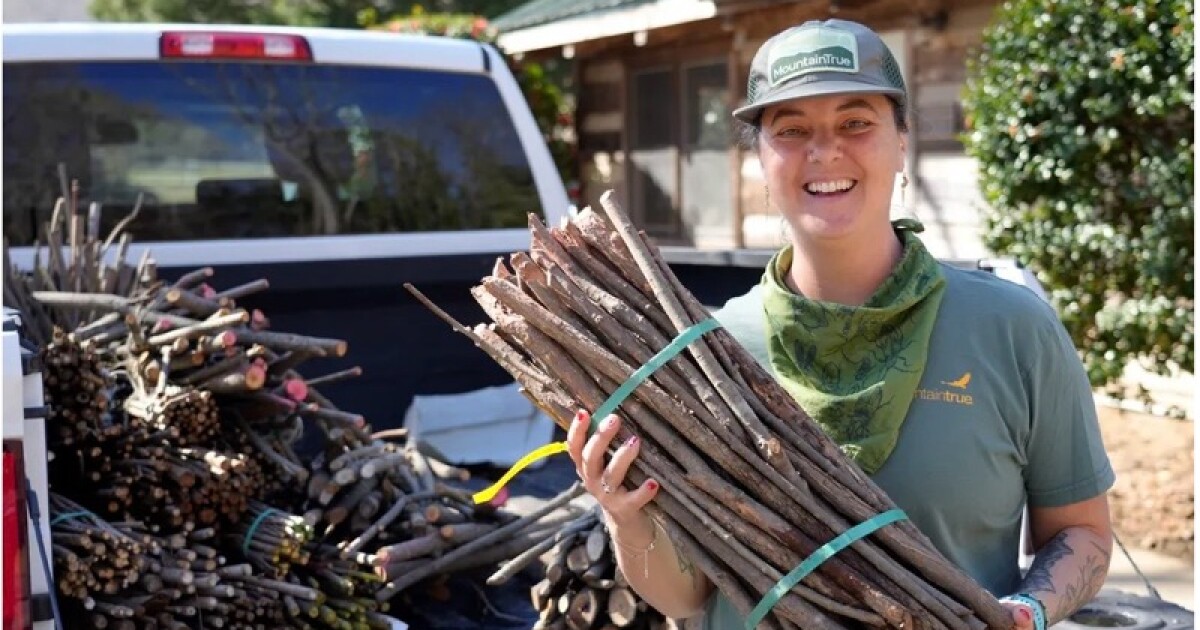
After the devastating effects of Hurricane Helene, Mother Nature is slowly bouncing back, with some help from people in the community. Volunteers and workers from MountainTrue and North Carolina State University have been busy planting trees this winter to help reduce future flooding.
The rivers in the area are recovering from damage. During Helene, floods uprooted trees and disrupted the habitats of important wildlife, like brook trout and hellbenders. Efforts to clean up, funded by FEMA, have highlighted further environmental changes, as heavy machinery has removed not just debris but also living trees.
Thanks to support from the North Carolina Department of Environmental Quality and various private sources, dedicated teams have planted trees across multiple counties, including Buncombe and Rutherford. They’ve already planted 226,000 trees, including 20,000 along the Green River—a popular spot for fishing and kayaking. Yet, the work doesn’t stop there; they plan to plant and distribute another 36,000 trees soon. This initiative has not only beautified the landscape but has also created 104 jobs and engaged over a hundred volunteers. Removing debris has opened up more river miles for healthier ecosystems.
Erica Shanks, the Riverkeeper for the Green River, has witnessed firsthand the damaging effects of flooding and debris removal on native plants. She and others have planted various native species, such as elderberry and river birch, using “live stakes.” These little cuttings may look small now, but they’ll grow rapidly and eventually stabilize river banks. As Shanks puts it, “Mama Green will restore herself in time.”
Mitch Woodward, an extension agent from NC State, emphasizes the importance of using native plants. Many non-native species can’t survive the heavy rains predicted to increase with climate change. “Where native vegetation thrived, the riverbanks held up better,” he stated, highlighting the resilience of natural ecosystems.
Restoration efforts are also sensitive to the cultural significance of native plants. Organizations like Riverlink and Haywood Waterways are educating landowners on the benefits of these plants. Collaborating with the Eastern Band of the Cherokee Indians, Adam Griffith is working to plant rivercane, a traditional material used in Cherokee basket weaving. These cultural connections deepen community ties and support biodiversity.
As Western North Carolina continues to grow, the challenge of stormwater runoff grows too. Woodward shares a crucial idea: “We need to slow it down, spread it out, and soak it in before it hits the streams.” This “3 S’s” approach could help mitigate the risks of flooding and encourage a healthier ecosystem for years to come.
Overall, the community’s efforts not only help the environment but also promote a sense of unity and purpose. People are coming together to restore the land they cherish, ensuring a greener future for generations to come.
For further insights about environmental restoration efforts, you can explore related topics at Grist.
Source link
Helene,MountainTrue,debris removal,river cleanup
