
Scientists today focus on refining theories rather than declaring absolute laws. While we still refer to Newton’s famous laws of motion, we’ve learned that they don’t hold up perfectly under all circumstances.
A recent study by researchers at the University of Konstanz in Germany has brought attention to a historic friction law proposed by Guillaume Amontons in 1699. He stated that friction increases with the weight of an object. This concept seems straightforward: heavier objects create more friction due to increased contact.
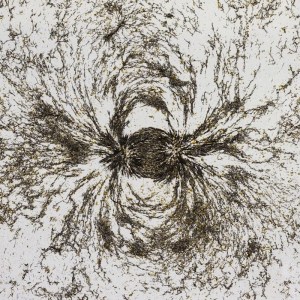
However, the researchers found that this law doesn’t apply perfectly to magnetic materials. In their study published in Nature Materials, they conducted experiments with two layers of magnets that never touched, yet they discovered measurable friction.
Lead researcher Clemens Bechinger explained that this friction arises from the internal reorganization of magnetic elements. As the distance between the magnets changed, friction fluctuated. It was weakest when layers were either very close or very far apart, but peaked at intermediate distances. This unusual behavior occurs because competing magnetic forces cause continuous rearrangement of the magnets.
Interestingly, this new understanding could benefit the development of tiny devices, like magnetic bearings, which are crucial in technology such as hard drives and sensors. The unique properties of magnetic friction could lead to innovations in how these devices work.
Expert opinion is essential here. Dr. Hongri Gu, involved in the study, noted that no previous laws entirely covered this phenomenon. Such insights remind us that science is an ever-evolving field.
Interestingly, trends on social media show increasing public interest in how scientific theories can shift over time. Many users express curiosity about what other ‘laws’ might need a rethink in the light of new discoveries.
These findings not only enhance our understanding of physics but also highlight science’s nature: it’s a journey where there’s always more to uncover.
Source link
University of Konstanz, magnetic materials, Guillaume Amontons, Newton’s laws of motion, law of friction, force of friction, scientific breakthroughs
