
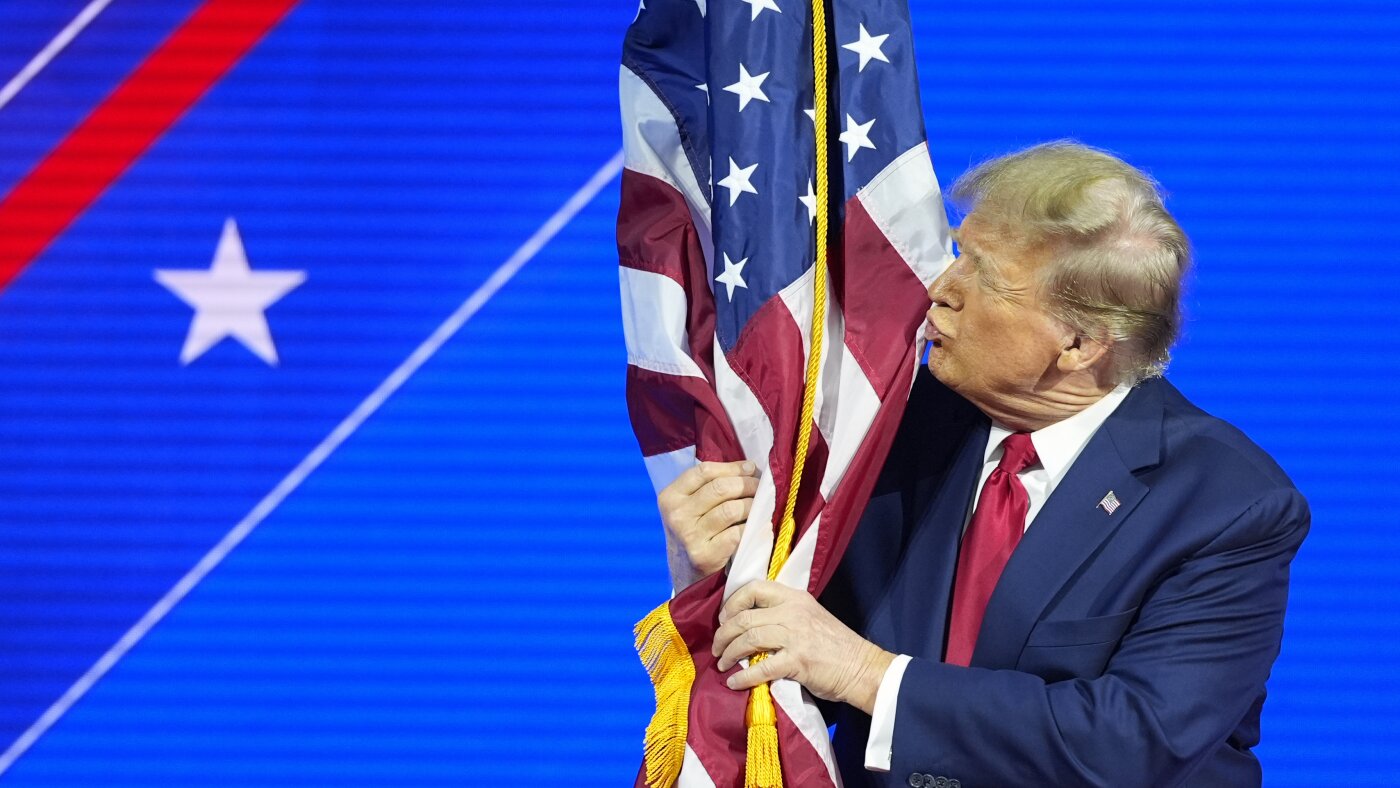
Three major reports suggest that since returning to the White House, President Trump has rapidly harmed American democracy. An annual study from V-Dem, a research institute at Sweden’s University of Gothenburg, shows that the U.S. democracy ranking has dropped from 20th to 51st out of 179 countries. This places the U.S. between Slovakia and Greece.
Similarly, Bright Line Watch, which surveys over 500 U.S. scholars, finds that the U.S. now sits almost midway between a liberal democracy and a dictatorship. Their latest survey is set to release soon. From another perspective, Freedom House—a democracy think tank—reported that the U.S., along with Bulgaria and Italy, experienced significant declines in political rights and civil liberties last year.
Staffan Lindberg, the V-Dem Institute’s director, noted that this is unprecedented. He stated, “It’s the most rapid decline ever in American history.” Over 4,000 scholars contributed to this report, making it one of the largest studies of its kind.
The White House dismissed these claims, with spokeswoman Olivia Wales calling them baseless and asserting that Trump champions freedom and transparency. She claimed his presidency has revitalized the media landscape.
Lindberg attributes the U.S. democracy downgrade to Trump’s concentration of power, legal overreaches, and attacks on the media. He compares Trump’s actions to those of leaders like India’s Narendra Modi, Turkey’s Recep Tayyip Erdoğan, and Hungary’s Viktor Orbán, who have also undermined democratic institutions after winning elections. He argues that Trump has achieved what took those leaders years, all in just one year.
Trump has defended himself against accusations of autocracy, stating, “I don’t like a dictator. I’m not a dictator.” However, the evidence suggests that his administration has made alarming strides toward concentrating power.
Scholars like John Carey, a co-director of Bright Line Watch, express concern but note that U.S. courts have pushed back against some of Trump’s initiatives, hinting that democracy could still recover. He highlighted a recent Supreme Court ruling against Trump’s tariffs as a sign that not all governmental institutions have been compromised.
Brendan Nyhan, another Dartmouth professor, mentions that while Trump may attempt to stick to authoritarian tactics, the landscape could change after the midterm elections or beyond.
Yana Gorokhovskaia from Freedom House points out that Trump’s policies abroad, particularly in how the U.S. addresses election fraud in other countries, are weakening its global democratic standing. Under Trump, the State Department has shifted its focus, commenting on foreign elections only when U.S. interests are at stake. This change risks eroding global support for democracy.
In a notable contradiction, Secretary of State Marco Rubio praised Orbán, Hungary’s autocratic leader, for seeking another term, which raises questions about U.S. commitment to democracy abroad.
In summary, as the current political landscape evolves, the implications of Trump’s leadership on democracy are profound, marking a significant moment in American history.
Source link
