
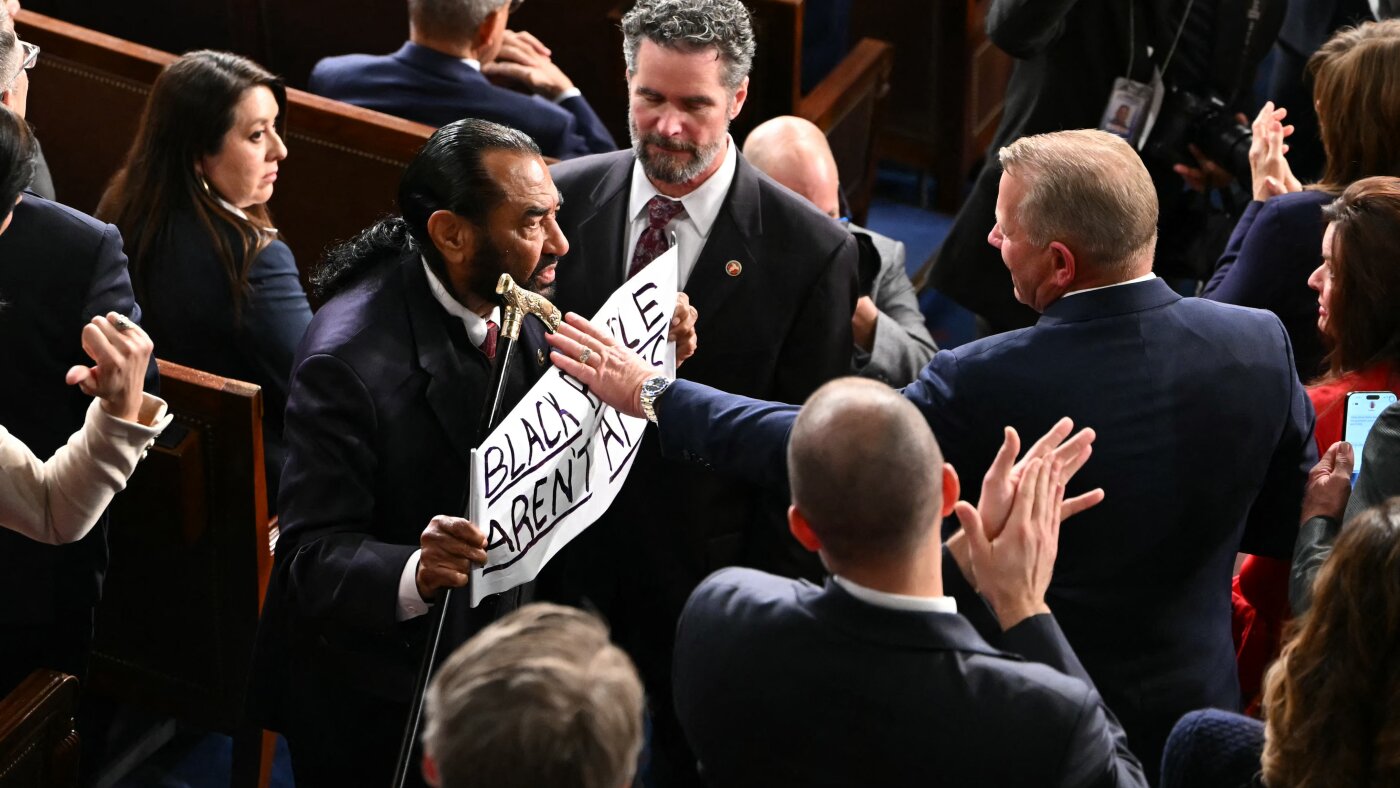
During President Trump’s recent State of the Union address, tensions ran high. Many Democrats took a stand against the president’s message, with some skipping the speech entirely. Others went further, protesting during the event.
In a show of defiance, House Minority Leader Hakeem Jeffries encouraged Democrats to either silently attend or not show up at all. True to this spirit, a significant number chose to walk out or stage protests while Trump spoke. According to a recent NPR/PBS News/Marist poll, 57% of people felt the state of the union was weak, with 80% of Democrats and over 60% of independents sharing that view.
Prominent moments during the address included Rep. Al Green holding a sign that read, “Black people aren’t apes.” This protest connected to a controversial video Trump shared earlier, depicting the Obamas in a racist manner. Green was swiftly escorted from the chamber, marking yet another instance of his protests against Trump’s rhetoric.
Another notable protest came from Rep. Norma Torres, who displayed photos of victims adversely affected by Trump’s immigration policies. Her actions accompanied Trump’s remarks on immigration, which he emphasized as a key agenda item.
The president criticized the Democrats for not standing or applauding throughout his speech, expressing frustration at their lack of support. “You should be ashamed of yourself,” he said.
Adding to the narrative, many Democratic lawmakers invited over a dozen survivors of Jeffrey Epstein to the event. These guests wore pins that read, “Stand with survivors, release the files,” emphasizing their demand for greater accountability regarding Epstein’s case.
This response from the Democrats illustrates the widening divide in American politics. Social media reactions mirrored these sentiments, with many users expressing their outrage or support for either side of the debate. As the U.S. nears the midterm elections, such incidents provide a clear picture of the ongoing conflict in the political landscape.
It’s evident that events like the State of the Union are more than just speeches; they are battlegrounds for differing ideologies and public sentiment. The confrontations seen during the address serve as a reminder of the passionate discourse that defines the current political climate and foreshadows an intense electoral season ahead.
Source link
