
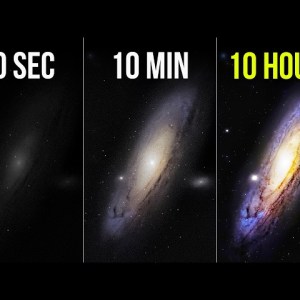
Capturing the Andromeda Galaxy: A Quick Shot vs. a Long Exposure
Check out this video by Ian Lauer. He breaks down astrophotography in a way that’s easy to understand. He shows us how he captures the Andromeda Galaxy with long exposure times.
In his images, you’ll notice they often start in black and white. Don’t be fooled—the galaxy is full of color! That will be clearer once we discuss the details.
If you zoom in on a photo, you might see some graininess, known as noise. Noise can hide the finer details, making it tough to appreciate the beauty of what you’re capturing. To reduce noise, photographers take several shots of the same subject. By stacking these images with software, they can average out the noise and create a clearer picture.
For example, instead of a single one-minute photo, imagine stacking ten one-minute shots. The difference is striking. The stacked image is much cleaner and reveals more detail than the single image could.
There are plenty of other helpful videos on Ian Lauer’s channel. You might find his tips on shooting the Milky Way or recommendations for beginner telescopes particularly useful. He suggests the Seestar S50 Smart Telescope, which has received positive feedback from users on social media.
Interestingly, many photographers are now turning to smartphones for astrophotography. The recent iPhone 17 Pro, for example, has features specifically designed to capture stunning night sky photos, making this hobby more accessible than ever. A strong example of this shift can be found in recent trends shared on platforms like Instagram, where users are posting breathtaking pictures taken just with their phones.
In conclusion, whether you’re using a telescope or a smartphone, photography of celestial objects has never been more exciting. Take your time, explore the cosmos, and enjoy the journey of discovering the universe around us.
