
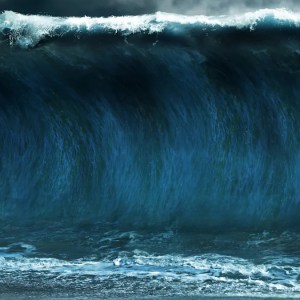
In the summer of 2025, a powerful 8.8-magnitude earthquake hit off Russia’s Kamchatka Peninsula. This seismic event, while not among the largest ever recorded, was impressive enough to trigger a tsunami that raced across the Pacific Ocean. NASA’s recently launched SWOT satellite played a crucial role, capturing detailed images of the tsunami.
The SWOT satellite, which stands for Surface Water and Ocean Topography, is cutting-edge technology that helps researchers understand the ocean’s surface better. This earthquake was its largest observation so far. By combining data from SWOT and deep-ocean tsunami buoys, scientists traced the earthquake’s rupture zone. This area extended around 250 miles and even pushed parts of the seafloor up by 13 feet. The satellite helped visualize how the tsunami changed as it traveled, providing valuable data for future studies.
This research, featured in The Seismic Record, emphasizes the destructive potential of megaquakes and showcases how satellite technology enhances our ability to monitor and predict tsunamis.
Satellites like SWOT have changed the game in how we study our planet. They give us insights into ocean events that are often invisible to the human eye. To understand how the Kamchatka tsunami developed, scientists used information from NOAA’s DART system (Deep-ocean Assessment and Reporting of Tsunamis), which monitors water pressure in various locations.
When the earthquake occurred, several sensors went on high alert, capturing the tsunami as it moved. The seismic data helped scientists estimate the seafloor’s shifts during the quake. Meanwhile, SWOT flew over the area, recording a wide swath of ocean surface. This allowed researchers to work backward and analyze the tsunami’s shape and speed.
This event opens new avenues in tsunami science. The data related to this earthquake suggests that the risks associated with earthquakes and tsunamis might be higher than previous models indicated. The 2025 quake had a unique connection to a 9.0 magnitude quake in the same region back in 1952. Understanding how these two earthquakes relate could challenge existing models that predict significant quakes happening hundreds of years apart.
Interestingly, the older quake released some stress, but not all, leading to the more recent event. Scientists noted differences in the depths of the two quakes, impacting the height and size of the resulting tsunamis. Though emergency evacuations were necessary, the damage from the 2025 tsunami was less severe than what the 1952 quake caused.
The integration of SWOT and DART systems can dramatically improve tsunami monitoring and emergency responses. As researchers explore new ways to use this data, the aim is to better inform coastal communities and enhance public safety during tsunami threats.
Recent studies show that real-time data from satellites can make a world of difference. This marriage of technology and science gives us hope for more effective warning systems and improved responses to giant oceanic waves in the future.
For more on this topic, you can read about related research and advancements on NASA’s website.
Source link
a tsunami, SWOT, tsunami warning system, Kamchatka Peninsula, NASA, scientists, Ocean Topography
