
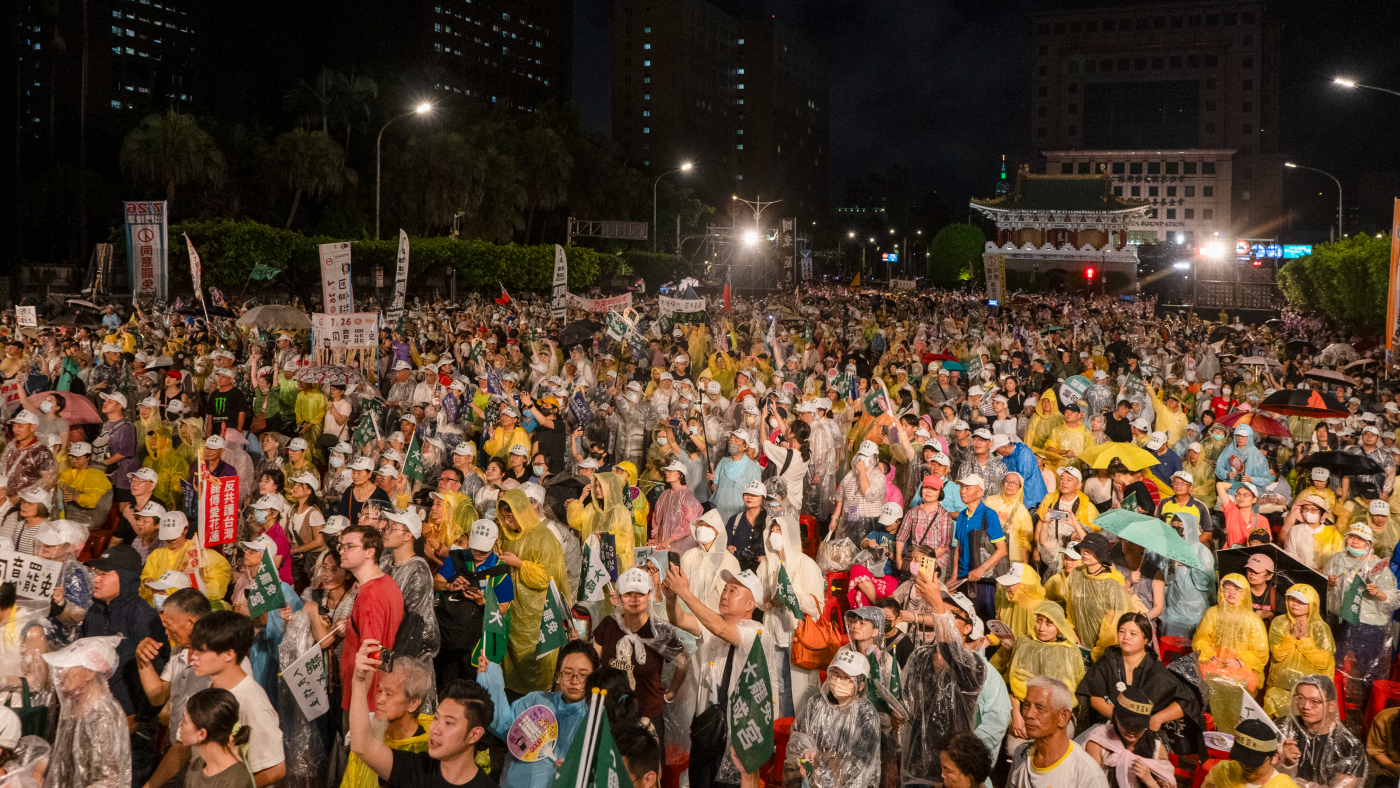
Taipei, Taiwan – Recent events in Taiwan’s legislature are raising eyebrows and sparking discussions. A recall effort aimed at ousting 24 opposition lawmakers has failed to make the cut, allowing these officials to keep their seats and maintain control in parliament. This outcome signals continued struggles in Taiwan’s political landscape.
The recall campaign was a first for Taiwan, marking the largest public voting effort in recent history. It stemmed from accusations against the lawmakers, claiming they jeopardized national security and leaned too close to China. Since early 2024, when the Democratic Progressive Party (DPP) won the presidency through candidate William Lai but lost legislative control, the opposition has blocked many of Lai’s proposals, leading to rising tensions.
Local campaigner Mitch Yang expressed concerns, stating that opposition members are intentionally undermining Taiwan’s stability, referencing fears of Chinese aggression. China has long claimed Taiwan as its territory and has not ruled out the use of force.
Interestingly, the largest opposition party, the Kuomintang (KMT), argues against being labeled as pro-China. They describe themselves as the only party that can negotiate with Beijing while ensuring defense. Alexander Huang, the KMT’s international affairs director, emphasized the need for both deterrence and dialogue to navigate these troubled waters.
While the KMT defends budget cuts as necessary checks on the government, critics—including Nathan Batto, a researcher at the Institute of Political Science at Academia Sinica—suggest these actions have overstepped. Tensions boiled over last year during legislative sessions, resulting in physical altercations and injuries.
In May 2024, the KMT introduced controversial legislation aimed at increasing parliamentary control over the presidency. This prompted protests in Taipei, contributing to the momentum behind the recall movement. KMT officials, however, allege that the petitions are tactical maneuvers aimed at discrediting the election results from just a year ago.
Despite the challenges, experts confirm that the recall process is constitutional and rooted in democratic principles. However, campaign organizers faced an uphill battle, notably because they targeted strongholds already held by the KMT.
DPP spokesperson Wu Cheng clarified their position, stating, “We support the ‘great recall’ movement, but this is not our party’s work.” Meanwhile, the KMT currently holds 52 out of 113 parliamentary seats, and their ambition to gain more control remains unfulfilled.
The results of the recent vote left many in the opposition feeling disheartened, despite Yang’s call for greater parliamentary power. “Once we get a majority, we can reset a lot of bad legislation,” he asserted.
Going forward, another recall round looms, with seven more opposition lawmakers at risk. However, given the recent results, analysts believe it’s unlikely that the DPP will regain legislative control.
Dafydd Fell, director of the SOAS Centre of Taiwan Studies, suggested that President Lai must engage with the opposition to find a way forward. “I don’t think he can just carry on,” he remarked, hinting at the pressing need for dialogue to avert further political deadlock.
In the midst of these evolving dynamics, the political climate in Taiwan remains tense. Voters and lawmakers alike are keenly watching how events unfold as the nation navigates its relationship with both internal and external pressures.
Source link
