
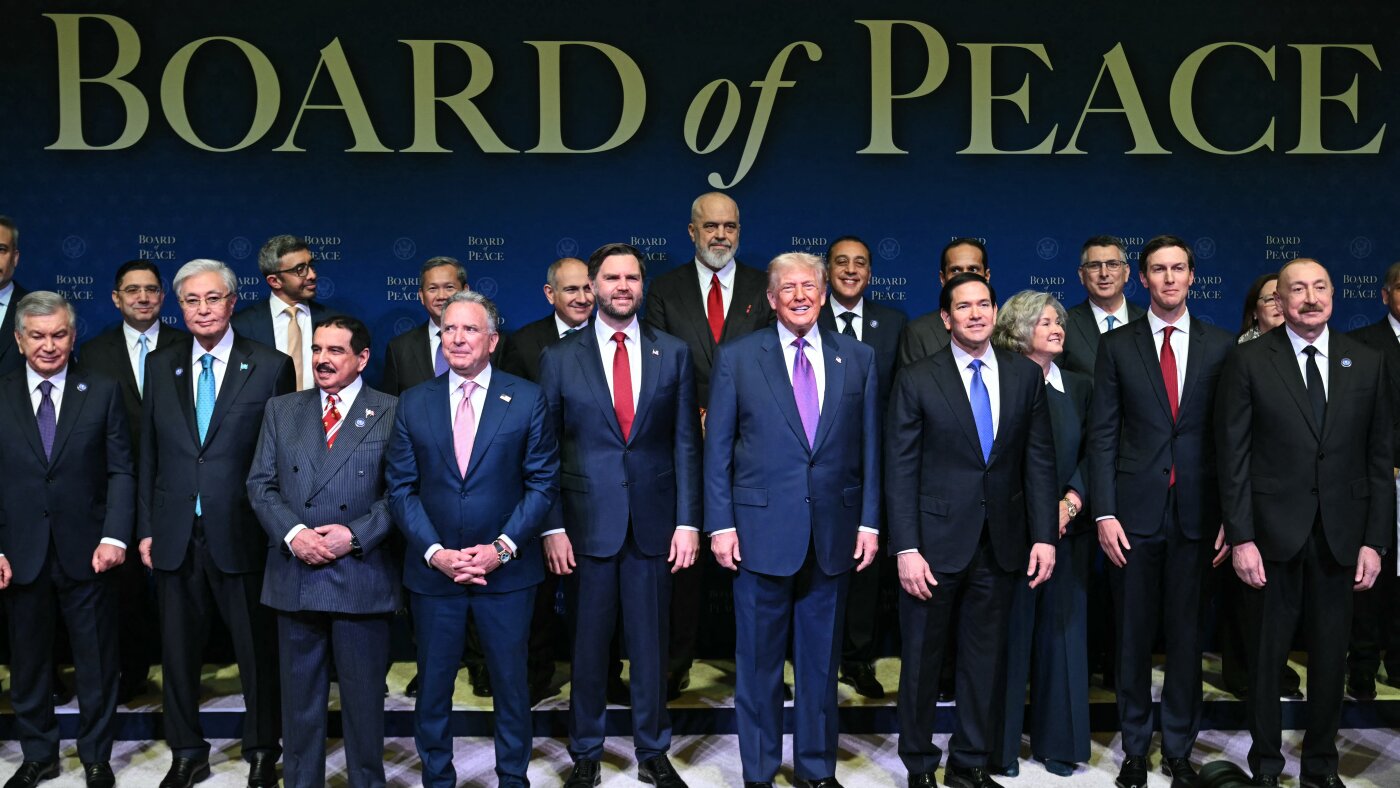
President Trump held the inaugural meeting of the Board of Peace in Washington, D.C., aiming to manage the ongoing ceasefire plan in Gaza. He announced that member states have pledged $7 billion for Gaza’s reconstruction, with the U.S. contributing $10 billion to this initiative.
More than 40 countries were represented during the meeting, held at the U.S. Institute of Peace, which now bears Trump’s name. Figures like Vice President JD Vance and Secretary of State Marco Rubio were in attendance, with invitations extended to nations such as Argentina, Hungary, India, Pakistan, and Vietnam. Meanwhile, France and the U.K. opted to send observers, wary of potential links to Russia.
Interestingly, the Board of Peace includes both Israel and various Arab states but lacks a Palestinian representative. Trump emphasized the board’s significance, claiming, “This is the most prestigious board ever put together.” However, doubts linger about whether this new organization might overshadow or challenge the United Nations’ role in international diplomacy.
Amidst the fragile ceasefire between Israel and Hamas, which Trump negotiated last October, over 600 people in Gaza have reportedly died due to Israeli strikes since it began. Trump described the situation as having “little flames,” asserting that the war is effectively over. He highlighted the return of dozens of Israeli hostages, emphasizing the board’s role in fostering stability.
Part of the ongoing efforts includes deploying thousands of international troops to act as a buffer between Israel and Hamas, a plan that Indonesia has signaled readiness to support. However, a significant obstacle remains: Hamas must disarm. This condition is crucial for the U.S. and several Arab nations, who fear that a lack of disarmament could reignite conflict.
Israeli Prime Minister Benjamin Netanyahu has demanded that Hamas relinquish all weaponry, warning of renewed military operations should they fail to comply in the next 60 days. A report from The Lancet estimates over 75,000 people have been killed in Gaza since the conflict began, highlighting the dire humanitarian situation on the ground.
As the situation evolves, opinions differ on the Board of Peace’s potential impact. Some experts argue that while new initiatives can be beneficial, they should work in concert with established organizations like the UN to avoid fragmentation of diplomatic efforts.
This complex landscape illustrates the urgent need for collaboration and effective communication among global leaders, especially as they navigate the challenges of peacebuilding in a region marked by history and conflict.
