
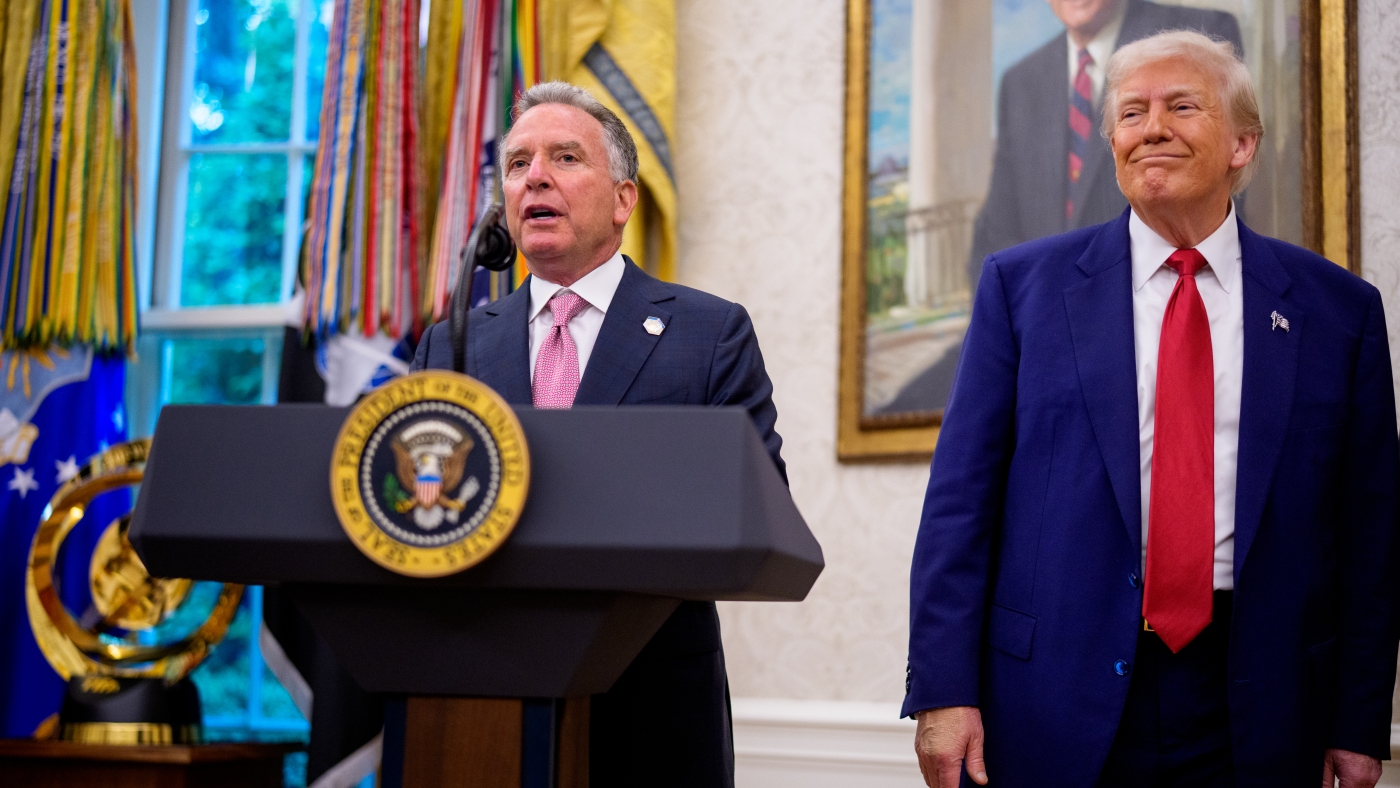
President Trump is defending Steve Witkoff, his special envoy, after a leaked recording suggested Witkoff was coaching a Russian official on how to negotiate terms for ending the war in Ukraine. Trump dismissed the concerns, claiming that Witkoff was just doing what a dealmaker does—trying to find common ground.
Witkoff, a long-time friend of Trump, has faced criticism for his lack of experience in diplomacy and his sometimes controversial approach. The recording came from a call in October, leading up to a 28-point plan that seemed to favor Russia. Trump claimed he hadn’t heard the audio but saw no issue with how Witkoff handled the situation.
Critics argue that Witkoff appears to lean too heavily toward Russia, which is viewed as an aggressor in the conflict. Yet, Trump is sending Witkoff back to Moscow to finalize a new deal.
Witkoff and Trump have been friends for nearly four decades. Their friendship reportedly began at a New York deli, where Witkoff helped Trump out when he was short on cash. Witkoff has described Trump as an influential figure in his career. He also praised Trump for providing support during personal hardships, indicating a deep bond between the two.
Trump initially appointed Witkoff to handle peace talks in the Middle East, a role formerly filled by his son-in-law, Jared Kushner. This raised eyebrows since both men share a similar background in real estate and have faced skepticism about their qualifications for such significant negotiations.
Witkoff has shared his negotiation strategy, emphasizing empathy and understanding the other side’s perspective. Don Peebles, a real estate entrepreneur, remarked that Witkoff has a knack for resolving conflicts, turning adversarial situations into partnerships. Yet, some experts argue that handling a war is much different from negotiating a real estate deal.
Aaron David Miller, a former negotiator, pointed out that successful negotiations often require urgency, which is driven by the pain each party is experiencing and their need for gains. He expressed skepticism about whether Putin is prepared to make necessary concessions, highlighting the complexities of resolving the ongoing war.
In contrast to bold real estate maneuvers, achieving peace in Ukraine necessitates a much more nuanced approach. Witkoff’s experience might help in some areas, but the stakes in the conflict are higher than any deal he’s brokered before.
In a recent survey, 62% of Americans expressed skepticism about the effectiveness of back-channel negotiations like those Witkoff is conducting, suggesting a growing demand for transparency and a more balanced approach to U.S.-Russia relations.
For deeper insights into ongoing diplomatic efforts, the Carnegie Endowment for International Peace offers comprehensive analyses on negotiation strategies and their implications.
