
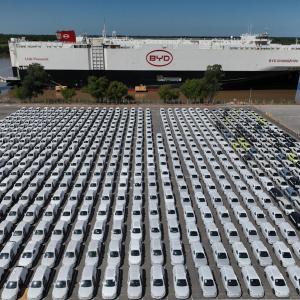
ZÁRATE, Argentina (AP) — A huge vessel filled with over 5,800 electric and hybrid vehicles from Chinese automaker BYD recently docked in Argentina. This shipment marks a significant shift for the country.
For many, it might seem like any ordinary day in the car industry. But for Argentina, this is groundbreaking. The arrival of these vehicles sends a strong message about the changing landscape of global trade and investment.
Stephen Deng, BYD’s manager in Argentina, expressed his vision for the future: expanding the dealer network nationwide. This moment is not just about cars; it represents a new chapter for a country long weighed down by high tariffs and import restrictions that favored local manufacturing.
Claudio Damiano, a transportation expert, noted that many in Argentina have held onto a belief that products should be made domestically. The arrival of these Chinese vehicles symbolically challenges that idea. It’s a pivotal moment: “Everyone’s wondering how far it will go.”
The presence of duty-free Chinese cars also sends a clear signal to Europe. Recently, the EU postponed a trade deal with South America, which could have opened doors for European electric vehicles. Experts believe that Chinese manufacturers are better positioned than their European counterparts to thrive in this changing market.
Historically, under the Peronist government, Argentina had one of the most closed economies in Latin America, shunning free trade in favor of stringent protections for local companies. Nonetheless, President Javier Milei’s recent policies have turned the tide. By slashing trade barriers, he aims to rejuvenate the economy and diversify consumer choices. In the last year, imports surged by 30%, with many seeking low-cost options from online retailers.
The shift is evident. Now, Chinese automakers enjoy a new measure allowing 50,000 electric and hybrid vehicles into Argentina without tariffs. This policy opened the floodgates for BYD and others, who can meet the price limits set by the government. Expert Andrés Civetta emphasized, “China has won the race.”
However, challenges remain. Argentina’s infrastructure, particularly its aging power grid, isn’t ready for a massive influx of electric vehicles. Local manufacturers, like Sero Electric, are concerned about maintaining competitiveness in this new landscape. “We’re not worried,” says Pablo Naya from Sero Electric, yet he acknowledges future competition could be tricky if consumer demand aligns with improved infrastructure.
While the car market shifts, there’s a lot to watch. User reactions on social media reflect a mix of excitement and concern. Many see the influx of Chinese EVs as an opportunity for change, while others worry about job security and the impact on local manufacturers.
This is a turning point for Argentina. It signifies both challenges and opportunities for the local economy. As the landscape evolves, the future of electric vehicles in Argentina will certainly be a story worth following.
For more insight into the impact of electric vehicles on economies, you can check out this report.
Source link
Javier Milei, Donald Trump, Argentina, Chinese cars
