
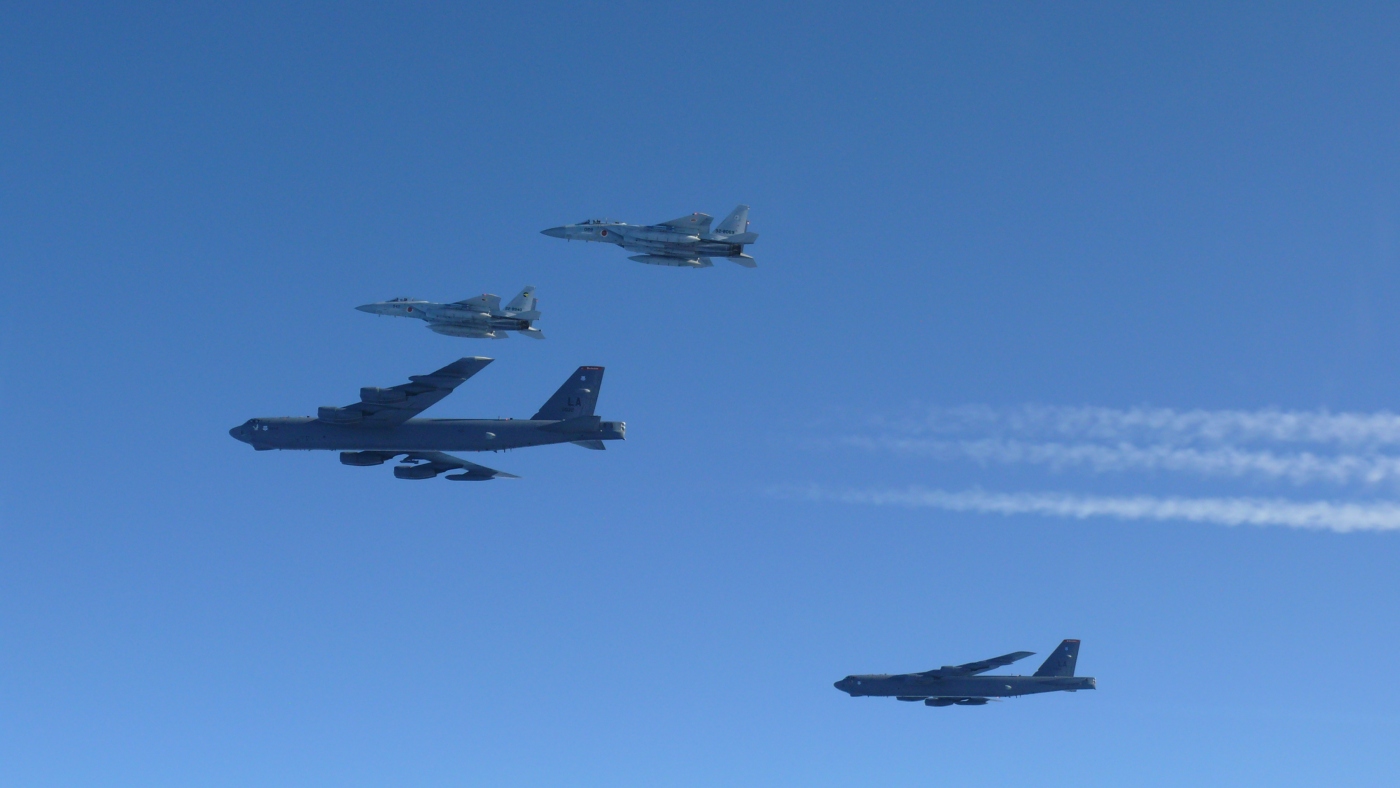
U.S. and Japan Conduct Joint Military Exercises Amid Rising Tensions with China
The U.S. recently showcased its military power by sending nuclear-capable B-52 bombers, supported by Japanese fighter jets, over the Sea of Japan. This was the first show of force between the two allies following a tense conflict with China. The drills included two B-52s and six fighter jets, including both F-35s and F-15s, according to the Japanese Defense Ministry.
In a statement, Japan’s Joint Staff emphasized the importance of this exercise. They stated it shows their commitment to counter any aggressive changes in the region, particularly concerning Taiwan, which China claims as part of its territory.
This move came after Chinese and Russian aircraft had conducted drills in the area, leading Japan and South Korea to scramble their jets for surveillance. South Korea even lodged a diplomatic protest against the joint drill by China and Russia.
On the diplomatic front, accusations have been flying between Japan and China. Recently, both nations claimed that each other’s planes were locked onto with targeting radars during military operations near Japan. This escalating situation has put Japan on alert, especially as naval activities by China around Okinawa have intensified. Akira Saito, chief of staff of Japan’s Maritime Self-Defense Force, noted that the increased Chinese naval presence was unusual and concerning.
The current tensions escalated further when Japan’s Prime Minister, Sanae Takaichi, suggested that a Chinese blockade of Taiwan would justify Japan’s military mobilization. China responded, asserting that their drills were routine and in compliance with international law.
This situation reflects the historical context of territorial disputes in the region. In the past, similar military exercises often signaled rising tensions, indicating the delicate balance of power in East Asia.
According to a recent survey by Pew Research, about 63% of Japanese view China as a significant threat, highlighting the people’s concerns regarding national security. This viewpoint is also reflected in social media trends, where hashtags related to military exercises and national defense are trending, indicating a strong public sentiment regarding security issues.
As tensions grow, both Japan and the U.S. are taking measures to reaffirm their alliance. The U.S. State Department’s recent comments verify their commitment to Japan, stating that China’s actions threaten regional stability.
The strategic landscape in the region is precarious. Ongoing military exercises and diplomatic disputes illustrate the complexities of international relations in East Asia, making it a focal point of global attention.
