
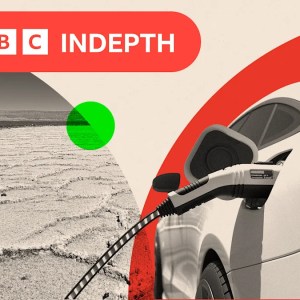
Raquel Celina Rodriguez walks carefully on the parched ground of the Vega de Tilopozo in Chile’s Atacama Desert. This area was once a lush wetland, filled with springs. “It used to be all green,” she says, pointing to some grazing llamas. Now, the landscape is dry and cracked.
For generations, her family raised sheep here. But changing climate patterns and reduced rainfall have made farming a struggle. Raquel laments that “they” have taken the water away. These “they” refer to lithium mining companies that operate beneath the salt flats, which hold the world’s largest lithium reserves. Lithium is crucial for powering electric vehicles and storing renewable energy.
As global demand for lithium skyrockets, Raquel feels the local community is paying the price. In 2021, about 95,000 tonnes of lithium were consumed worldwide; by 2024, that number is projected to surpass 205,000 tonnes, according to the International Energy Agency (IEA). By 2040, demand could exceed 900,000 tonnes. Much of this increase will primarily be driven by the electric vehicle market.
Chile, the world’s second-largest lithium producer after Australia, has launched a National Lithium Strategy this year to enhance mining production, including a state-private sector partnership. However, local residents are concerned about the environmental impact of increased mining.
Faviola Gonzalez, a local biologist, shares her observations from the Los Flamencos National Reserve, home to diverse ecosystems. “The lagoons are smaller now, and flamingo reproduction has declined.” She explains that lithium mining affects the microorganisms that birds rely on for food, upsetting the entire food chain.
In 2021, a slight reduction in water extraction allowed for a few flamingo chicks to hatch for the first time in years, but she notes, “it’s still just a small success.” The underground water supply replenishes slowly, and excessive extraction threatens to drain these vital ecosystems.
Ecosystem damage is evident; some areas have lost nearly one-third of the native algarrobo trees due to mining activities. Still, proving long-term ecological impacts remains challenging, as James J. A. Blair from California State Polytechnic University noted in a 2022 report.
Environmental damage from mining is often seen as inevitable. Karen Smith Stegen, a political science professor, argues that mining companies can do better. “Community involvement is crucial. Companies need to conduct proper impact assessments before any extraction begins.”
Mining companies, including the Chilean firm SQM, claim they are now listening to community concerns. Valentín Barrera, Deputy Manager of Sustainability at SQM, says they’re working on new technologies that could reduce water extraction by 50%.
Locals, however, remain skeptical. “We feel like the Salar de Atacama is a giant experiment,” Faviola warns. The fear is that they are being treated like a “natural laboratory” without considering the long-term effects.
Sergio Cubillos, leader of the Peine community where Raquel lives, highlights the drastic changes caused by water shortages. “We had to adapt our water systems due to mining,” he explains. “For decades, companies have been taking water, and now we’re left to deal with the consequences.”
While Chile’s government insists they are consulting with indigenous communities, local residents feel unheard in discussions that affect their lives. They recognize the importance of lithium for renewable energy but don’t want to be the collateral damage.
The Salar de Atacama serves as a microcosm of a wider global issue: climate change is indeed generating crises, yet solutions like lithium extraction may create new environmental problems. There’s a prevalent argument that, despite environmental costs, mining creates jobs and economic benefits.
Daniel Jimenez from iLiMarkets argues that environmental concerns are exaggerated, suggesting communities primarily want financial compensation. On the other hand, Professor Stegen believes that mining often disrupts existing traditional economies, leaving indigenous communities wanting more than just money.
Raquel captures the sentiment of locals: “Lithium may bring benefits to cities, but it harms us. Our way of life has changed.”
Faviola adds that transitioning to electric vehicles alone won’t solve climate change. The responsibility to reduce emissions must be shared globally. “Our carbon footprint is tiny, yet it’s our water that’s being taken,” she points out.
The local voices highlight a critical truth: while the demand for lithium grows to address climate change, communities like those in the Atacama Desert face loss of their resources, livelihoods, and cultural identities. They seek not just compensation but respect for their lives and their land.
In this complex equation of environmental impact and sustainability, finding a balance is essential. The voices of the affected communities must be prioritized in discussions around future mining operations and the broader impacts of transitioning to a green economy.
Source link
Atacama Desert, Mining companies, Salar de Atacama, salt flats, lithium, climate change, renewable energy sources, Chile, Los Flamencos National Reserve
