
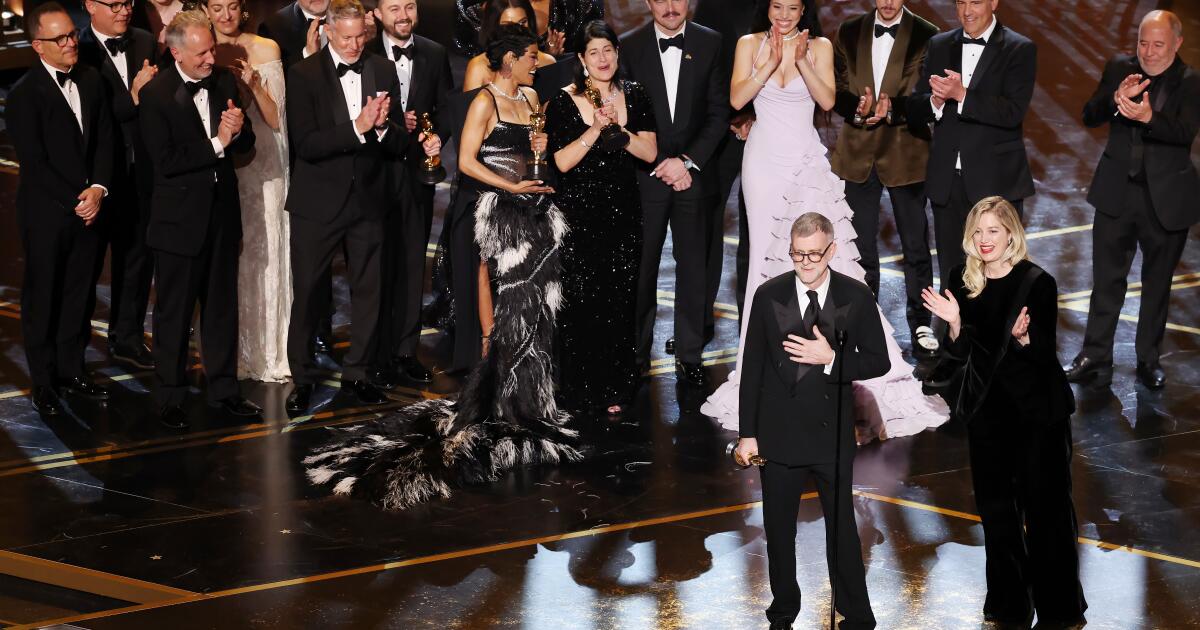
The 98th Academy Awards had a memorable moment when “One Battle After Another” took home the best picture award. Directed by Paul Thomas Anderson, this film tackles the story of California revolutionaries standing up to a harsh federal government. Despite its hefty $130 million budget, the movie struggled at the box office but sparked significant discussion.
Critics are split on its impact. Conservatives argued that it romanticizes violent resistance, while progressives appreciated its timeliness. Anderson himself has downplayed the film as less of a current commentary and more of a reflection on the ongoing struggle for democracy in America. He noted that similar themes have appeared in news for over a century.
The film features a gripping score and impressive cinematography. Sean Penn, who won an Oscar for his supporting role, embodies a character reminiscent of a notorious Border Patrol commander. Yet, while “One Battle” has its highlights, it also falls short in its portrayal of Latino characters, reducing them to minor roles.
The film depicts a world where change seems stagnant despite ongoing battles. Following a dramatic liberation scene at an immigration detention center, we see the aftermath years later. Members of the revolutionary group, the French 75, hide out in a sanctuary city as life continues around them.
Anderson borrows themes from Thomas Pynchon’s 1990 novel “Vineland,” shifting the focus from Reagan’s drug wars to Trump’s immigration policies. Critics note the film’s portrayal of conservatives as one-dimensional and overlook the complexity of Latino voting patterns, which shifted significantly in recent elections.
Indeed, as of 2024, many Latinos voted for Trump, showcasing that political identities are diverse and multifaceted. Activism today often takes on new forms, where organizing online and in communities has become just as crucial as protest marches. This stands in contrast to the film’s assertion that only violent uprisings can challenge authority.
Experts argue that peaceful activism has proven more effective. A recent study indicated that grassroots movements, rather than armed resistance, have led to significant change.
In summary, while “One Battle After Another” raises potent questions about resistance, it misses the mark by oversimplifying complex issues. Real-life activists engage in a broader dialogue, blending various strategies to enact change. As vivid as it attempts to be, Anderson’s film is perhaps more a reflection of a moment than a blueprint for future action.
For those interested in further reading on the changing landscape of activism, check out this Pew Research article on the impact of digital organizing.
