
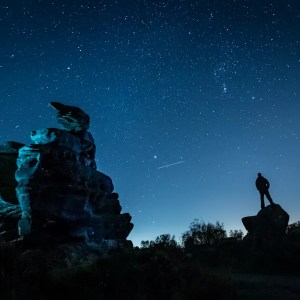
This October, two meteor showers will light up the sky. The Draconids and the Orionids are here, along with the stunning super harvest moon.
The Draconids Meteor Shower
- When: October 6 to 10.
- Peak Viewing: Best seen on the night of October 8 into early October 9.
- Location: Look for the Draco constellation in the northern sky. Free apps like SkyView Lite can help you find it. You might catch a glimpse in the southern hemisphere if you’re close to the equator.
- What to Expect: On a dark night, you might see about 10 meteors per hour. However, this year, the bright super full moon could make viewing difficult.
- Origin: The Draconids are remnants from Comet 21P/Giacobini-Zinner.
NASA explains that meteor showers happen when Earth passes through the debris trail left by comets.
The Orionids Meteor Shower
- When: September 26 to November 22.
- Best Viewing: Look before midnight on October 21 until around 2 a.m. October 22.
- Location: Near the Orion constellation. If you’re in the northern hemisphere, look southeast; in the southern hemisphere, look northeast.
- What to Expect: Up to 20 meteors per hour, including bright fireballs that can light up the sky.
- Origin: These meteors come from Halley’s Comet.
A Bit of Context
Meteor showers have been a part of our skywatching experience for centuries. They often spark excitement and curiosity. In recent years, events like the Perseids and Geminids have gathered huge online audiences, with many sharing their experiences on social media using hashtags like #MeteorShower. This kind of engagement shows how people still connect with and celebrate these natural wonders.
According to a recent survey by the American Astronomical Society, over 60% of Americans say they would like to see meteor showers more often. This desire reflects a growing interest in astronomy and the wonders of space exploration.
So, grab your blankets, find a dark spot free from city lights, and enjoy the show! For deeper insights on skywatching, visit NASA’s Skywatching page.
Source link
meteor showers, NASA, Draco constellation
Related Posts

Trump Challenges Harvard: Threatens $3 Billion Funding Cut Over University Policies
Ms. Rachel, YouTube Sensation, Joyfully Welcomes Her Daughter Through Surrogacy!
Alaska’s Rapid Warming: Understanding Its Global Impact and Urgency
Transform Your Lifestyle with X-Design: One-Click Product Photos Take Product Hunt by Storm!
Northeastern University Returns $600,000+ to National Science Foundation After Financial Audit: What You Need to Know
Unearthing Secrets: Shocking Discoveries in a Polish Cave Reveal Hidden Truths About Prehistoric Life
Unlocking the Secrets: How Physicists Finally Cracked a 90-Year-Old Puzzle in Quantum Damped Harmonic Oscillators
Exciting News: One of Costco’s Beloved Cakes is Poised for a Comeback in the Bakery!
Why DNA Technology Still Falls Short in Unraveling the JonBenet Ramsey Murder Mystery
Seahawks Make a Splash: WR Marquez Valdes-Scantling Joins the Roster!





DEE Assam recruitment notice for 4,500 teacher vacancies released: Check details and official notice here – Newz9
Remarkable Family Achievement: Mother and Her Three Daughters Celebrate Graduation Together from Georgia State University!
Bank of America Surpasses Analyst Projections with Strong Interest Income and Trading Performance
Governor Waller’s Insightful Speech: Navigating the Future of Our Economic Landscape
Sean ‘Diddy’ Combs Seeks Dismissal of Sex-Trafficking Case, Citing Alleged Prosecutorial Misconduct
Trump Urges Homeless Individuals to Relocate from D.C.: What This Means for the Community
Discover Saturn’s 128 New Moons: Unraveling the Mysteries of Their Strange Orbits and Origins!
‘India is building temples in the world’, what did Pakistani experts say on the Arabic version of Ramayana-Mahabharata?
Shocking Devastation in Myanmar: Survivors in Mandalay Face Ongoing Struggles Amidst Limited Aid
Jury Rules MyPillow Founder Defamed Ex-Employee of Major Voting Equipment Firm: What It Means for the Industry


