
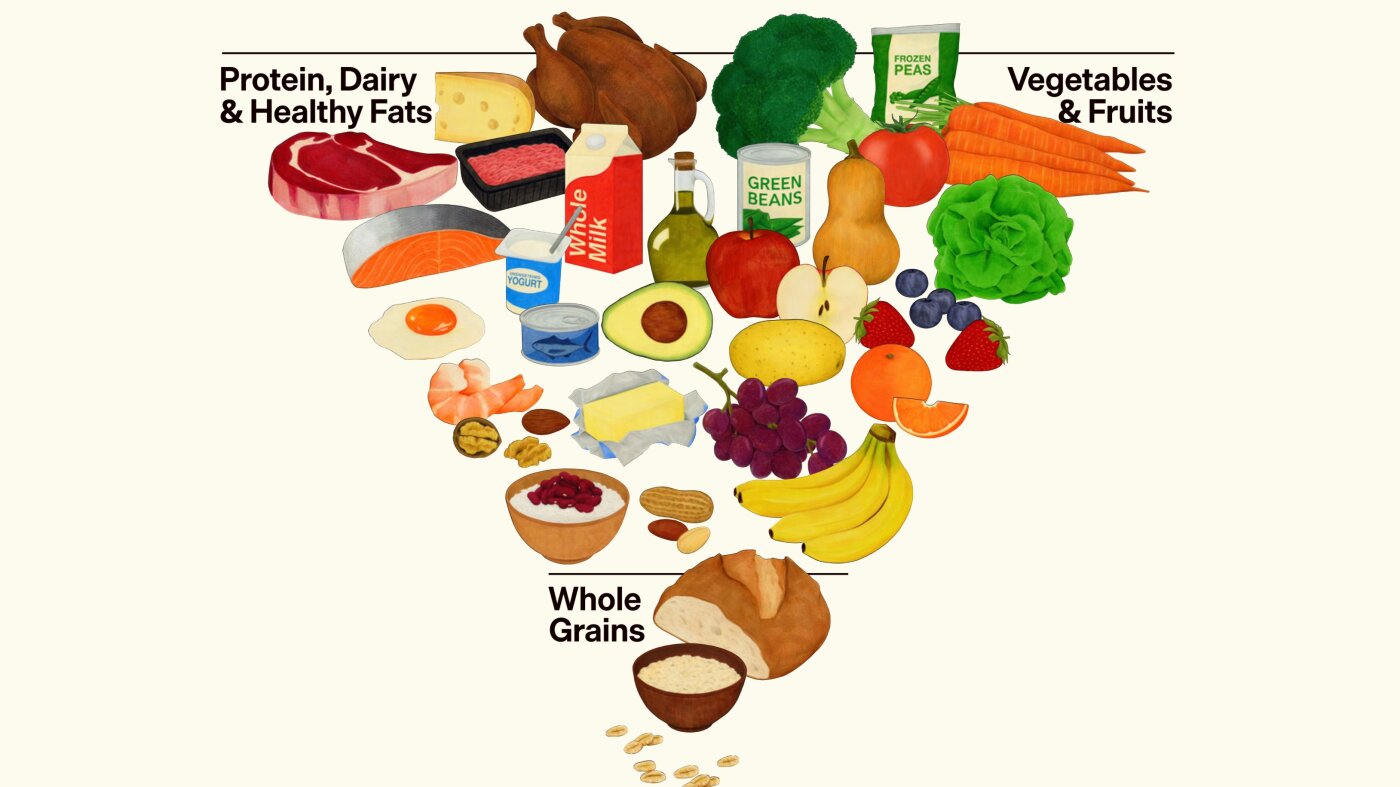
A new food pyramid was introduced earlier this year, flipping the traditional model that focused on grains. Now, the emphasis is on proteins, full-fat dairy, and what Health and Human Services Secretary Robert F. Kennedy Jr. refers to as “healthy fats.”
This updated pyramid is more than just a visual change; it influences food standards in schools, labeling, and programs like SNAP. As these guidelines shape our food choices, it’s worth exploring what they mean for us.
In a recent discussion, registered dietitian Shana Spence and diabetes expert Dr. Sarah Kim shared insights on these guidelines. They explained how the new pyramid could transform school lunch trays, putting more proteins and dairy on the menu. This shift is significant, especially given that recent studies show children’s diets are lacking in essential nutrients.
A study from the U.S. Department of Agriculture found that only 40% of children consume the recommended amounts of dairy and protein. As schools adjust to these new guidelines, the potential for improving student health is encouraging.
On social media, reactions have been mixed. Some people are excited about the focus on healthy fats and proteins, while others worry about the implications for overall dietary balance. Various experts are weighing in, emphasizing the importance of a diverse diet rich in fruits, vegetables, and whole grains—elements that shouldn’t be overlooked despite the shift.
This new approach reflects a significant change in how dietary guidelines are formulated, moving away from a one-size-fits-all strategy. For more detailed information, you can check out the USDA’s Food Pyramid updates.
As these changes take shape, it’s a good time to reflect on our food choices and how they impact our health. From schools to grocery stores, the food pyramid influences many aspects of our daily lives, making it crucial to stay informed about what’s on our plates.
