
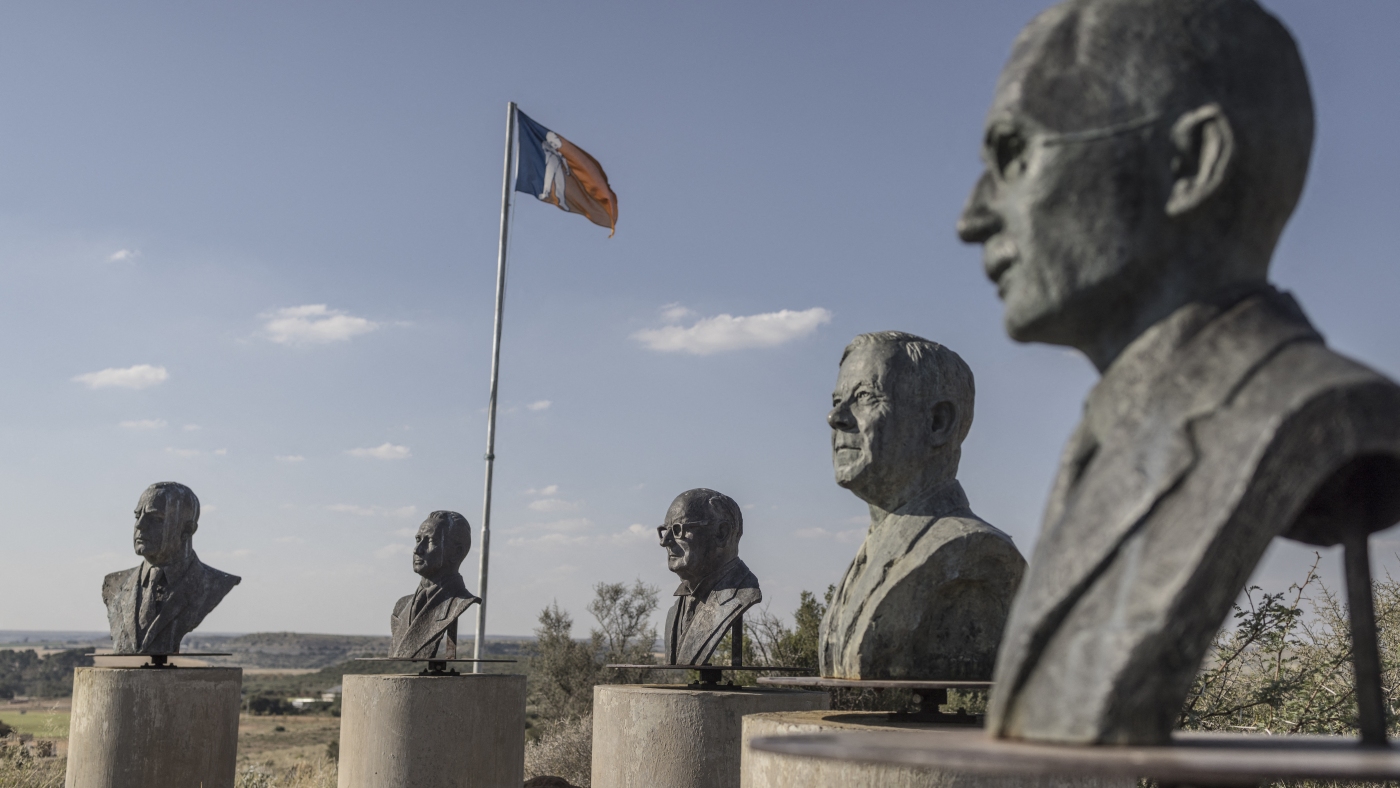
When the G20 meeting starts in South Africa this weekend, one nation will notably be missing: the United States.
Former President Trump has decided to boycott the conference due to what he believes is discrimination against Afrikaners, a major group within South Africa’s white minority. Historically, Afrikaners governed South Africa for most of the 20th century and were deeply involved in the oppressive apartheid regime until its end in 1994.
Trump has propagated false narratives suggesting the South African government is seizing land from white farmers and even claiming a “white genocide” against Afrikaners. He has gone as far as offering refugee status to those who wish to flee. The first group of 59 Afrikaner refugees arrived in the U.S. in May.
South African officials, including President Cyril Ramaphosa, have dismissed Trump’s statements as inaccurate. They cite official statistics indicating that while violence is a significant issue in South Africa, the majority of victims are Black, not white.
Lindie Koorts, a historian from the University of Pretoria, has noted that this distorted narrative threatens to undo some of the progress made since the end of apartheid. Many Afrikaners, descendants of those who enforced apartheid laws, are struggling with their changing status as a minority without the protections they once had. Koorts stated that this creates feelings of dread, which can easily be exploited by right-wing groups.
Afrikaners trace their roots back to 17th-century colonists from Europe, mainly of Dutch origin. They became known as Boers, meaning “farmers,” after many moved inland to establish agricultural communities. Tensions between the Afrikaners and British colonists led to the Boer War, resulting in Afrikaners maintaining a dominant position among South Africa’s white population and gaining governmental control.
In 1948, the Afrikaner-led government introduced apartheid, establishing a regime of institutionalized racial segregation. Post-apartheid, white South Africans, including Afrikaners, have seen their political power diminish, yet some still retain wealth and privilege. Daniel Magaziner, a historian at Yale, pointed out that while many Afrikaners are doing well, there’s a growing sense of grievance regarding the loss of their political dominance.
Claims of violence against Afrikaners have sparked controversy. Right-wing groups like AfriForum often echo these sentiments, accusing the government of failing to protect white farmers. Some Afrikaners believe they face risks due to their race, although many others dispute this notion. In fact, a public petition signed by numerous Afrikaner professionals rejects the idea of them being victims of racial persecution in modern South Africa.
Tragically, narratives about violence against Afrikaners can fuel extremist ideologies, harming community cohesion. South Africa’s police report that the majority of violent crime victims are Black, highlighting the need for unity rather than division.
For a broader context, recent studies have shown that the wealth disparities between races remain glaring, with about 8% of the population controlling most of the commercial farmland. While racial issues remain sensitive and complex, it’s essential to base discussions on accurate data to prevent misinformation and the spread of fear.
To learn more, you can read about farm crime statistics here and the history of land reform in South Africa in this government report.
