
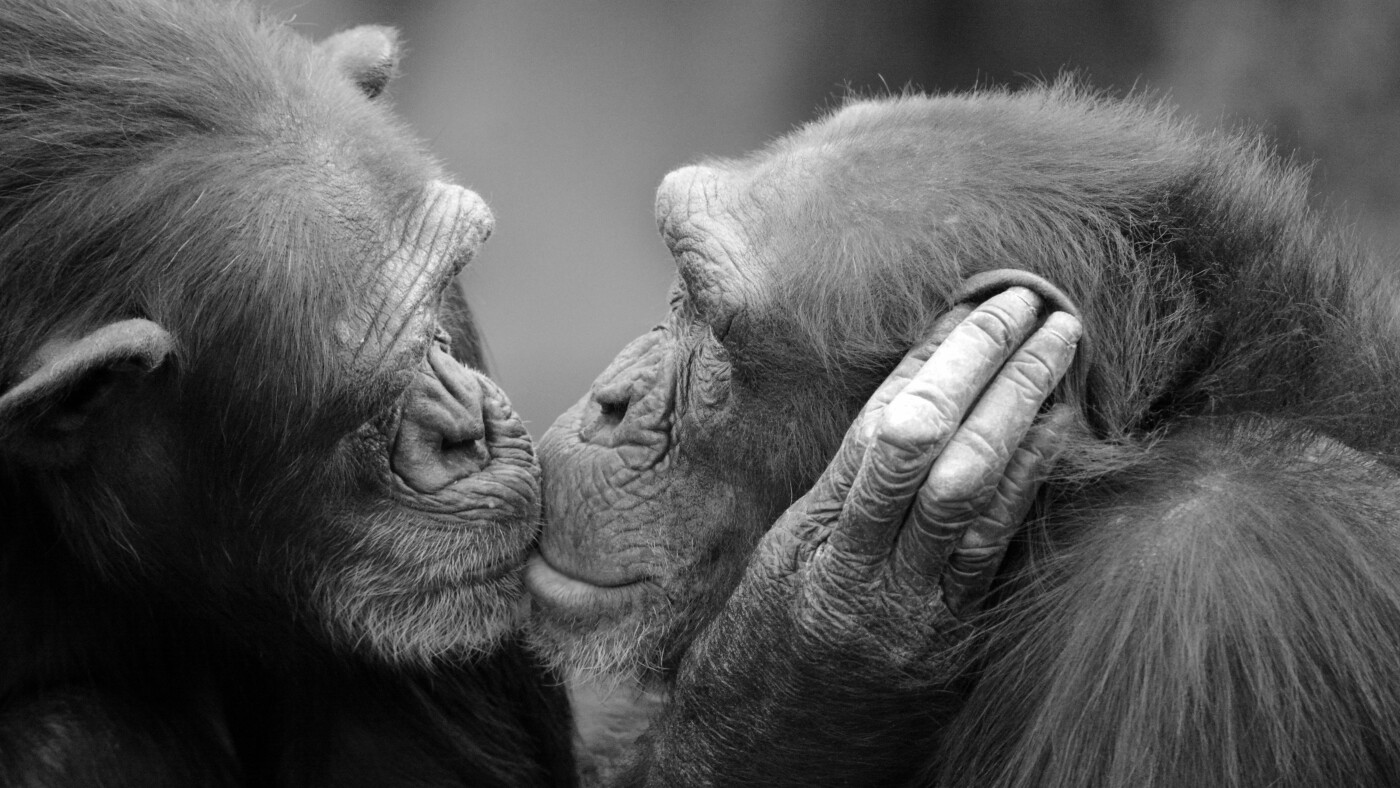
How far back does kissing go in human history? Surprisingly, it dates back 21 million years to our common ancestor with apes, according to recent research. Scientists found that kissing likely existed in the ancestor of all apes, revealing a rich history tied to our evolutionary roots.
A study published in Evolution and Human Behavior describes kissing as a gentle mouth-to-mouth contact that doesn’t involve sharing food. This behavior is not just a human trait; many animals, particularly primates, engage in kissing.
Matilda Brindle, an evolutionary biologist at the University of Oxford and the study’s lead author, explained, “Humans, chimpanzees, and bonobos kiss. It’s reasonable to think that our common ancestor did too.” Her team analyzed various studies and even watched videos of apes kissing to understand this behavior better.
Interestingly, clues suggest that Neanderthals also engaged in kissing. Most people of non-African descent share a small amount of Neanderthal DNA, hinting at interactions between early humans and Neanderthals. This new study deepens our understanding of those relationships, showing that kissing may have been common among ancient populations.
Social media reactions to the findings have varied, with many users expressing amazement at how deeply intertwined kissing is with our evolution. Some have even shared humorous takes, likening ancient kissing to modern dating scenarios.
As we continue to explore human evolution, these insights highlight not just our biological connections but also the historical depth of our social behaviors. Understanding where kissing fits into our past gives us a unique perspective on why it remains so central to human relationships today.
For more on human evolution, feel free to explore NPR’s coverage of related topics.
