
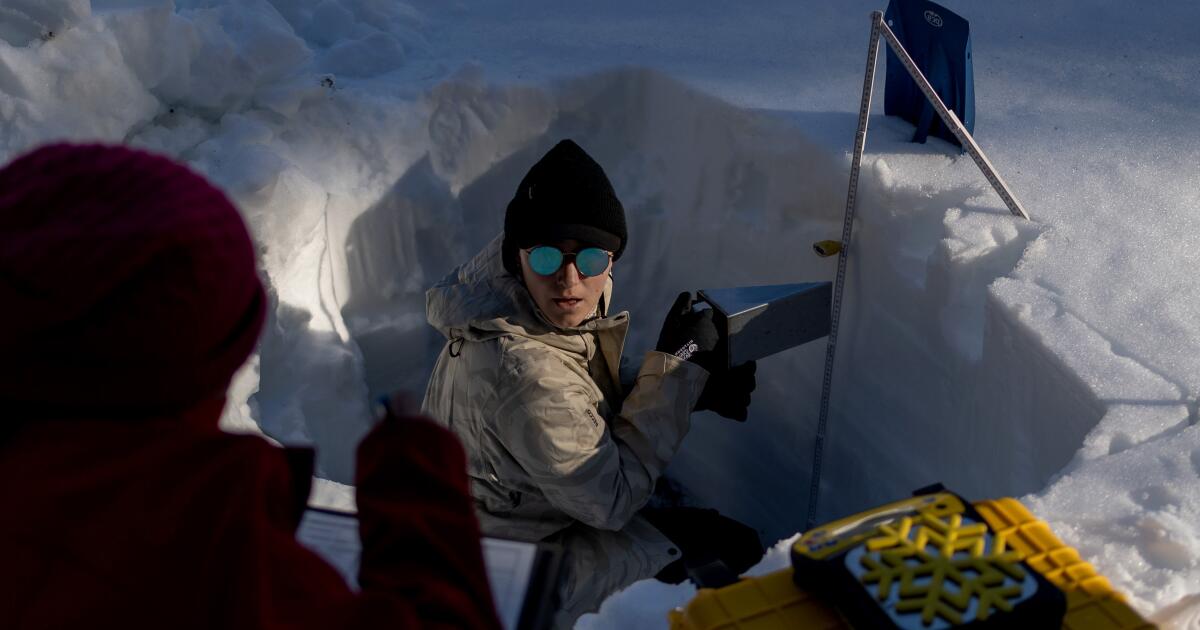
At the UC Berkeley Central Sierra Snow Laboratory, which sits high in the Sierra Nevada near Donner Pass, researchers monitor snow levels closely. This winter, they’ve noticed something concerning: the snowpack is lower than usual.
Warmer temperatures across the western U.S. are largely to blame. Since November, many areas have seen near-record high temperatures, impacting snowfall significantly. Andrew Schwartz, the lab director, stated, “We’ve had a warm winter with ample rain, but not enough snow.”
As of January 23, the snowpack at the lab was just 61% of what’s typical for this time of year. Other regions aren’t faring much better, particularly in Utah and Colorado, where levels are at or near all-time lows. Across California’s Sierra Nevada, the snowpack is around 66% of average—better in some areas and worse in others. Higher elevations managed more snow, but lower levels remain dry.
Daniel Swain, a climate scientist, pointed out that this pattern of warm winters and diminishing snow is a clear sign of climate change. “Warmer temperatures push snow levels higher,” he noted, leading to more rain and less snow at lower elevations.
Interestingly, despite the lower snowpack, California’s water supply seems stable for now. Major reservoirs report levels at 126% of their average. Over the past few years, the state has experienced enough rain and snow to maintain this balance.
Social media trends show a growing concern among residents about climate’s impact on water resources. Many conversations highlight the need for sustainable practices to conserve our water supply moving forward.
Additionally, the Colorado River Basin faces challenges. The snowpack there is currently only 61% of average for this time of year, following the warmest November-December in over a century. This decrease raises alarms about possible intensified drought conditions, as the river waters feed into several states.
Experts are in discussions about long-term solutions to manage water from the Colorado River better. With the ongoing effects of climate change, these conversations have become increasingly urgent.
Although February and March could still bring much-needed snow, the current outlook appears bleak, especially for the Rocky Mountains. This winter’s weather highlights the need for awareness and action regarding climate change and water conservation now and in the future.
For an in-depth look at California’s water resources, visit the California Department of Water Resources. You can also stay updated on drought conditions with the U.S. Drought Monitor.
