
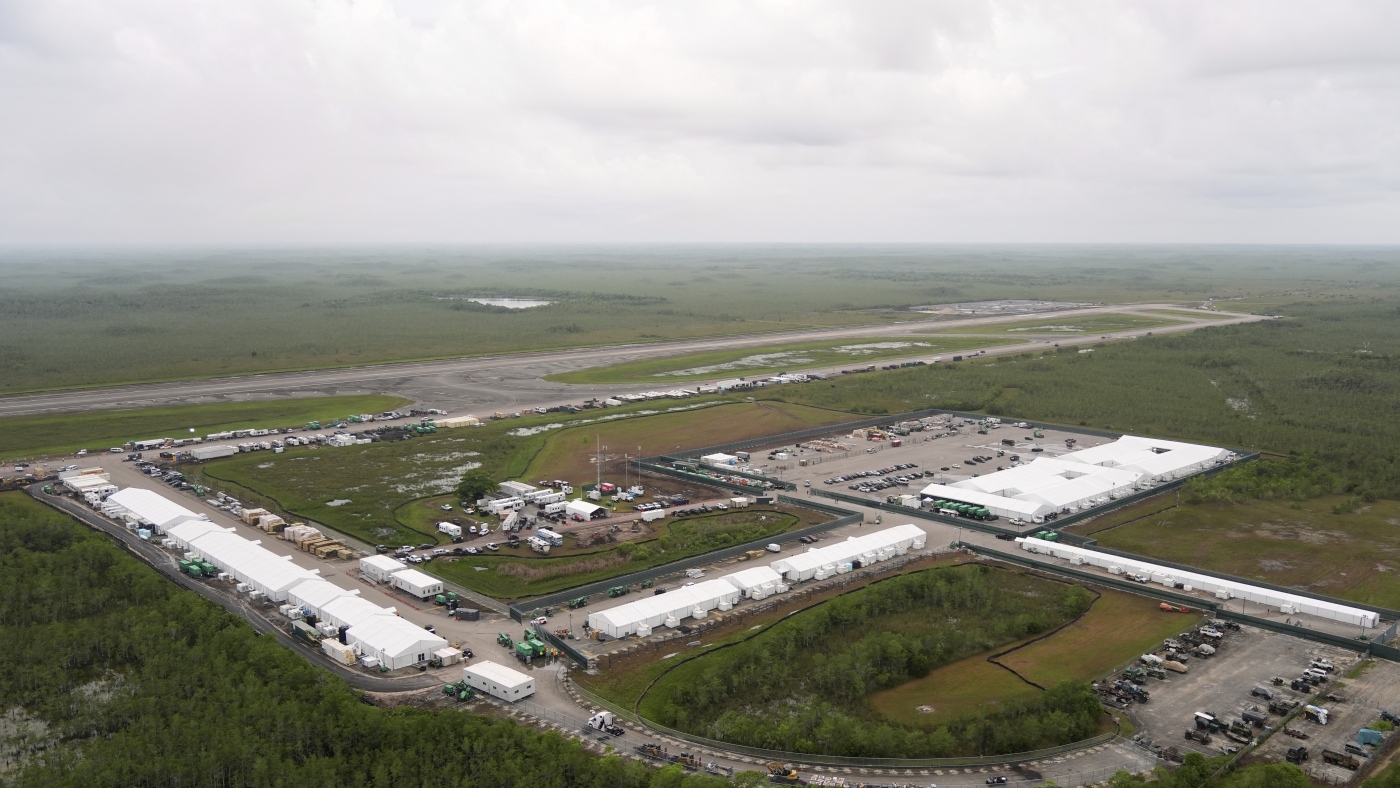
Miami is buzzing with a significant legal case. A group of environmental organizations and the Miccosukee tribe are challenging the construction and operation of an immigration detention center, nicknamed “Alligator Alcatraz,” deep in the Florida Everglades.
The lawsuit, wrapped up recently, left many crucial questions unanswered. One of the key points was posed by U.S. District Judge Kathleen Williams: “Who’s running the show?” The complexities arise from differing claims over who controls the facility. Lawyers representing the environmental groups argue that it operates under federal authority, while Florida’s officials say it’s a state-run facility. This ambiguity adds fuel to the legal fire.
The environmental groups claim that the construction process skipped vital steps, such as public input and environmental assessments. They argue this goes against the National Environmental Policy Act (NEPA), which mandates that environmental impacts be considered before projects proceed. Florida’s response? They assert that NEPA doesn’t apply since the state is in charge.
The site, located at the Dade-Collier Training and Transition Airport, is designed to hold up to 5,000 immigration detainees. Critics point out that the facility’s operations could harm endangered species and pollute nearby waters. Randy Kautz, a wildlife expert, warned that the bright lights and increased human activity could push the already endangered Florida panther out of its habitat. There are only about 120 to 230 of these panthers left.
Concerns about the effects on water quality have also been raised. Wetlands ecologist Christopher McVoy noted that the addition of asphalt could disrupt the fragile ecosystem of the Everglades, which is sensitive to nutrient levels. The runoff could introduce harmful substances, threatening both plant life and water quality.
Tribal members testified in court about the real-world impacts of the facility. They reported that runoff typically travels south, potentially affecting their homes and health. They are particularly worried about the light pollution’s effects on the bonneted bat, another endangered species.
As the legal battle unfolds, the environmental groups demand immediate action. They seek a court order to remove structures and waste, restore access for tribal members, and halt operations within two weeks. Judge Williams has temporarily postponed new construction and plans to make a decision soon.
This case not only highlights local environmental concerns but also reflects broader issues about immigration policy and land use in the U.S. The future of the “Alligator Alcatraz” facility remains uncertain, with ongoing debates about its necessity and ecological impact.
For a detailed overview of NEPA and its implications, check out this resource from the American Bar Association.
