
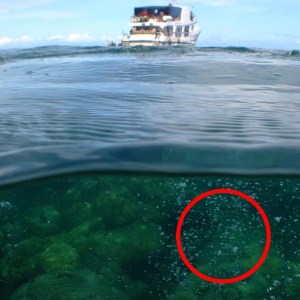
A recent discovery of bubbles emerging from an underwater volcano has raised alarms about the future of Australia’s iconic reefs. These bubbles, rich in carbon dioxide, are changing the water’s chemistry and altering reef appearances. While this phenomenon is occurring far from Australia, in Papua New Guinea, it serves as a warning for Australian ecosystems.
Dr. Katharina Fabricius from the Australian Institute of Marine Science (AIMS) noted that regions like Western Australia’s Ningaloo Reef and Queensland’s Great Barrier Reef could undergo significant changes over the next 75 years. If trends seen at the research site continue, we can expect to see a rise in brown and red algae dominance, with surviving corals becoming smaller and less vibrant.
Dr. Fabricius pointed out, “We have a natural lab to understand future ocean acidification effects,” which helps predict how reefs will transform as oceans absorb more atmospheric carbon.
The investigation took root in 2000 when Dr. Fabricius first spotted the unusual bubbles during a dive. Since then, she has returned to study how rising carbon levels impact marine life. Her research team has examined 37 sites in the Milne Bay area, helping reveal important insights about the effects on coastal communities that rely on reefs for tourism and fishing.
The urgency of this situation can’t be understated. Climate change is not just affecting the oceans but also human livelihoods. “It’s become clear how intertwined our futures are with that of the natural world,” Dr. Fabricius added.
The effects of increased carbon levels are profound. Global ocean acidification has risen by about 30% since preindustrial times, making it challenging for corals to form their essential calcium carbonate structures. A recent study published in Communications Biology highlights that fewer juvenile corals are emerging in high-carbon environments, raising concerns about recovery from extreme weather events like cyclones.
Coral reefs are vital habitats, supporting around 1 million marine species. A decline in coral complexity could lead to a marked decrease in fish and other marine life, disrupting the ecological balance. Dr. Fabricius warned, “If corals become less complex, many species lose their homes, leading to a drop in fish and invertebrate populations.”
As we look to the future, reefs like Ningaloo may become shadows of their former splendor. Protecting these unique environments requires urgent action, not just from governments, but from all of us who cherish our oceans.
For more information on coral reef conservation and the impact of climate change, visit the Australian Institute of Marine Science.
Source link
Katharina Fabricius, carbon dioxide, Australia, submarine volcano, more acidic, Milne Bay, Western Australia, Great Barrier Reef, AIMS, Papua New Guinea
