
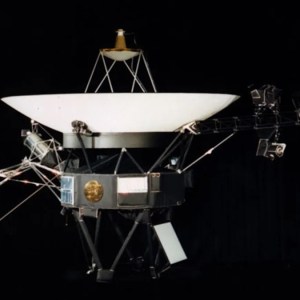
Voyager 1 is an amazing spacecraft. Launched on September 5, 1977, it’s now the farthest human-made object from Earth. By November 15, 2026, it will be about 16.1 billion miles or 25.9 billion kilometers away. That’s the distance light travels in one day! At its current speed of around 37,300 miles per hour, it takes two days for signals to travel between Voyager 1 and Earth.
Originally, Voyager 1 was sent to explore Jupiter and Saturn. It completed those missions by 1980. But then it continued on an incredible journey beyond our solar system. It finally entered interstellar space in 2012 after traveling through a region where the solar wind from the sun slows down. As of now, it remains busy gathering data.
Another interesting point is how Voyager 1 is powered. It uses three radioisotope thermoelectric generators, which can last into the 2030s. In fact, there was a scare recently when a memory error threatened to cut its mission short. Thankfully, engineers managed to fix the issue, ensuring Voyager 1 can keep sending us valuable information from deep space.
Many people might think the distance Voyager 1 has traveled is huge, but it’s nothing compared to the universe’s scale. For example, the nearest star, Proxima Centauri, is about four light-years away. At Voyager’s current speed, it would take around 73,000 years to reach it. By then, the spacecraft’s power would be long gone. Yet, it carries a golden record containing sounds and images of life on Earth, just in case an alien civilization finds it someday.
The story of Voyager 1 captures our curiosity about space and our place in the universe. It reminds us that exploration and discovery are vital for understanding what lies beyond our planet. According to a recent survey by the Space Foundation, over 50% of people believe space exploration is essential for the future of humanity. This shows that interest in such missions continues to thrive.
In the world of technology, Voyager 1 is a testament to human ingenuity. NASA’s efforts with this mission have sparked numerous innovations in engineering and satellite technology. Experts in space exploration often emphasize the importance of continued investment in such projects. They argue that we gain not just scientific knowledge but also technological advancements that benefit life on Earth.
So, as Voyager 1 journeys into the unknown, it does more than just travel through space. It carries human hopes and dreams, and simply reaching out to the stars is a partnership that unites us all.
Source link
Voyager Interstellar Mission, Voyager 1, spacecraft, kilometers per hour
