
In West Virginia, military service has deep roots. Many bridges and streets are named after local veterans, celebrating their sacrifices. The state boasts one of the highest per-capita veteran populations in the U.S., viewing military duty as both a patriotic responsibility and a critical path to economic stability, especially in rural areas where job opportunities are limited.
The recent deaths of Army Specialist Sarah Beckstrom and the wounding of Air Force Staff Sergeant Andrew Wolfe have hit close to home. They were attacked while on patrol near the White House as part of a National Guard deployment that has stirred up controversy. Critics question the necessity and legality of these deployments, even in a historically conservative state like West Virginia.
Specialist Sarah Beckstrom, who grew up in the small town of Webster Springs, was just 20 years old. Her childhood in a tight-knit community shaped her character. Residents remember her fondly as a cheerful and helpful person. Local bus driver Kenny Kidd noted that job options are scarce in the area, primarily limited to retail work. For many young people, joining the military opens doors that local jobs do not.
Air Force Staff Sergeant Andrew Wolfe, also from West Virginia, was stationed in a unit known for its high deployment rate. Many choose to enlist for financial reasons; service members receive bonuses, training pay, and deployment earnings. This is particularly appealing in economically challenged areas where traditional job prospects are dwindling.
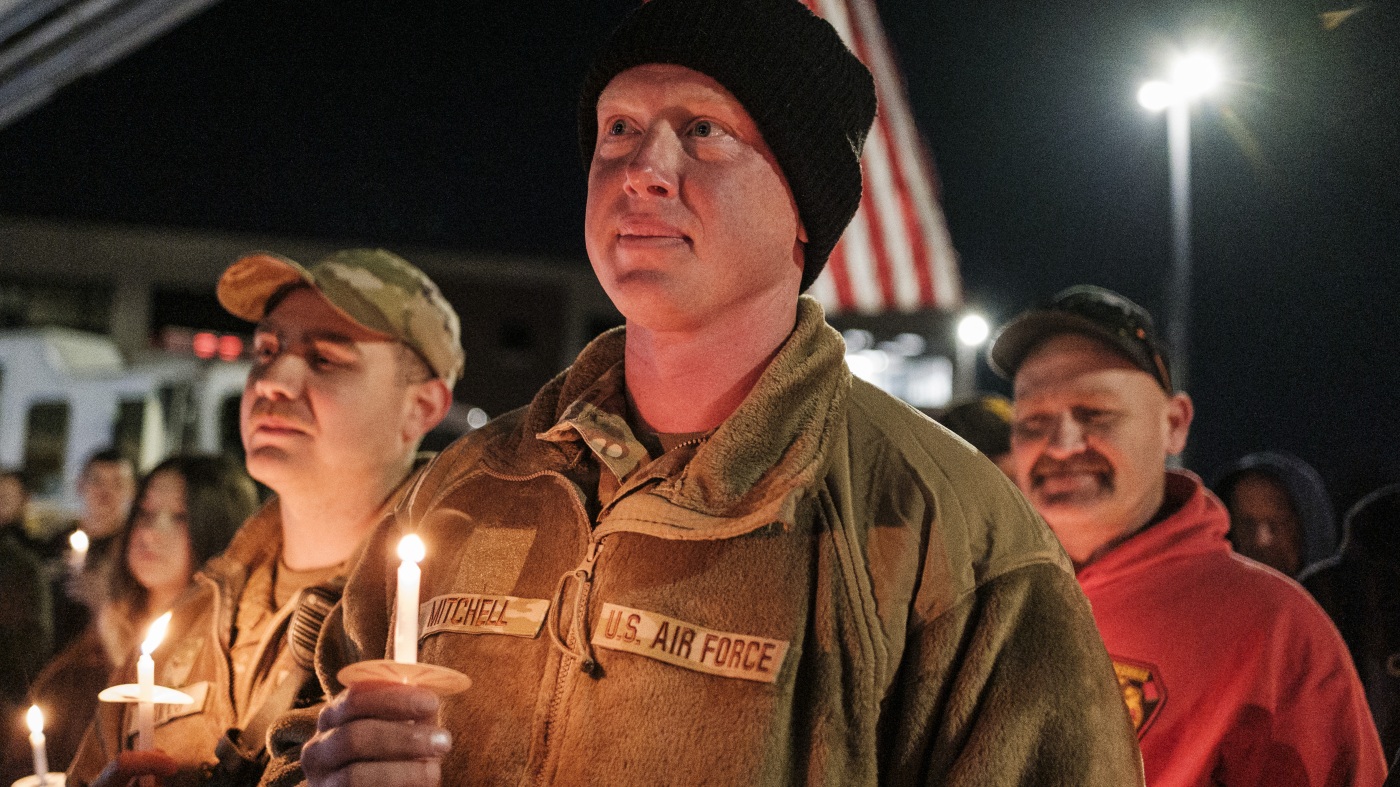
At a vigil for Wolfe in Martinsburg, attendees expressed shock and grief. Jason Mitchell, a fellow National Guard member, shared his own story of joining to help pay off college debt. He highlighted how the military offers educational opportunities, appealing to aspiring students who need financial support.
However, the legitimacy of the D.C. deployments is under scrutiny. Governor Patrick Morrisey, a Republican, faces backlash for approving the troops’ role, especially as news reports suggest their tasks diverged from security work to mundane jobs like trash collection. Critics from both sides of the aisle accuse the administration of using the Guard for political theater.
Local residents share concerns about the motivations behind these deployments. For instance, Mike Pushkin, a member of the West Virginia House of Delegates, criticized the rationale, pointing out that many soldiers wouldn’t be in harm’s way had these deployments not been called into question during a politically charged atmosphere.
As public sentiment continues to evolve, it reflects a broader national discussion about military roles and responsibilities at home. With sentiments of gratitude mixed with concern, the legacy of Beckstrom and Wolfe is likely to resonate within the community, serving as a reminder of both service and sacrifice amidst shifting political landscapes.
In the words of a local resident, “Sarah’s picture… it’ll be next. But she’ll be missed.” This sentiment resonates deeply in a state where military service is honored, yet complex questions loom about the implications of deployments in a politically charged environment.
