
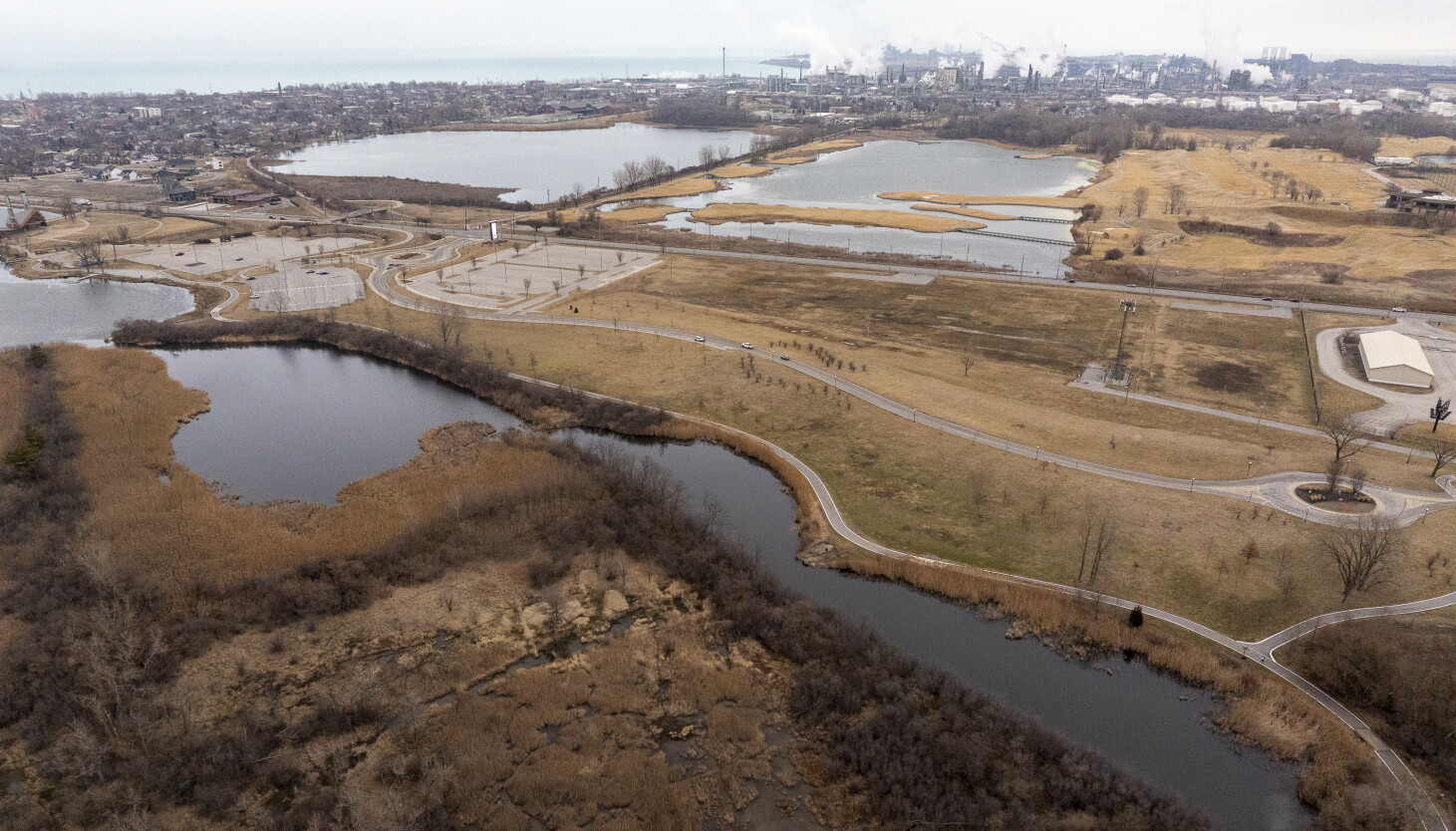
Bears executives faced a tough decision on a Monday morning after a suspenseful night in Springfield. Early that day, the Illinois Senate passed a bill allowing cities with over 70,000 residents to create their own stadium financing authorities. This bill could have helped the Bears avoid hefty property tax bills. However, the House didn’t vote before adjournment, leaving uncertainty about the team’s future stadium plans.
The Bears will decide between locations in Arlington Heights and Hammond, Indiana, by late spring or early summer. This decision will follow a meeting of their board, which includes notable members like chairman George McCaskey and CEO Kevin Warren.
Hammond’s mayor, Tom McDermott, noted that if a decision isn’t made by July 1, it might not bode well for the team’s future in Illinois. McCaskey emphasized the need for a legislative framework to support their plans, and it seems that Hammond is the only viable option if the Bears are serious about a new stadium.
A source close to the Bears indicated that state officials are challenging the team, hinting that it might not be feasible to build in Illinois without significant concessions. The situation reflects broader dysfunction in Illinois politics. Recent discussions show that the Bears, after years of trying to secure a stadium, face mounting pressure.
Illinois Governor J.B. Pritzker expressed disappointment over using taxpayer funds for a billionaire’s project. McCaskey suggested that Bears fans would adapt to the possibility of moving to Indiana, comparing it to past relocations from Wrigley Field.
Recent expert opinions, like those from sports consultant Marc Ganis, emphasize that the Bears should quickly finalize their lease to move forward. Ganis noted that there is currently only one deal on the table—the one from Indiana. With Illinois failing to provide adequate support, the Bears are being pushed closer to the exit.
The call for a new stadium echoes a growing need, not only for the Bears but for Illinois to attract major businesses and investment. Ganis pointed out that the Bears’ offer was favorable for taxpayers, as it required no public money for construction or ongoing costs—only infrastructure support and certainty around property taxes.
In the backdrop of these discussions, the Bears’ quest for a suitable stadium location continues. Their journey began five years ago when they first explored the Arlington International Racecourse site. Since then, various potential sites in downtown Chicago and Northwest Indiana have been considered.
As the team navigates its future, the stakes remain high. In a world where NFL teams often shift locations for better deals, the Bears are faced with critical decisions that could redefine their legacy.
For further insights into stadium financing and related sports development trends, the public can refer to research by the National Bureau of Economic Research here.
