
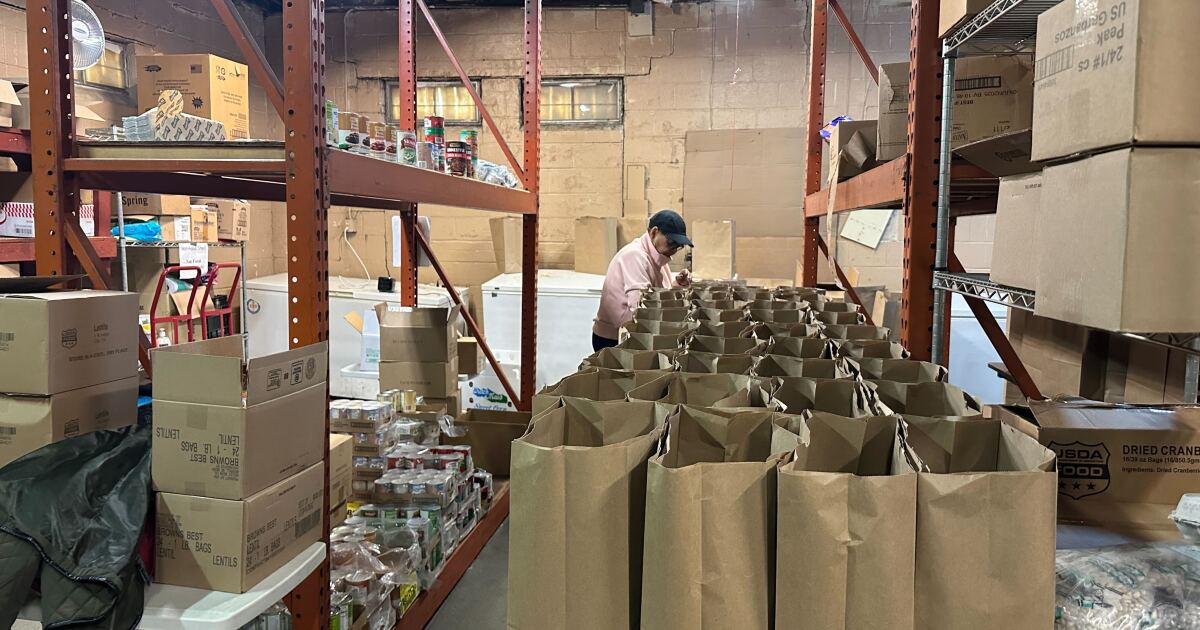
Food pantries in Cuyahoga County are busy lately. Many families are struggling because a federal government shutdown has delayed their November SNAP benefits. The U.S. Department of Agriculture announced it doesn’t have the necessary funding to distribute these benefits on time.
In response, the White House recently decided to provide partial benefits using emergency funds. This has led to increased demand at local food pantries. For instance, the Hunger Network, which assists food pantries in Greater Cleveland, reported that its MidTown Market saw a record number of families—110 households—on a single day. Previously, the highest number served was 83.
Emma Messett, the Hunger Network’s hunger relief program director, expressed concern about the future. She noted that last week they served 154 households, with 72 of them being new visitors. The Lee-Miles Hunger Center, another pantry in Southeast Cleveland, also reported a spike in demand, serving 42 households in one day, which is about double the usual.
Volunteers like Leonard Killings pointed out that when families rely on these hunger centers, they’re often restricted to certain hours. This can add stress, especially for those trying to juggle schedules while taking care of children.
Mia Jackson and John Wade are among those affected. They haven’t received their benefits and expressed their worries about how to feed their kids. “It’s heartbreaking. I can skip meals, but my kids shouldn’t,” Wade said.
Ohio has over four million SNAP recipients, with about 190,000 in Cuyahoga County alone. Governor Mike DeWine allocated $25 million last week to support food programs. In addition, local officials and nonprofit organizations donated $625,000 to aid food pantries as they see an increase in demand.
Despite these efforts, Messett fears that pantry supplies may dwindle soon. Food insecurity is a pressing issue, and while community support helps, many families continue to face tough choices every day.
You can read more about the impact of food insecurity on families affected by recent SNAP delays from the U.S. Department of Agriculture.
