
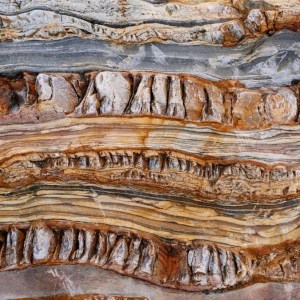
The Earth’s history is fascinating but filled with untold stories. One of the biggest mysteries is the “Great Unconformity.” This geological gap, found in places like the Grand Canyon, shows about one billion years of missing rock layers. It’s like flipping a book and finding whole chapters gone.
Scientists have long debated what led to this missing time. Some have blamed a period called “Snowball Earth,” when it was extremely cold, while others pointed to the formation of the supercontinent Rodinia. However, recent research suggests that the roots of this mystery may go back even further. A study published in the Proceedings of the National Academy of Sciences found that the first supercontinent, Columbia, likely played a significant role.
Research from five sites in North China revealed that the erosion associated with the Great Unconformity actually occurred before both Snowball Earth and Rodinia. Liang Duan, a geologist leading the study, emphasizes that although other geological forces contributed, they weren’t the main cause of this missing rock.
What makes this discovery compelling? For one, it challenges previous theories. The Great Unconformity was once thought to have led to significant erosion that “fueled” the Cambrian Explosion, a burst of life that appeared about 540 million years ago. Now, it looks like this erosion happened during a period known as the Boring Billion—a time often seen as uneventful in geological terms.
This new perspective not only deepens the mystery but also raises questions about our understanding of Earth’s history. As research continues, scientists may uncover more about this enigmatic period. As they dig deeper, they may finally piece together the story of the Great Unconformity and what it truly means for our planet’s past.
For further exploration into geological discoveries, visit Popular Mechanics.
Source link
Snowball Earth, geological layers, Great Unconformity, Earth history, Mario Martinez, geological forces, erosion
