
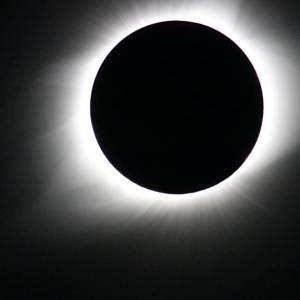
Astrotourism is becoming a hot trend in travel. Many people are looking forward to celestial events, especially with an exciting solar eclipse coming up. This event promises to draw many travelers eager for a unique experience.
The total solar eclipse on August 12, 2026, will be visible in Iceland for the first time this century. But eclipse chasers are already looking ahead to August 2, 2027, when the “eclipse of the century” will occur. This eclipse will last longer than the one in 2026, offering six minutes and 23 seconds of total darkness.
Key locations to see this magnificent event include Cádiz and Málaga in Spain, Tangier in Morocco, and Jeddah and Mecca in Saudi Arabia. Luxor in Egypt, just 60 km from the maximum point of totality, is bound to be a favorite spot.
To get more insights, we spoke with Dr. Kelly Korreck, a program scientist at NASA. She shared why this upcoming eclipse is special. “Earth is the only planet we know that experiences solar eclipses like this,” she explained. It’s amazing that our moon is just the right size and distance to block the sun completely.
Science also plays a big role in predicting eclipses. By studying the orbits of the moon, Earth, and the sun, scientists can forecast when these events will happen for thousands of years. The longest eclipse could last up to seven-and-a-half minutes under certain conditions. While the 2027 eclipse doesn’t hit that mark, six minutes and 23 seconds is still remarkable.
Experiencing an eclipse is unlike anything else. “It’s hard to explain why you should see it in person,” Dr. Korreck said. Not only will you see stunning visuals, but you’ll feel the drop in temperature—up to 10°C—as the sun disappears behind the moon. The event can feel unsettling at first, but witnessing totality is a breathtaking experience.
During totality, you can observe the solar corona, the sun’s outer layer, which is typically invisible. You might also spot stars and even planets if the sky is clear.
Safety is crucial when watching an eclipse. You’ll need protective eyewear, like solar viewing glasses that meet the ISO 12312-2 international standard—far darker than regular sunglasses. You can even make a simple pinhole projector to view the eclipse safely. For detailed safety tips, check out the NASA website.
Astrotourism not only offers stunning views but also brings communities together. Social media is buzzing with excitement, as people share their eclipse plans and past experiences. This sense of connection adds a layer of enjoyment to watching the sky.
Mark your calendars and consider traveling to see this spectacular event. It’s not just about the sight; it’s about feeling something extraordinary. Astronomers will be observing closely, and many travelers will join them, making it a remarkable moment in time.
Source link
solar eclipse, total eclipse, eclipse chasers
